Since I primarily take photographs of nature, my detail shots are mostly in the form of plant life. Even if I lived somewhere besides the desert, I think I would still be fascinated with cacti. Sometimes they’re shaped bizarrely, sometimes perfectly symmetrical. And when you move in close (but not too close) they provide elaborate details. Most would be vulnerable to damage from insects, birds, and animals if it weren’t for the defense mechanisms – all those thorns.
While many of you live in climates where flowers thrive, we are provided with only a limited showing of those. Even in the driest of years, when the rest of the desert is stingy with blossoms, the cactus bloom.
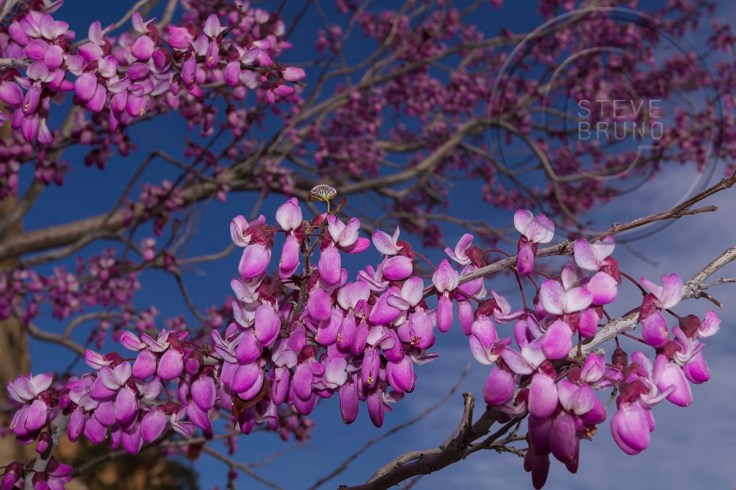
Trees are the other guaranteed bloomers around here, such as this redbud from nearby Red Rock Canyon.
In bloom or not, trees can be fascinating subjects, such as this one from Hawaii with a very entangled root system, or this detail of a bristlecone pine tree.
In the southwest, details of canyon walls can make for good photos, such as this one of cross-bedded sandstone in Valley of Fire State Park, or this etched detail in Fletcher Canyon.
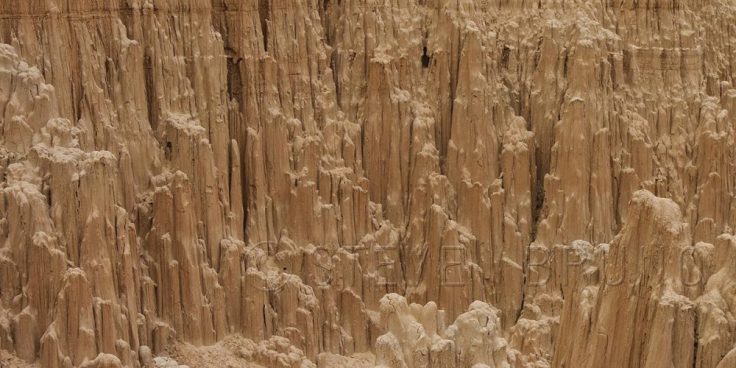
When I think of detailed shots, the first thing that comes to mind are close-up or macro images. But sometimes, there are landscapes that have so much going on, that it’s hard to not just look for all the details. This one is from Cathedral Gorge State Park, Nevada.
Textures in eroded clay and sand in Cathedral Gorge State Park, Nevada. Photo by Steve Bruno.
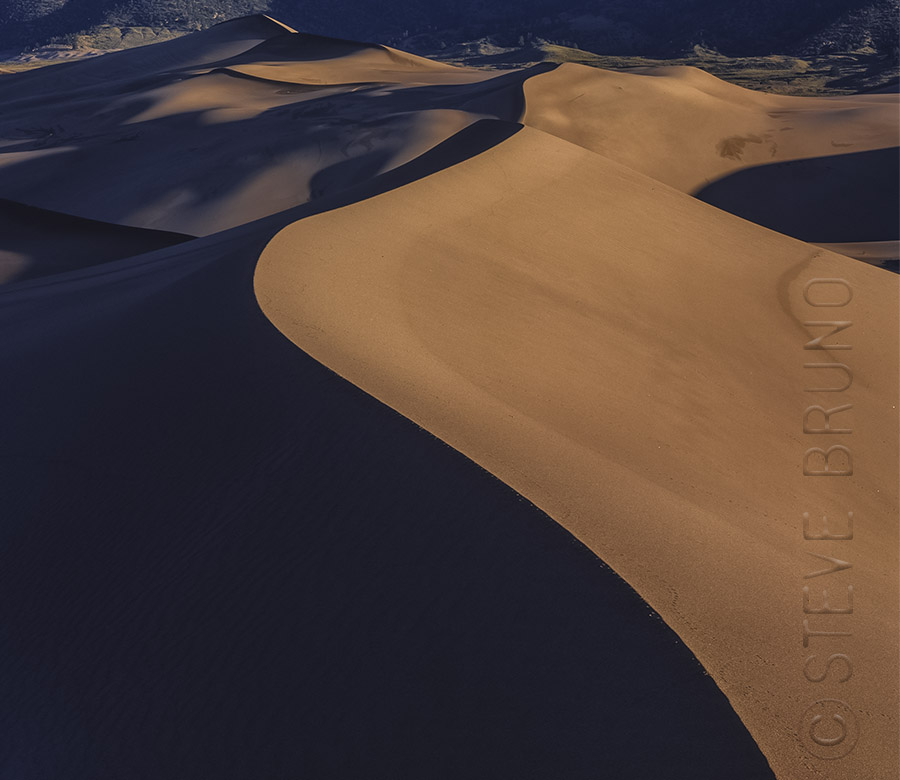
For this week’s Daily Post Challenge, I’ve found a few shots where the emphasis came from the curve in the photo. The top shot comes from Great Sand Dunes National Park in Colorado.
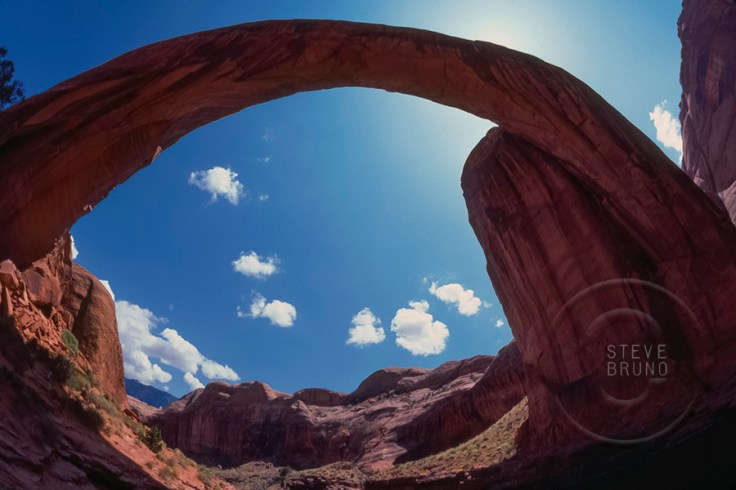
Rainbows made me think of curves, whether in the skies over southern Arizona, or frozen in sandstone at Rainbow Bridge National Monument, Utah.
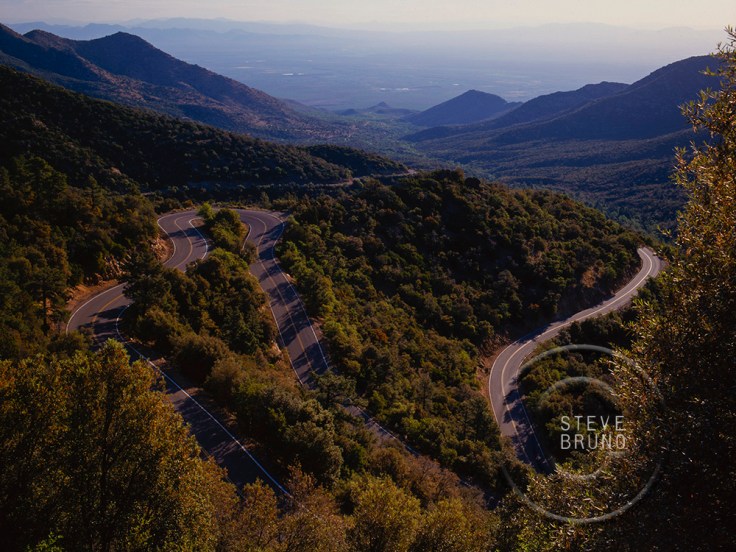
Curves in the road also came to mind, and this one has plenty. It’s called the Swift Trail, and it heads up the Pinaleno Mountains of Arizona. As you can tell, there’s nothing swift about this drive, but it can be a lot of fun, and takes you into a beautiful mountain range.
Also in Arizona, you will come across many of these Saguaro cacti. Although the younger ones are a single column, the older ones develop arms that often curve gracefully.
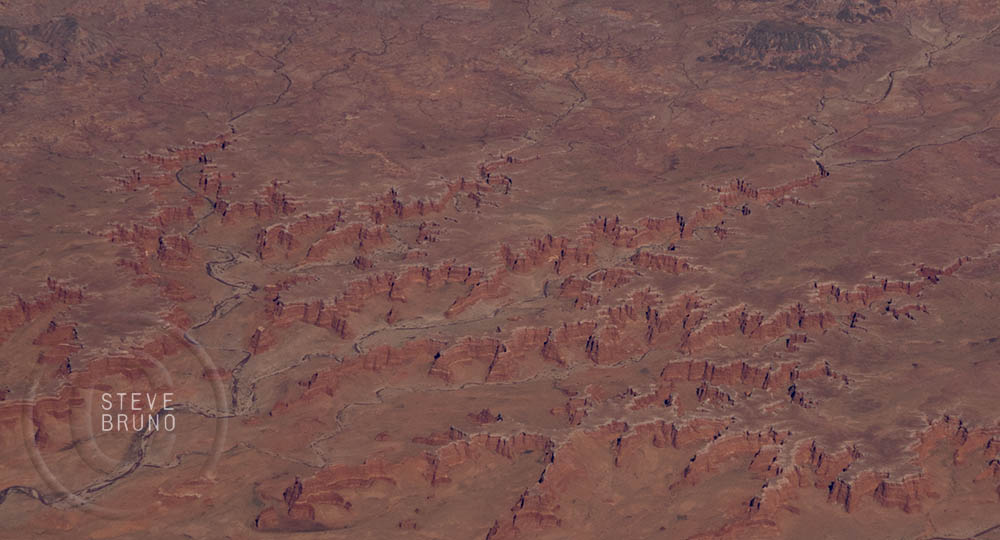
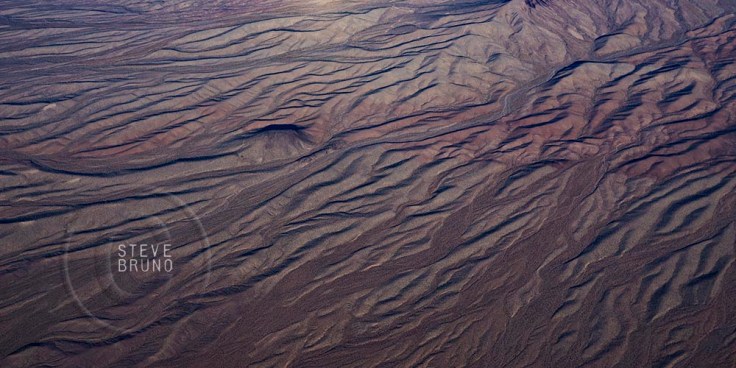
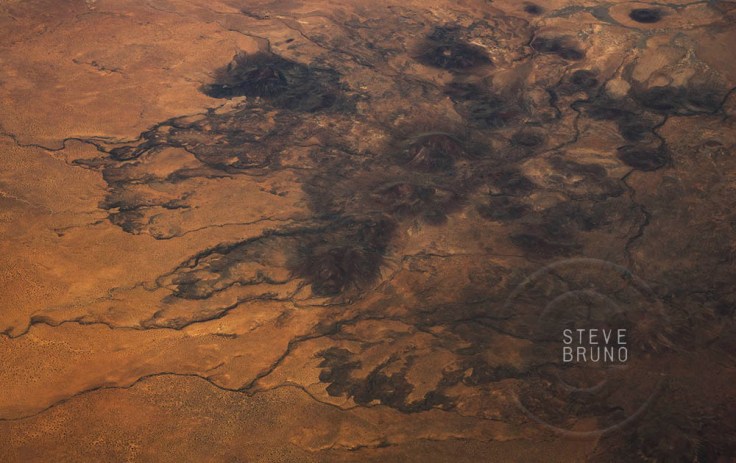
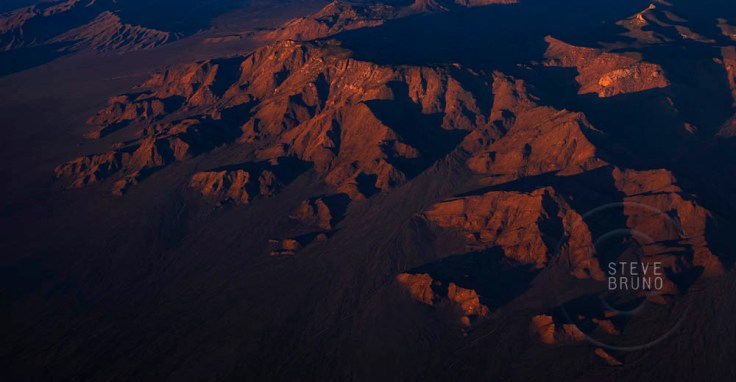
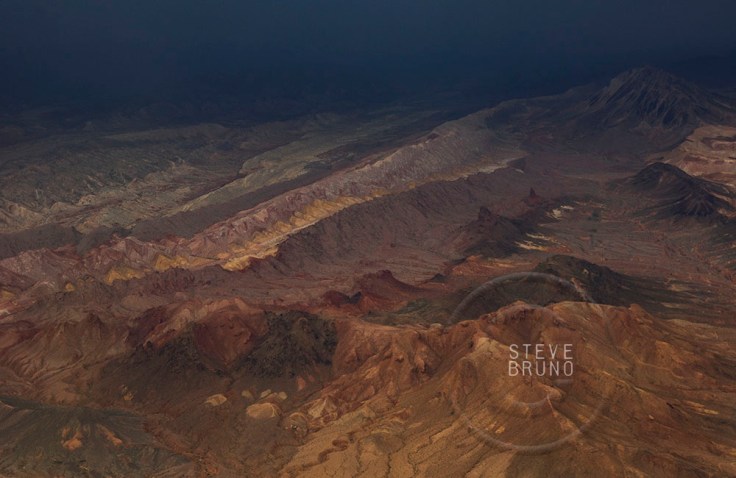
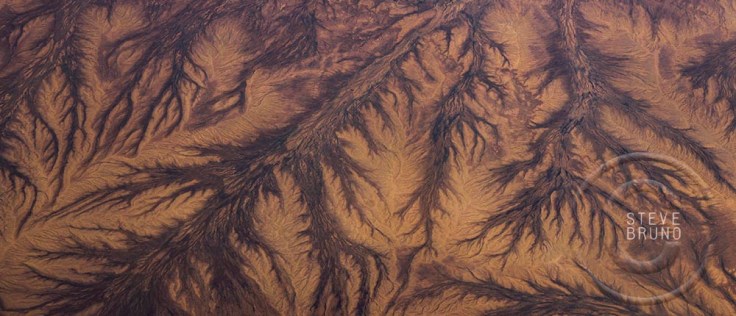
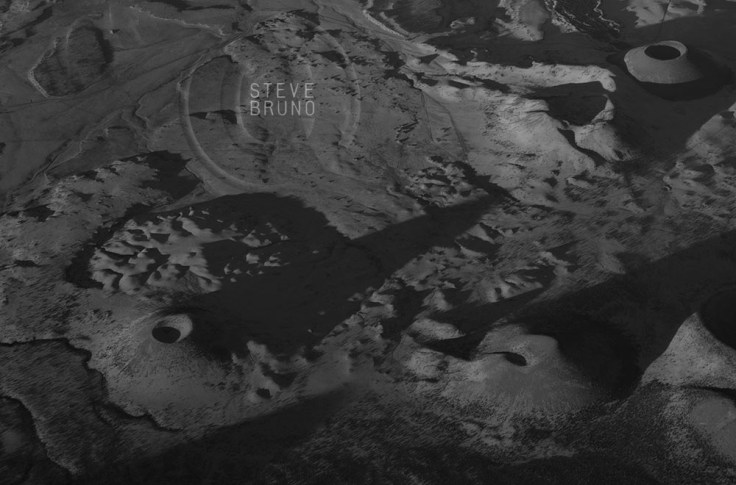
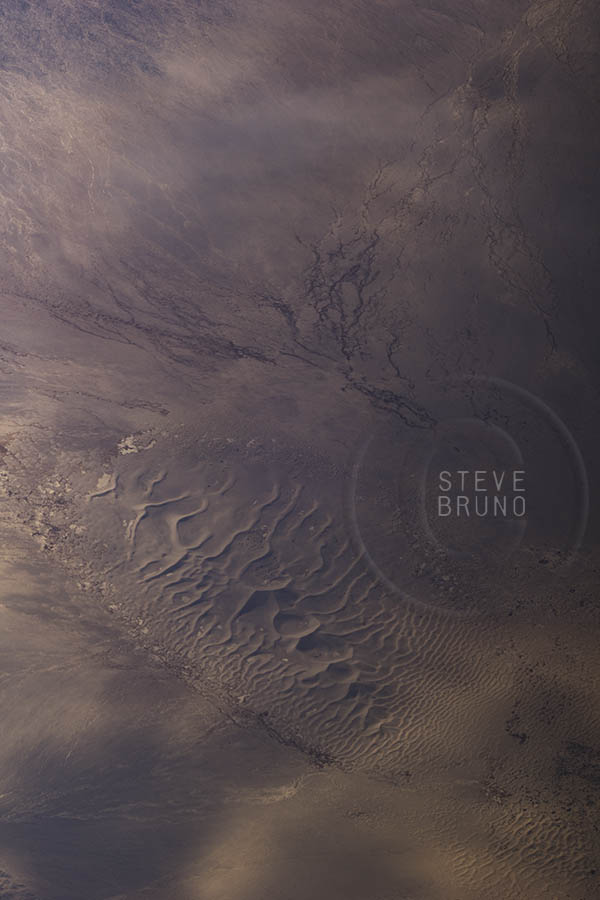
Well, the obvious answer is Earth, but several locations I’ve flown across bear resemblances to sci-fi movie settings. These are all desert locations, so it probably helps that I fly in and out of Las Vegas. This also means we’re still at an altitude low enough to see great detail.
Textures of the Mojave DesertHills in the desert of southern ArizonaMountains near Lake Mead at sunsetDesert ridges by stormlight outside of Las VegasWash patterns, northwestern New MexicoCraters Near FlagstaffDesert and dunes near Death Valley
The Daily Post Challenge for Abstract might just be my favorite one yet. I used to consider it the greatest compliment when someone would look at one of my images and say “That’s a photograph? That doesn’t look real!” Nowadays that usually means someone didn’t know when to say no to Photoshop.
The top photo is one I call Sandstone Wall Watercolor. This is straight off the film, no effects added. It was taken in a canyon where water was working its erosional magic, and the sunlight was just out of frame and bouncing light all around.
I have a few more favorites in the gallery below. Some are obvious as to what they are, some not so much. Details are in the captions in the gallery.
WordPress recently informed me that I have been on their site for a year now. To those of you who have followed, liked, commented or enjoyed my posts – Thank You!
It was a little over a year ago when I was spending way too much time on a computer because a leg injury was keeping me inactive. Those who know me know I don’t do well at sitting. I came across a page that explained why photographers should start a blog and listed some sites. I really had no idea what I was getting into, but I have a lot of photographs that never made publication, and many that have a story behind them. I was always disappointed when I came across other photographer’s websites and saw interesting images that had no words to convey the thoughts, motivation or process behind the image.
I suppose I should start with my title. Quite a few years ago, I had the chance to meet with Josef Muench. Josef was one of the pioneers of modern day landscape photography, and around that time an editor told me that Josef was still submitting photos to the magazine, some of which couldn’t be used because the emulsion had started to degrade. As I was talking with Josef, I asked him, “Out of all your photographs, which is your favorite?” He responded quickly with “The one I haven’t taken yet!” He was an inspiration with his images, but even more so with his philosophy. I want to reach that age and continue taking photographs that I still care about. That’s where the name Gottatakemorepix got its initiation.
I had a couple stories that I wanted to write when I first started, but I wasn’t sure how long I would keep this going. Then I started noticing blog posts that all had the words “Weekly Photo Challenge” in the title, and soon began posting those. I’ve participated in other blogger’s challenges, and as much as I enjoy seeing what other people respond with, I never knew how time consuming this could become. I also noticed a lot of people posting “Wordless Wednesday”. After doing a couple of these myself, I thought I can’t do this…I need words. So my alternative is Mid-week Mixings. This allows me to get away with Tuesday, Wednesday, or Thursday, too! To those of you that post every day, my hat’s off to you – I don’t know how you do it.
If you don’t see a post from me for a while, it’s a good bet that I’m travelling or just plain busy. My priorities are still real life, family, and friends before cyberspace. My end of December and beginning of January were way too busy to do a 2015 recap, so I’m going to do it here.
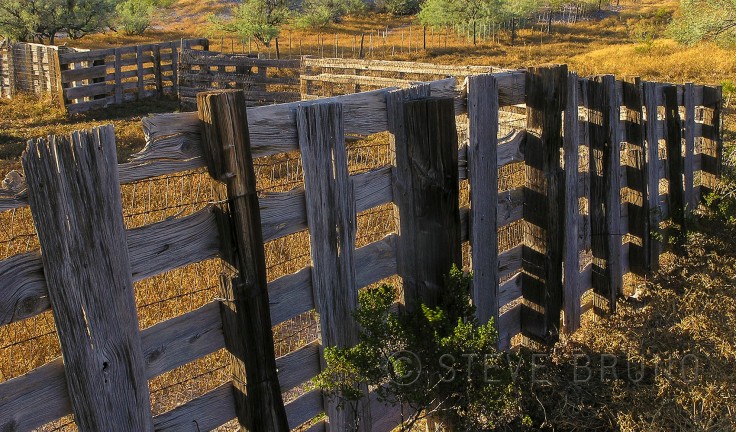
Old fence on a ranch in the desert, photo by Steve Bruno
While the most liked/commented images were in the Daily Post’s Challenges, many of you enjoyed these images from one of Cee’s Challenges
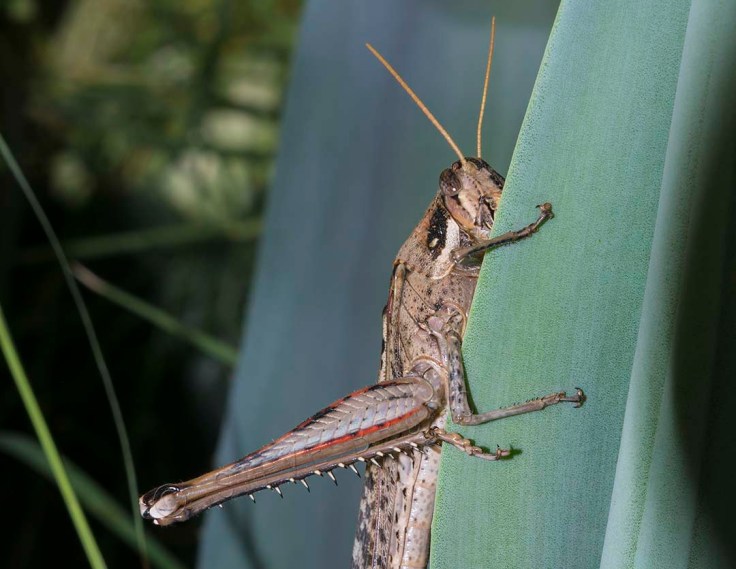
This grasshopper shot was another challenge that the blogging community seemed to enjoy
grasshopper clings to agave plant, photo by Steve Bruno
The Daily Post’s Symbol challenge gave me a reason to go out and photograph something that everybody and their brother has a shot of, and when I got there, I discovered more subjects fitting the challenge
Elvis impersonator performs under the Las Vegas sign. Photo by Steve Bruno
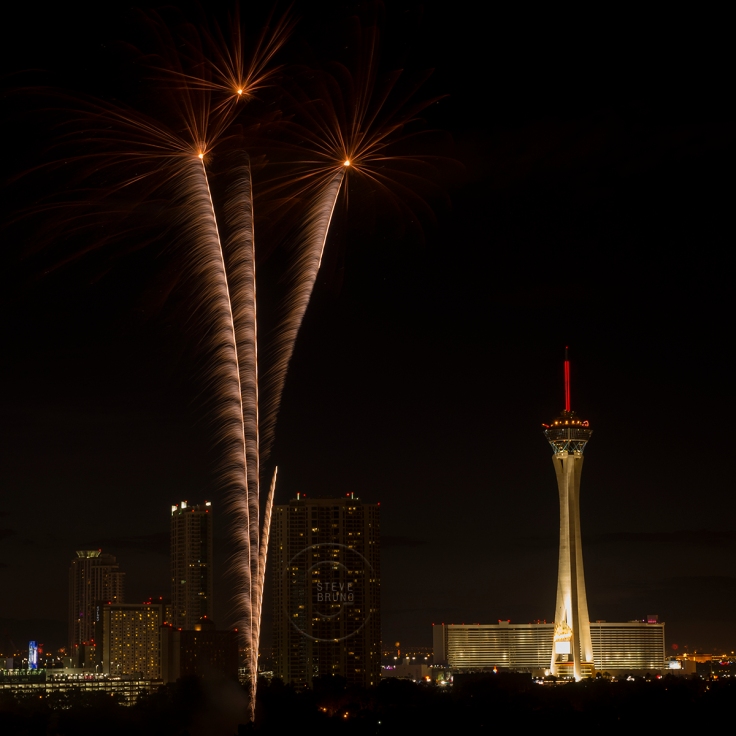
Although not a challenge, but close to home, I enjoyed capturing fireworks last summer
Las Vegas Fireworks July 2015. Photo by Steve Bruno.
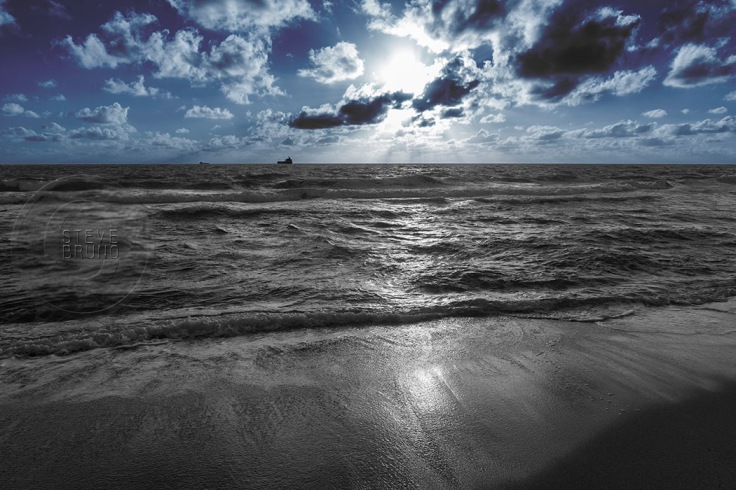
Away from the challenges, this one was a little departure for me, but has become one of my favorites, as well as yours
The Atlantic Ocean in early morning. Photo by Steve Bruno.
I’m sure I’ve mentioned it before that I really don’t enjoy shooting with clear blue skies, but I found a situation where it worked well
Crescent moon in the skies above an ocotillo plant in the Arizona desert by Steve Bruno
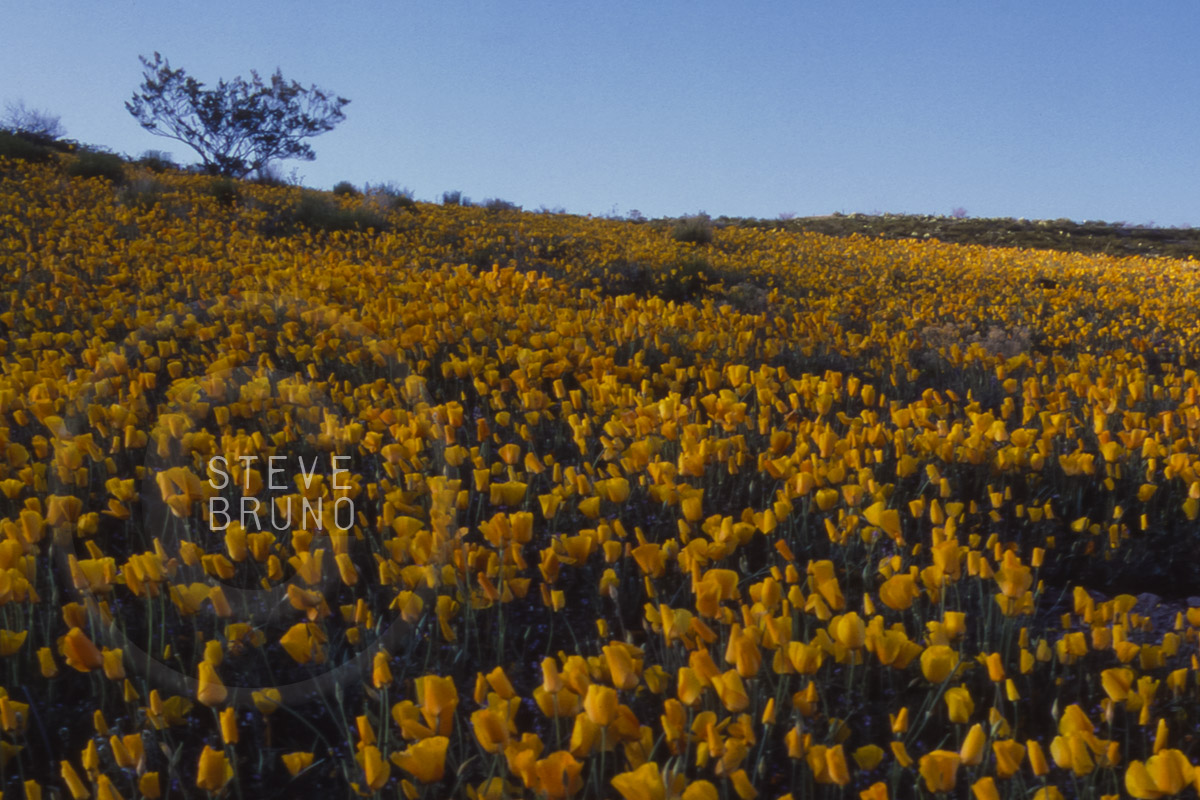
Late season bloom of yucca plants, as twilight approaches, in the Arizona desert by Steve Bruno
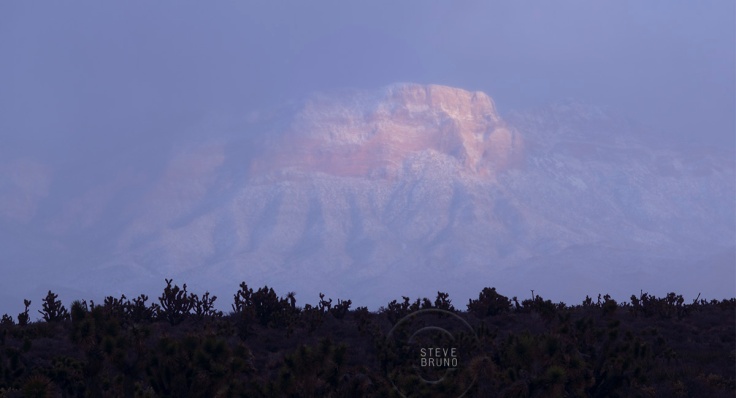
Weather is a little more to my liking for taking photos, and I showed this in one of my first posts of the year. I don’t know what grinder WordPress uses to compress images, but the first time I posted it did not look as good as it does on my screen. I like unique captures, and this is a favorite so far this year, and hopefully it looks better this time
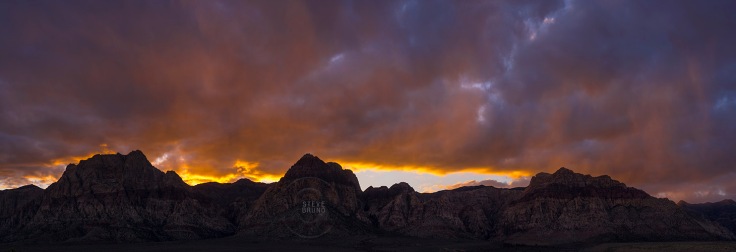
A window of sunlight shines through clouds in Red Rock Canyon, Nevada. Photo by Steve Bruno
Sunset over Red Rock Canyon, Nevada. Photo by Steve Bruno.
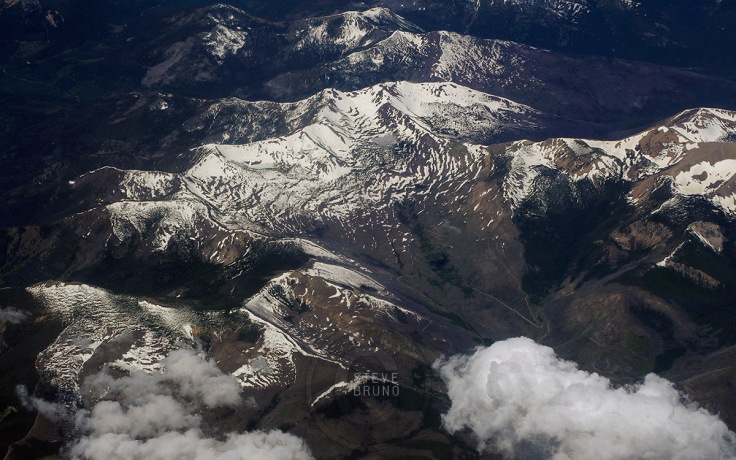
You know by now that I can’t resist the view out of airplane windows, and I have plenty of those from last year. Here’s one more that you haven’t seen yet. Over Montana, I believe
Aerial view over the Rocky Mountains. Photo by Steve Bruno.
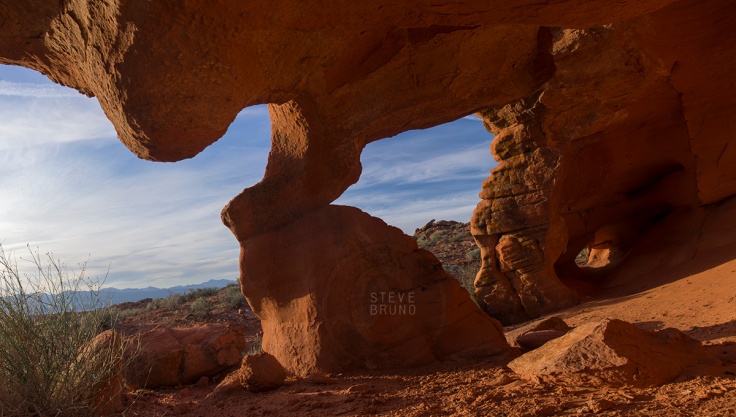
I can’t go a year without returning to my Muse, and here’s one from last year at Valley of Fire State Park
Sandstone cave in Valley of Fire State Park, Nevada. Photo by Steve Bruno.
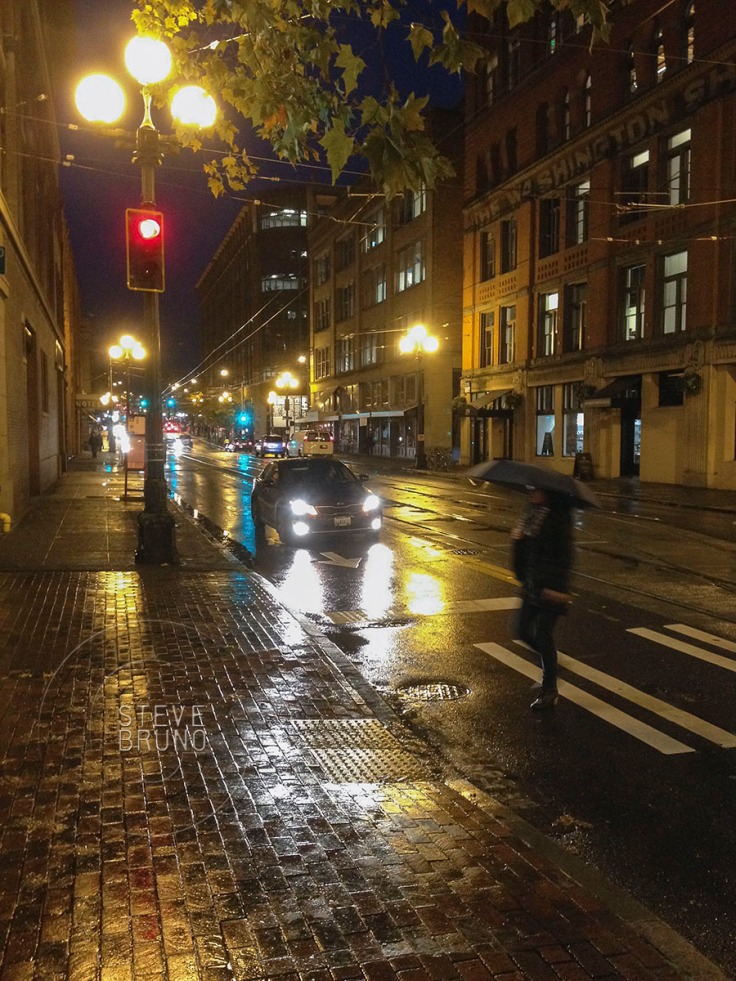
And lastly, I know phone cameras have improved, but I still consider my DSLR my real camera. My shots in the rain in Seattle last November started making me appreciate the phone a little more
Pedestrian in the nighttime rain in Seattle. Photo by Steve Bruno.
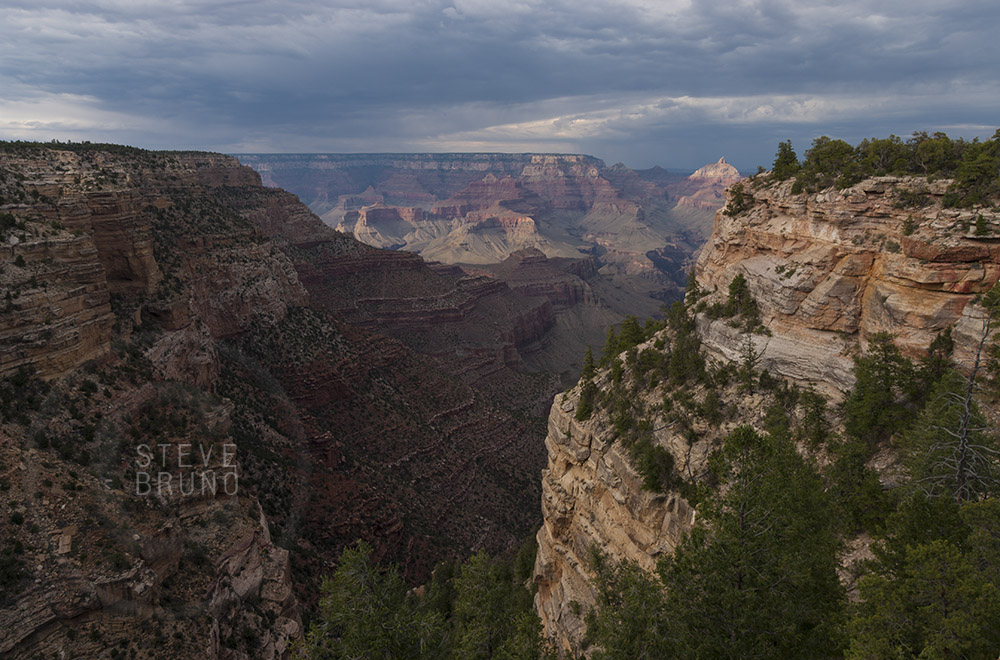
Although there are new studies which are saying the Grand Canyon may be much older, it is generally believed that the Grand Canyon is over 5 million years in the making. This is the first place I thought of when seeing this week’s Daily Post challenge of Time.
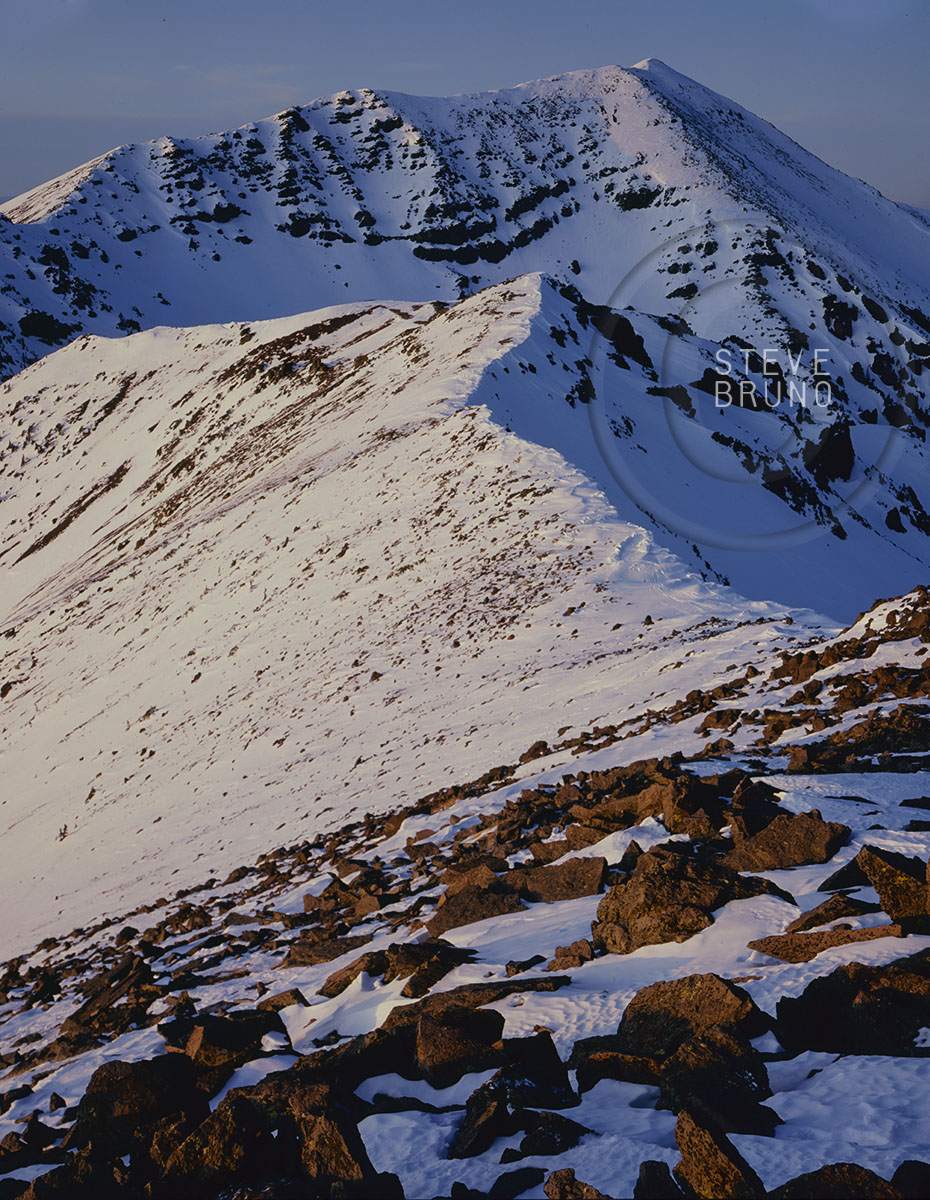
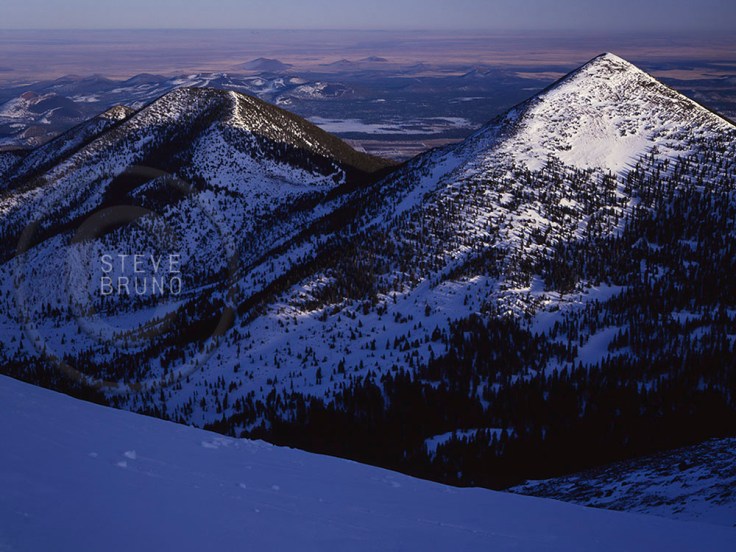
Back when I was younger, my best friend from high school years would come to visit me in Arizona. We were always looking for a camping adventure that was a little bit different, and I think I was the one who suggested going atop Arizona’s highest mountain, the San Francisco Peaks…..in early January.
The weather forecast called for typical sunny Arizona weather, with no storms predicted, so it seemed like a great idea. I was lugging the bulky heavy camera gear and tripod in addition to camping supplies, while my friend travelled relatively light. At least we didn’t have to carry much water!
As we found our way to the top and picked out a good spot for setting up the tent, we couldn’t help but notice that the rocks were exposed and there didn’t seem to be a lot of snow on the western slope. We weren’t on the absolute summit, but we were still above 12,000 feet, and above treeline, and above the people skiing on the mountain below us.
View from the summit ridge of the San Francisco Peaks looking east. Photo by Steve Bruno.
I managed to take a few photographs before the sun went down, and as we enjoyed our dinner the conditions were very calm. Shortly after getting into our sleeping bags, however, the breeze started to pick up. During the course of the night it continued to pick up, and by morning it was probably close to level 1 hurricane force winds. We had very lengthy ice stakes holding down the tent, but within minutes of us being out of the tent, the winds were removing the stakes and attempting to send the tent to the bottom of the eastern side of the mountain.
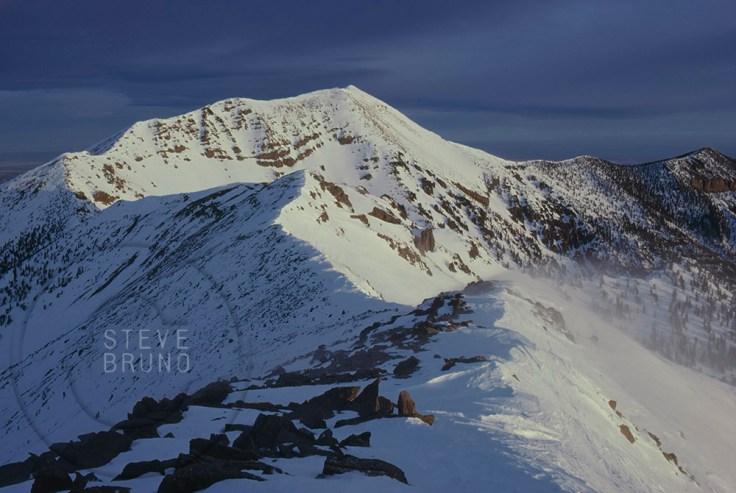
Although there were some high thin clouds, there was no moisture falling from them. This was just the result of the pressure difference from the front passing far to the north, and being exposed on a summit 5000′ above the surrounding plateau. I managed to take one photograph that morning. If you look closely in the lower right, you can see the snow being blown over the ridge. What you can’t see is me huddled over the camera and tripod in an effort to keep the camera steady (and within reach!)
High winds whip snow across the summit ridge of the San Francisco Peaks at sunrise. Photo by Steve Bruno.
Now that my camera gear no longer exceeds the weight of all my camping gear, this is an adventure I might consider again. I know what to expect when I see exposed rocks in a snowy landscape.
My work schedule has been crazy for about the last month, and it’s been amazing that I’ve found any time to check in on this blog. Fortunately, there was one break in the action, Christmas, where most of my family members gathered in Phoenix. Some of them wanted to go for a hike. Their criteria was a trail that was easy to get to, not too demanding, and had something to offer in a short amount of time. No problem, I have it covered!
Boulder Canyon Trail takes off from across the marina at Canyon Lake, east of Phoenix. Our group consisted of people of various ages and hiking abilities, and it was really just an excuse to be out with family and get in a little exercise. The trail doesn’t have any steep sections in its entire length, and we just went to the point where one can see into Boulder Canyon. This was probably less than a mile from the parking lot.
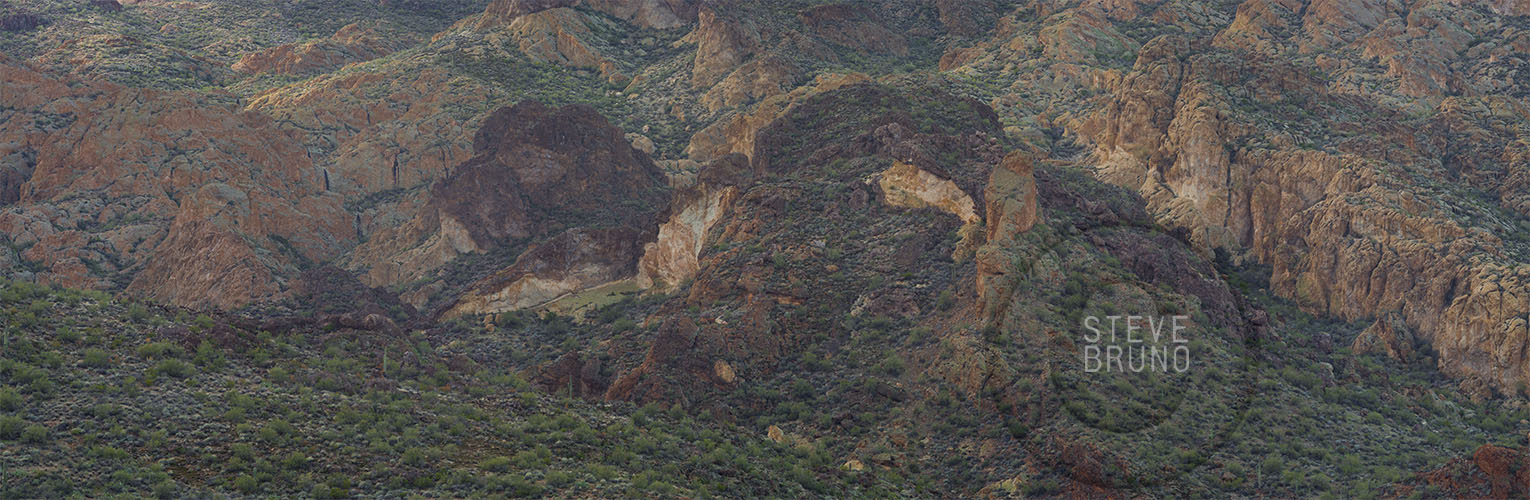
Colorful cliffs above the early part of the trail in Boulder Canyon. Photo by Steve Bruno.
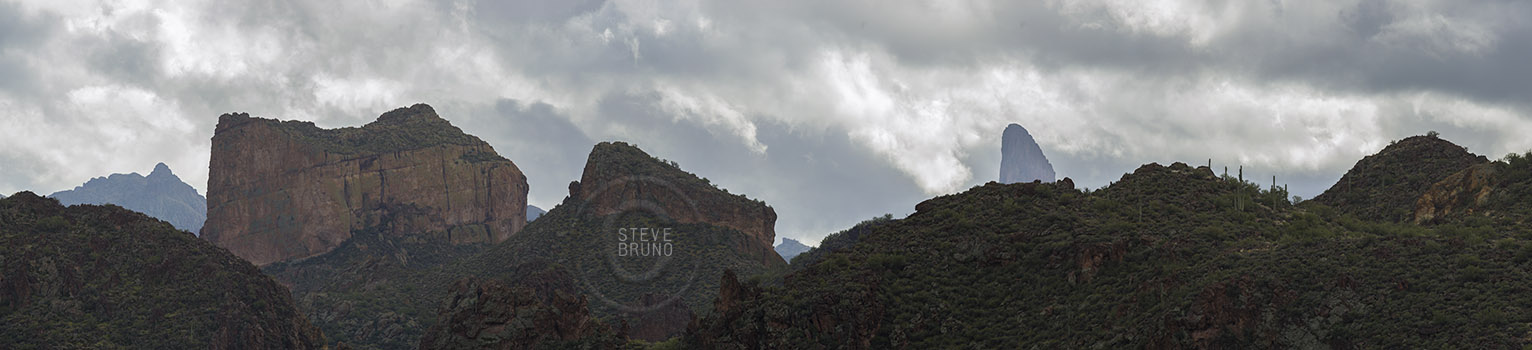
In the early part of the trail there is an overlook of Boulder Canyon’s cliffs, and Weaver’s Needle in the Superstition Wilderness, Arizona. Photo by Steve Bruno.
I had taken this trail further a number of years before. After the overlook, the trail descends into Boulder Canyon, and continues in the bottom for a couple miles. There are no steep grades or any boulder hopping, as the name might suggest. It’s probably close to the four mile point where the canyon gets quite photogenic. The Superstition Wilderness is full of spires and odd shaped rocks, but there is one of the most interesting peaks in this range just before the trail heads into the narrowest part of the canyon. In this narrow part, the bottom of the canyon becomes mostly solid rock, and if you time it right – water. The following photos are from my previous trip.
Sunlight starts to make its way into Boulder Canyon. Photo by Steve Bruno.
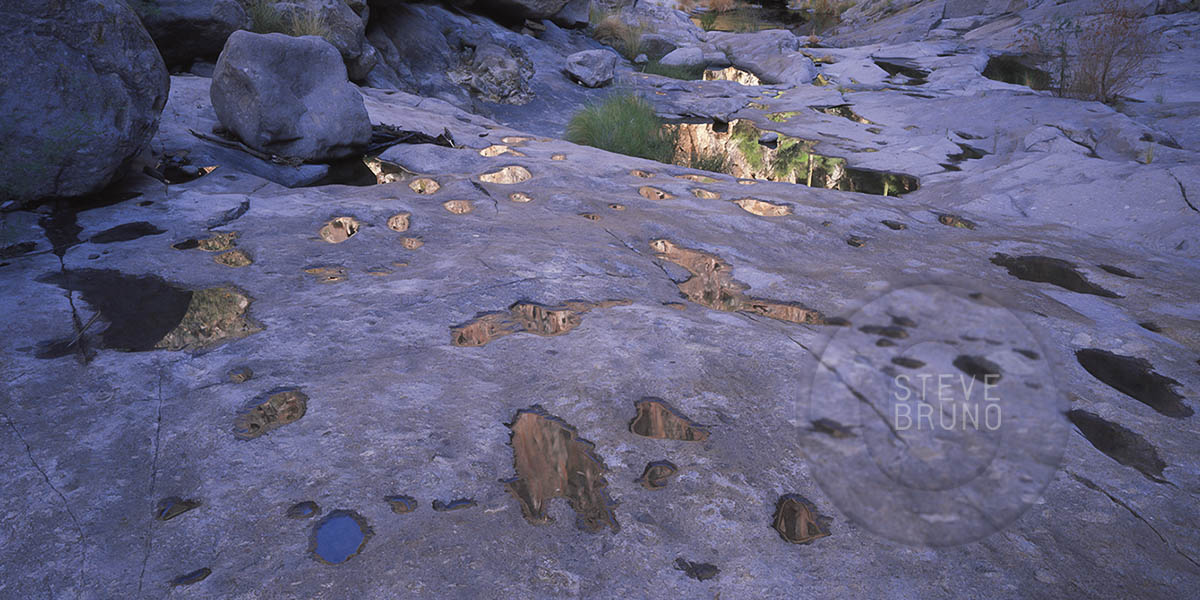
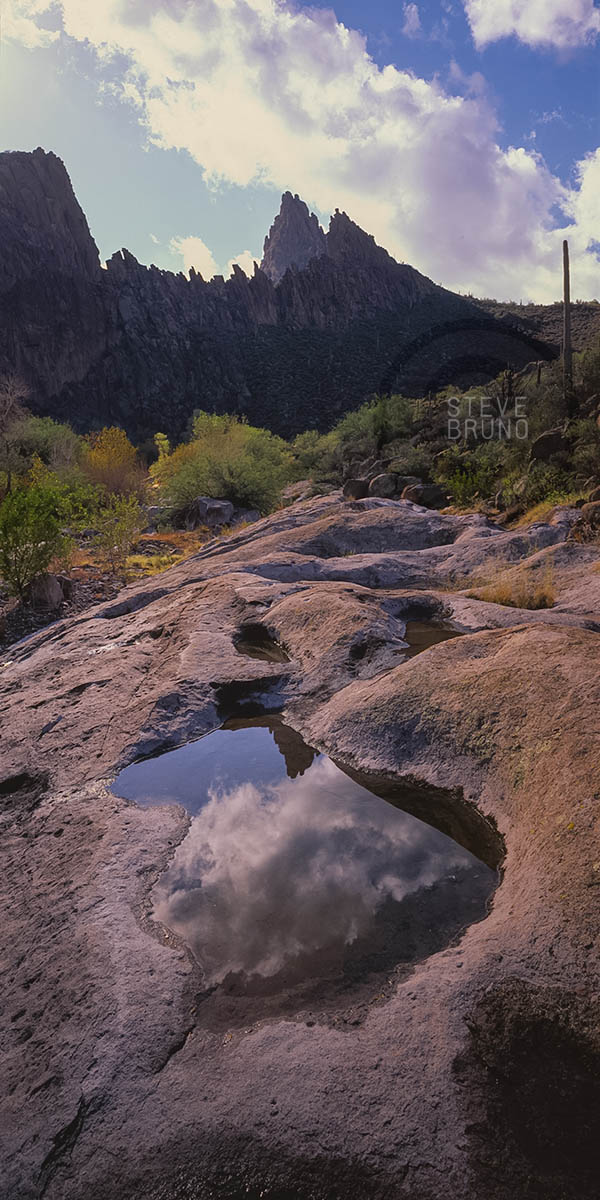
Tiny rainwater pockets in the canyon bottom of Boulder Canyon, Superstition Mountains, Arizona. Photo by Steve Bruno.
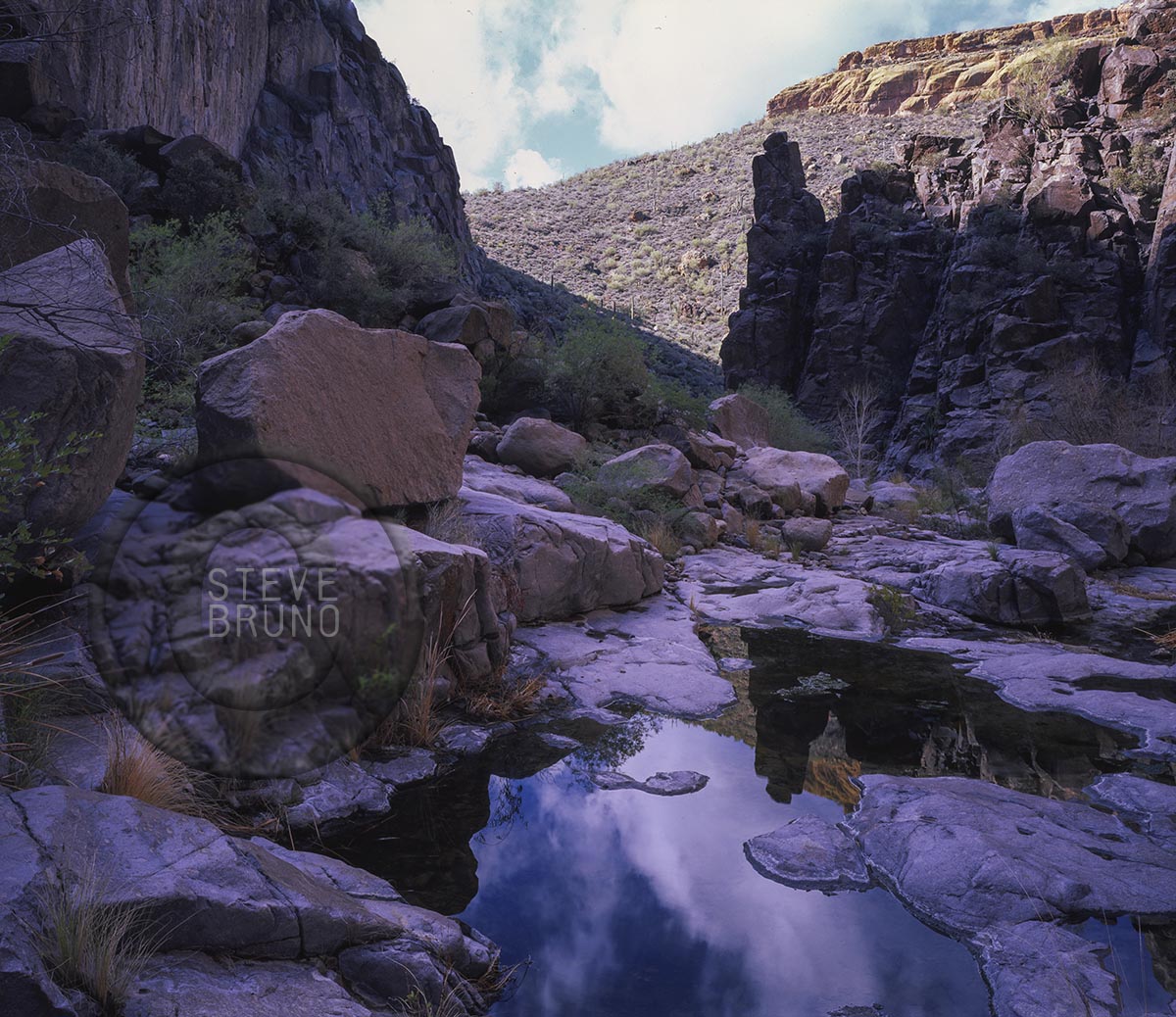
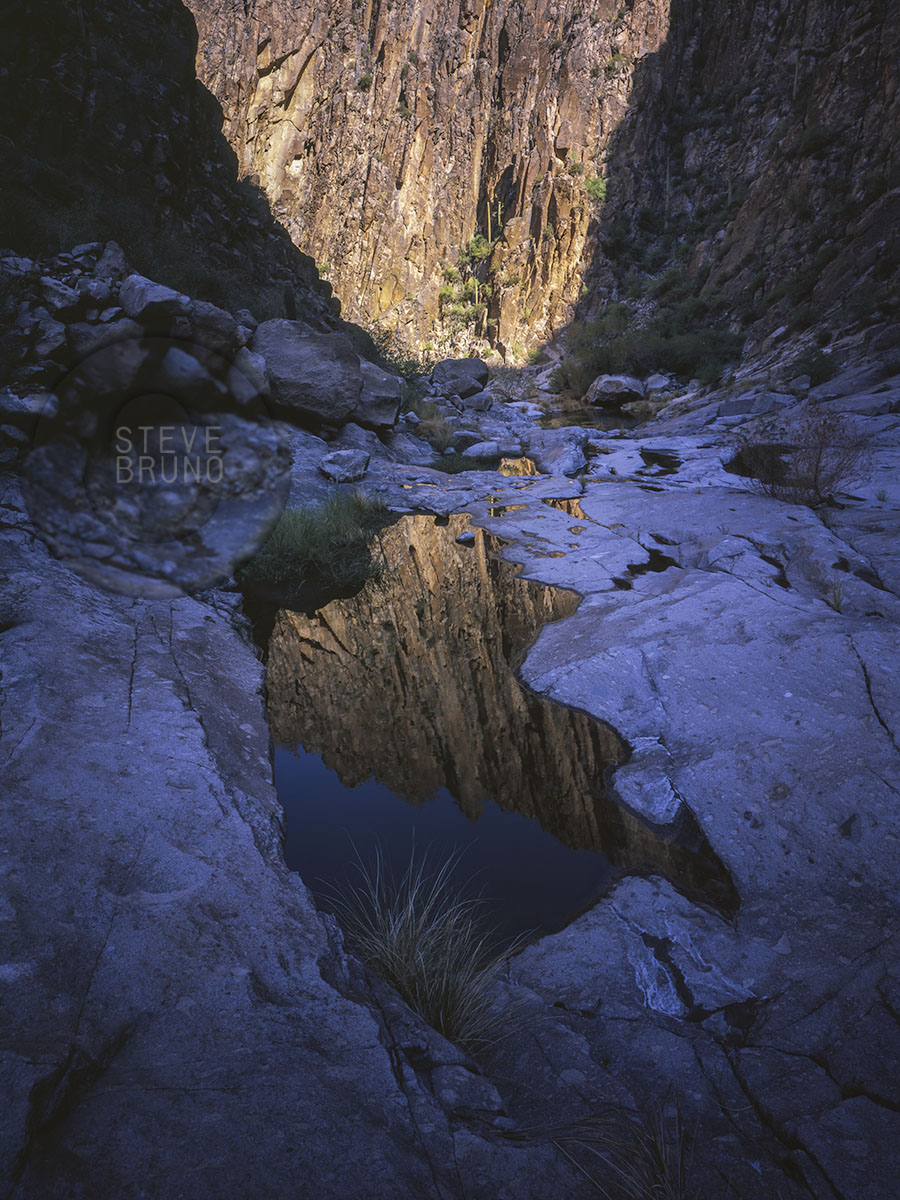
Sunlight at the end of the canyon, reflected in a pool in Boulder Canyon, Superstition Wilderness, Arizona. Photo by Steve Bruno.
Jagged peaks above Boulder Canyon, Superstition Wilderness, Arizona. Photo by Steve Bruno.
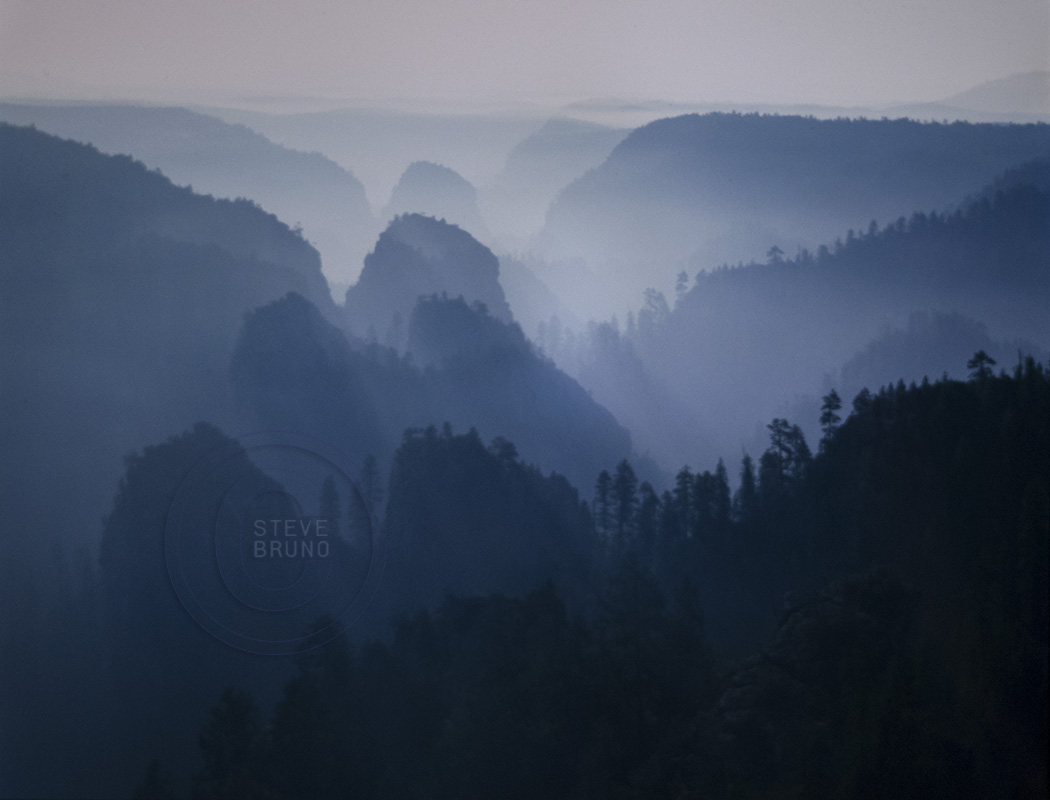
In my first year of shooting with a 4×5 camera, there were two occasions where I ended up double exposing a sheet of film because I wasn’t paying enough attention to the dark slides as I placed them back into the film holders them post-exposure. Oddly enough, both mistakes turned out really well, and encouraged me to practice this deliberately from time to time.
This shot was taken overlooking the West Fork of Oak Creek Canyon in Arizona. I took one exposure with the closest thing I had to a ‘standard’ lens, then switched to a more telephoto lens, thinking I was exposing a different sheet of film. The enhanced layering effect made this one my favorite mistake.
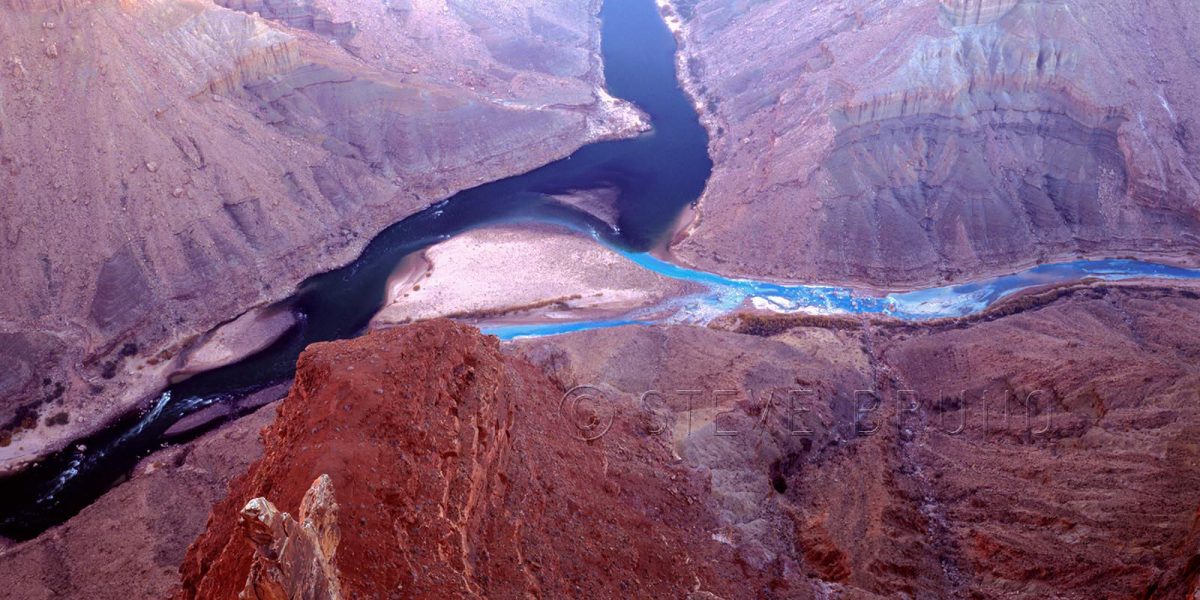
The Grand Canyon is one of earth’s special places, and even in special places you come across spots that are extra incredible. The photo above is the confluence of the Little Colorado and Colorado Rivers in Grand Canyon National Park, Arizona. During the majority of the year it looks like this. The turquoise colored waters of the Little Colorado, coming in from the right, are fed from a highly mineralized spring about six miles upstream. The Colorado’s waters come from Glen Canyon Dam, which filters out most of the sediment, leaving a deep green hue to the water, when the sunlight hits it. If there is a flood in the vicinity, either, or both, will turn muddy before returning to this two tone mix.
For this week’s challenge, I thought the changing of the Little Colorado’s waters after mixing with the larger volume of the main river showed the visual aspect of change. But there’s a far deeper issue of change at stake. The photo above is in National Park property, but about a mile east, just outside the right edge of the frame, is the boundary with the Navajo Indian Reservation.
A project called the Grand Canyon Escalade is still being considered to be built in the Navajo lands at the edge of the national park. The project’s main feature would be a gondola estimated to bring up to 10,000 people a day into the canyon. At the bottom would be restaurants, shops, an amphitheater and elevated riverwalk. You can also add toilets and garbage to that list. On the rim would be hotels and an RV center plus more of the previously mentioned items. They seem to have omitted where the water supply would be coming from.
The Escalade idea came from developer R. Lamar Whitmer, with the project offices based in Scottsdale, Arizona. Mr. Whitmer has several arguments for his cause, including making this area “accessible to those who might never get to enjoy the tranquil isolation at the bottom of the canyon”. Have you been to Mather Point on the South Rim, Mr. Whitmer? There can easily be a thousand people there at sunset, and the words “tranquil isolation” are the furthest thing from my mind. I can’t imagine experiencing tranquil isolation with thousands of strangers in this tight little pocket of the canyon. That is where raft trips fill the need quite well.
The major selling point of this project was jobs for the Navajo Nation, where unemployment is incredibly high. Nobody could possibly be against that, or could they? Written into the contract is a non-compete clause for 40,000 acres along access roads. It seems all those jewelry stands run by nearby families would have to go, among others. And how about that corporate address? I would have an easier time believing that the Navajos’ best interests were at stake if it was based in Window Rock, or Cameron, or even Flagstaff. Are the Navajo workers supposed to move or commute to Scottsdale? Or are the Navajos not even being considered for corporate level jobs?
This project is completely in the hands of the people of the Navajo Nation. There is nothing that US citizens or the US government can legally do to prevent this from becoming reality. The nearby Hopi tribe has no say in the matter, either. The spring which feeds the Little Colorado is one of the Hopis’ most sacred sites. Fortunately, newly elected Navajo President, Russell Begaye, is against the Grand Canyon Escalade. This is probably the best news to come about since this idea first started. His predecessor was completely for it.
In addition to the impact in the immediate area, this eyesore will be visible from many points along the South Rim, and those points on the eastern drive of the North Rim. The spot I was standing, even though considered backcountry, used to have a rough road leading all the way out to the overlook. Very few people knew of this, but it only took a couple of disrespectful people, having bonfires and leaving trash, to make it so you have to walk the last five miles now. I wonder what the impact will be when the numbers are in the thousands?
I really don’t want to add this to my historical photograph collection.
In response to The Daily Post’s weekly photo challenge: “Change.”
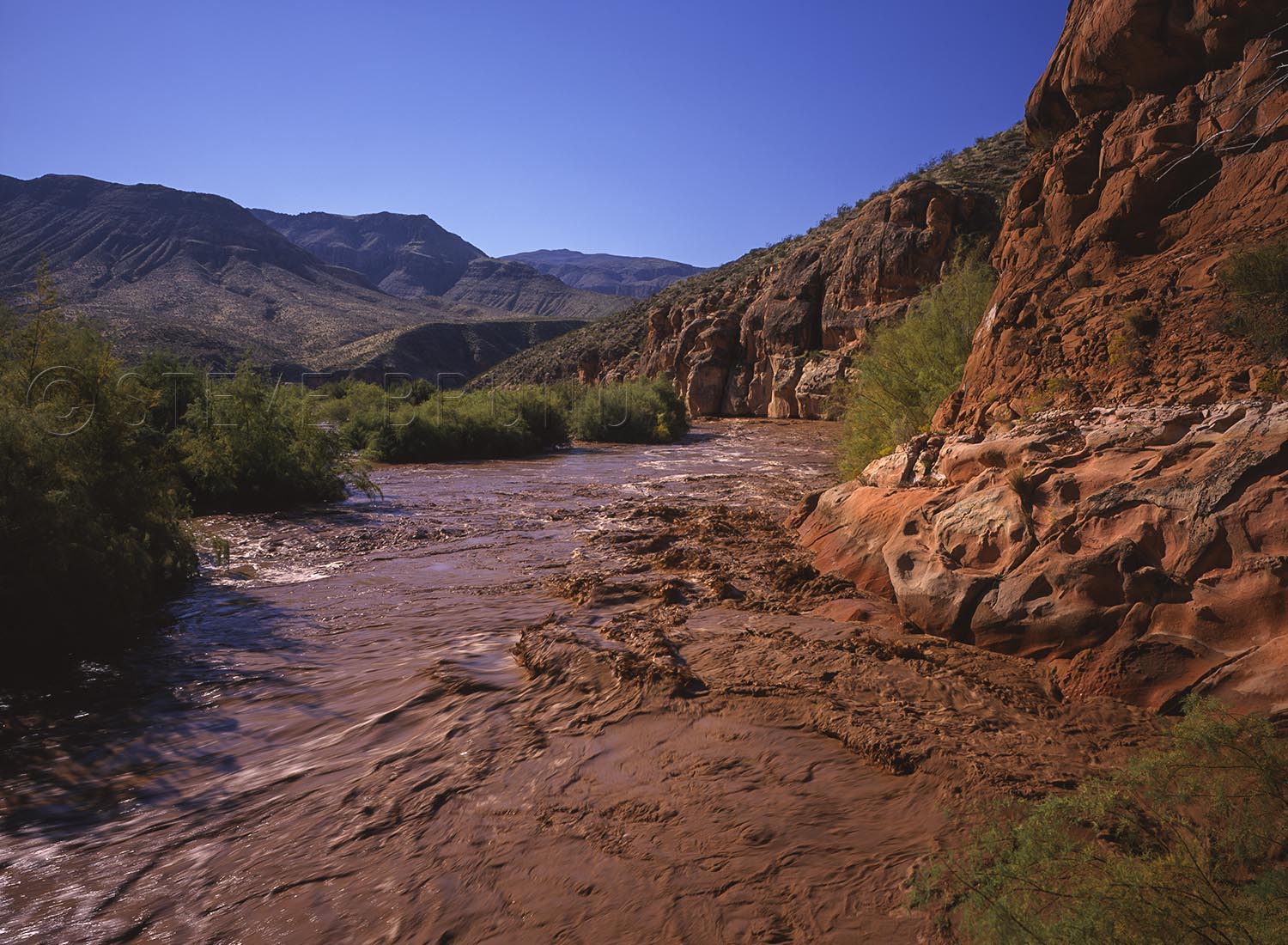
This is what we faced one morning a few years ago when we planned a trip into the Paiute Wilderness in northwestern Arizona. During the majority of the year, the water of the Virgin River would be mostly clear and about ankle to calf deep here. In the parts where the river channel narrows to the length of your average rental car, it is still only knee to thigh deep. At this point, you can certainly feel the pull of the water, yet it is not dangerous.
Upon our arrival, we knew we had to scrap our plans. One single thunderstorm had dumped upon the headwaters of the river, about thirty miles away, during the course of the night. We could kick up dust here.
On Monday, hikers died in a narrow slot canyon in Zion National Park, Utah. Rangers had given them a warning about potential flooding, but they can’t stop people from going unless flooding is imminent or occurring. It is up to the discretion of the visitors to proceed, and once this has happened, there is no way to warn them of changing weather. In canyon country, you have no way of knowing unless it’s directly above you.
On August 14, 1997, eleven hikers perished in a flood in Antelope Canyon. A photographer friend of mine was there that day, and was one of several people pleading with the tourists not to proceed into the canyon. The tourists had already discussed the conditions, and voted to continue, but they weren’t from around here. Besides, it wasn’t raining there, either.
I get it. People plan a trip and try to see as much as they can, and end up on a tight schedule. A little rain shouldn’t interfere with that, right?
This is the desert, and a little rain goes a long way. Literally. Many, many miles sometimes.
To see an example of what not to do in a flood, watch this video on Youtube. These are the stupidest people, and because they survived, the luckiest people you might ever come across. I wanted to give them credit for making a wise decision when they seek higher ground in the earlier portion of the video, but then they resume when the rain seems to let up. Tell me you’re not scratching your head by the end of this video thinking what are these people doing?
I’m certain this week’s news about hikers in a flood will not be the last of its kind. I just know there’s no photograph in the world that justifies going into a narrow canyon when there’s rain nearby. Other links to flash floods will show up when you watch this video. I don’t want my last words to be “Should I keep filming this?”
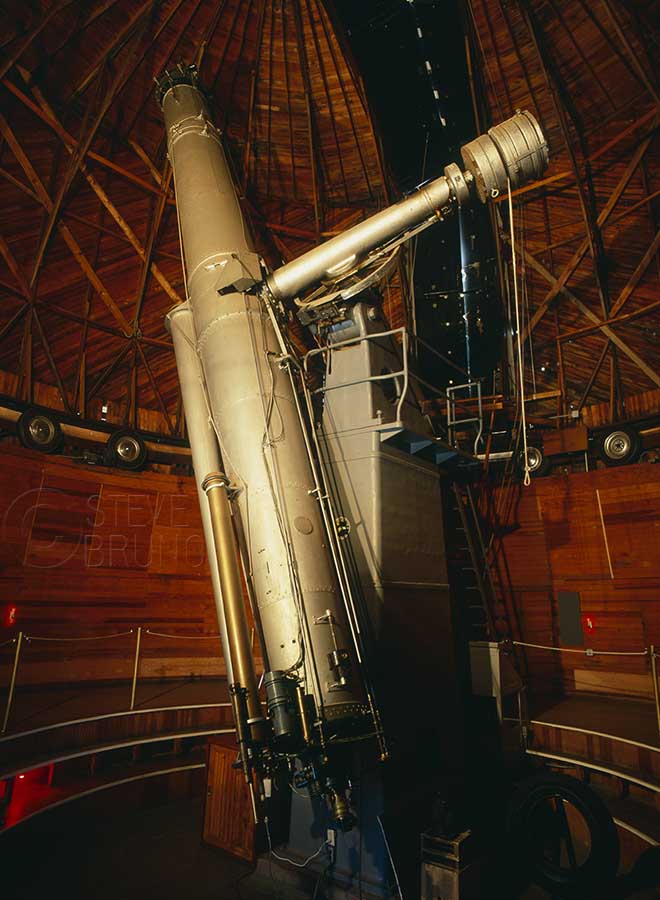
The 24 inch Alvan Clark refractor telescope, used in the discovery of Pluto. Lowell Observatory, Flagstaff, Arizona, photo by Steve Bruno
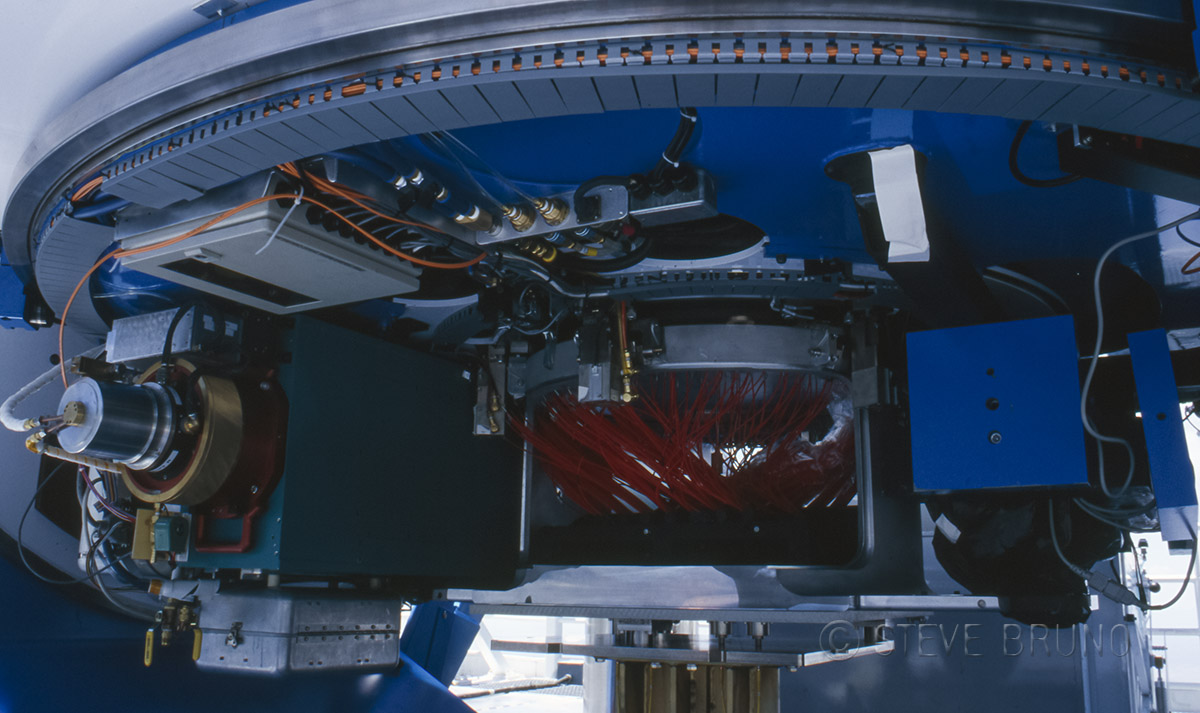
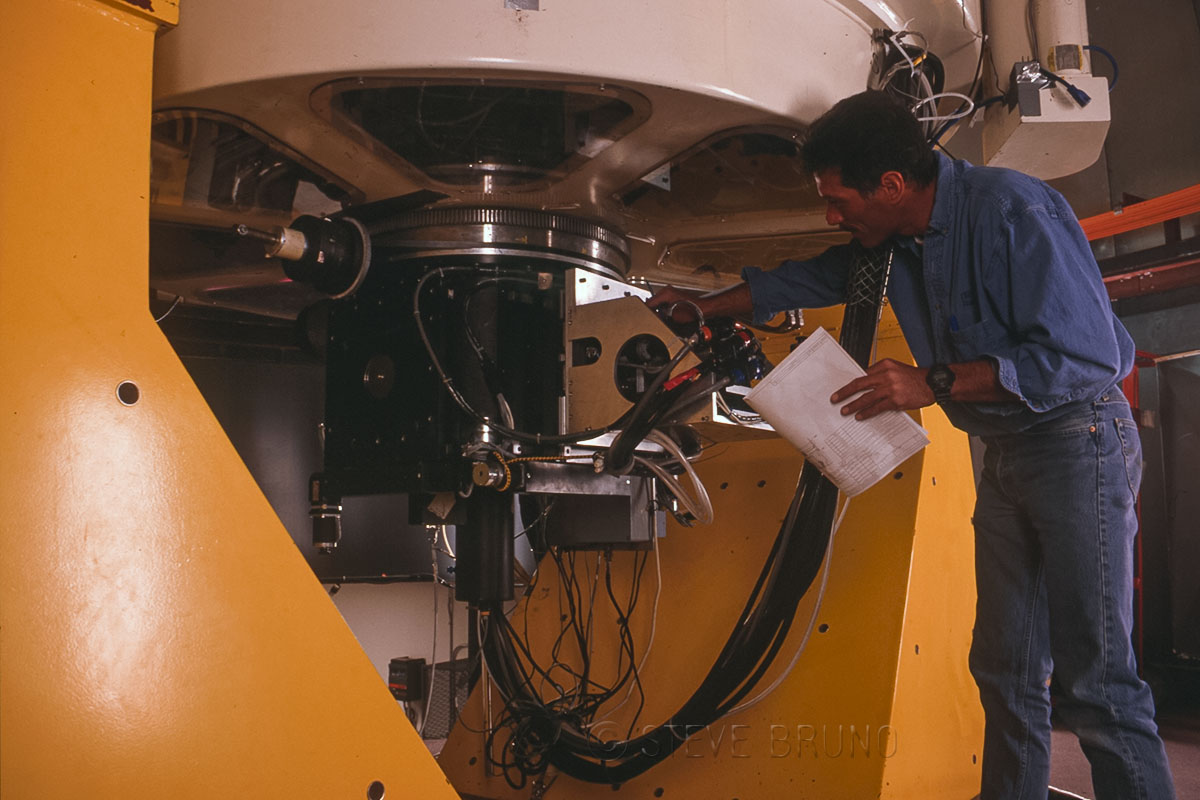
The science of astronomy has come a long way since Percival Lowell sat in his chair peering through this once high-tech telescope at the Lowell Observatory in Flagstaff, Arizona. It has been many years since someone “looked” through a large telescope of the magnitude you might find at any of the major observatories in the world. Instead, astronomers sort through large amounts of data fed to their computers from the instrumentation at the receiving end of these technological works of art. The romantic notion of someone peering through a telescope towards a new galactic discovery exists only as a Hollywood vision. If only they were fitted with an eyepiece – the views would be incomparable.
The underside to a modern telescope – no eyepiece here, just electrical components. Photo by Steve Bruno
Astronomer checking on equipment on one of the telescopes on Mount Graham, Arizona. Photo by Steve Bruno
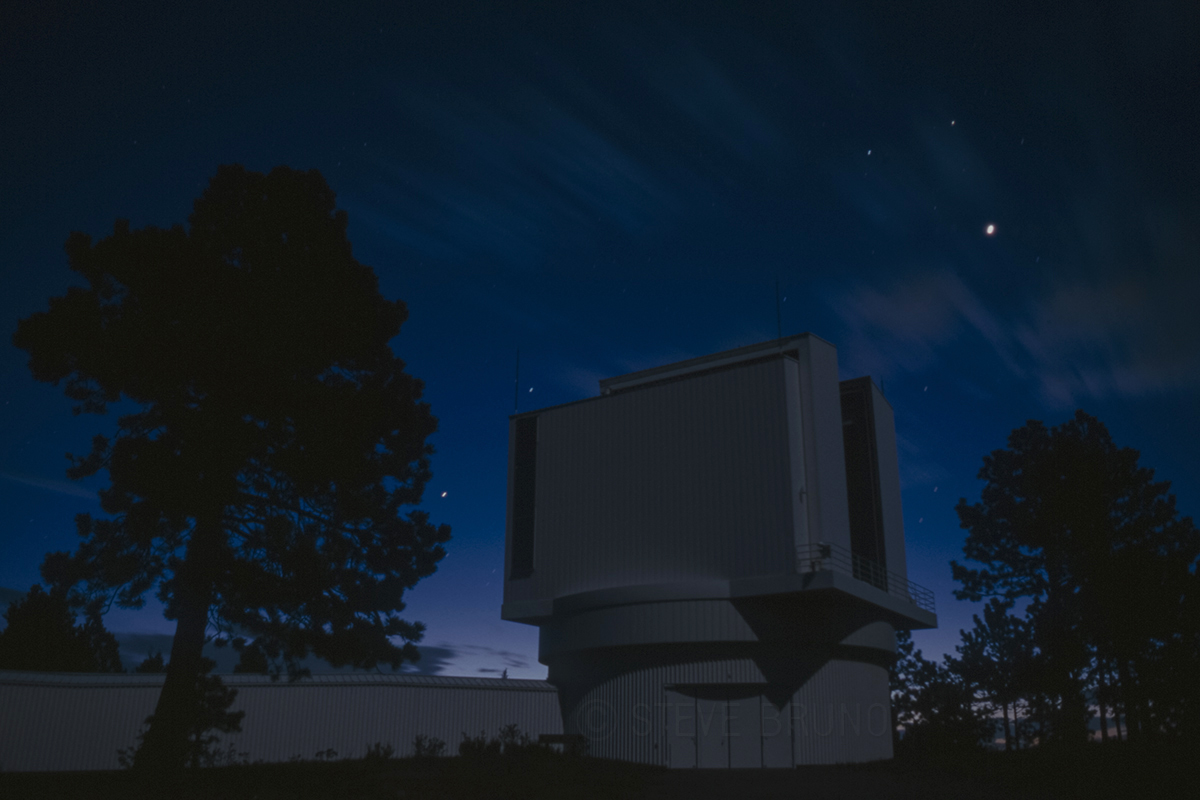
The start of an evening’s work at the Apache Point Observatory in New Mexico. Photo by Steve Bruno














 Steve Bruno Photo
You must be logged in to post a comment.