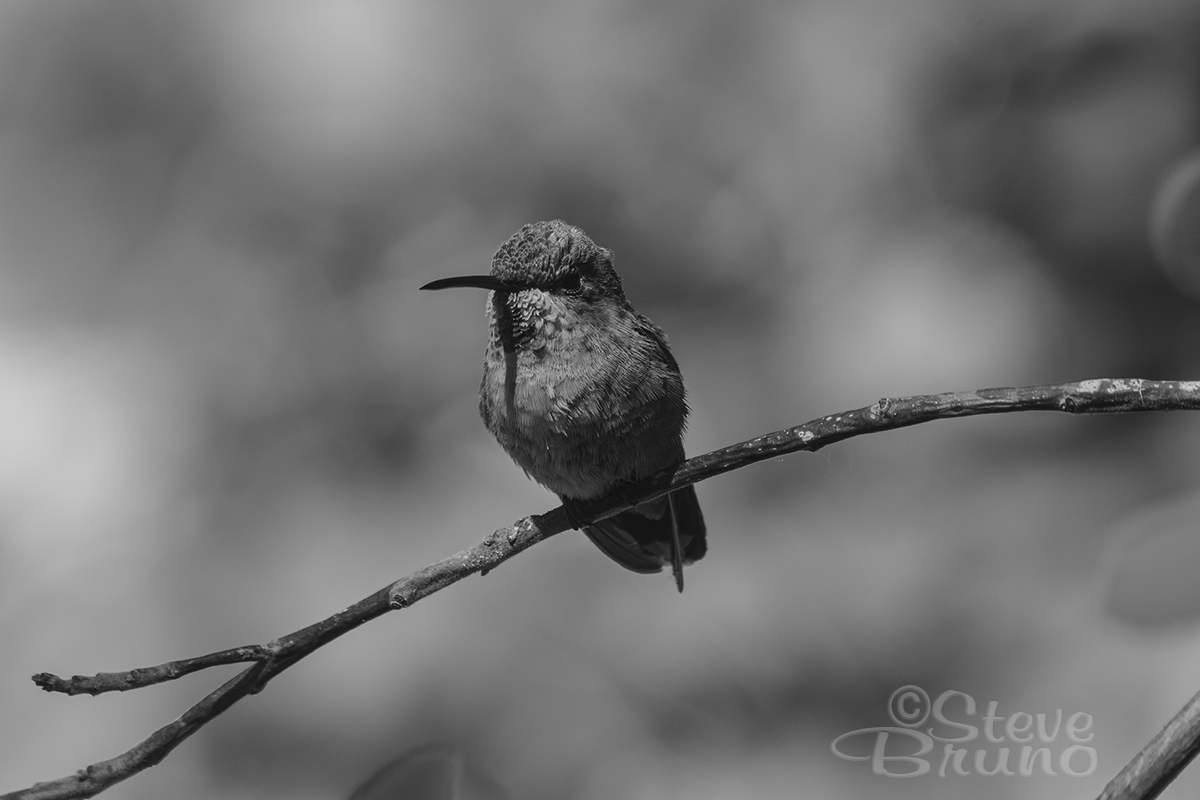
About a month ago, when things were still cool, I returned to a hike I had done three weeks prior. In a spot close to where I encountered a dragonfly on that previous visit, I saw this hummingbird. He had little tolerance for me being close, so this was through a decent telephoto lens. The tree he was favoring was swaying in the breeze, so he was moving in and out of the shadows while he perched on this branch. I just kept clicking until I was sure I had some variations I liked.
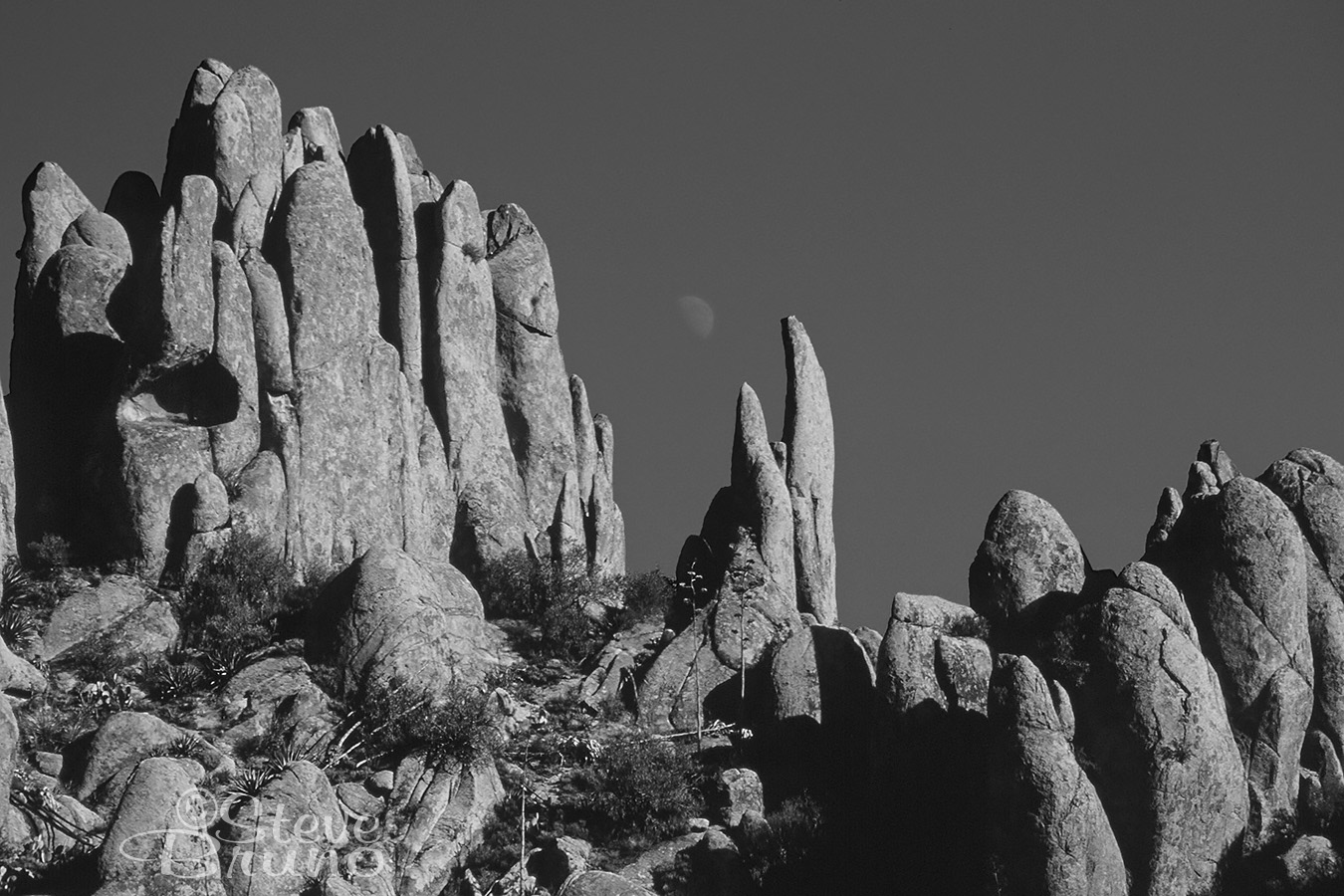
As with most people, I’ve had some time to catch up on a few things lately. I came across this photo in my files and thought it was perfect for a b&w conversion. This is a glimpse of some of the many pinnacles that decorate the summit of the Superstition Mountains near Phoenix, Arizona.
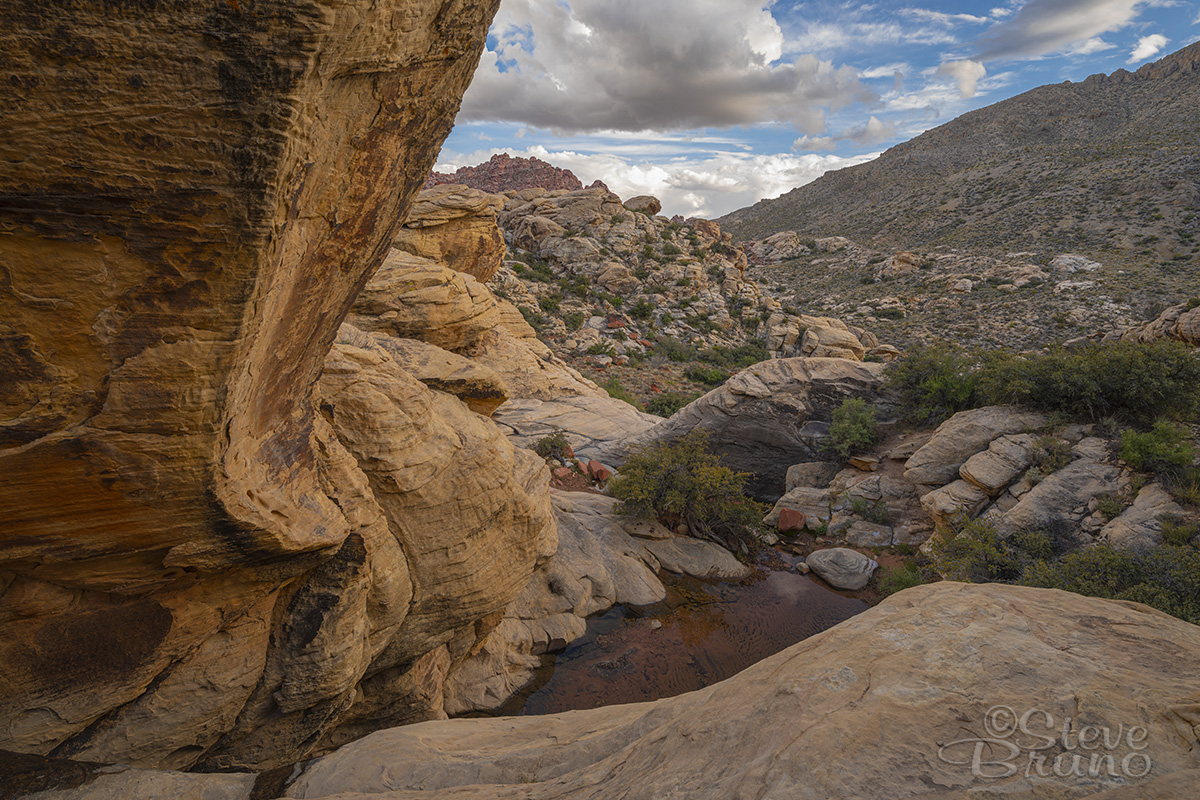
About a half year ago, I suffered a severe leg injury which kept me from being outdoors with my camera. A couple weeks of being mostly bedridden and using crutches to get around eventually gave way to being able to do some work and the start of physical therapy. My physical therapist was hesitant about me hiking at first, so my first couple trails were relatively flat. No backpack filled with tripods or cameras either, just a phone. Earlier this year, I finally made a hike with all the gear on a trail that had more difficulty involved. I could feel the difference of the terrain versus just being in therapy. I can’t imagine how long I would have been out if I wasn’t taking care of myself before this accident, and now that we’re all being asked to stay home, I realize I need to keep moving more than ever.
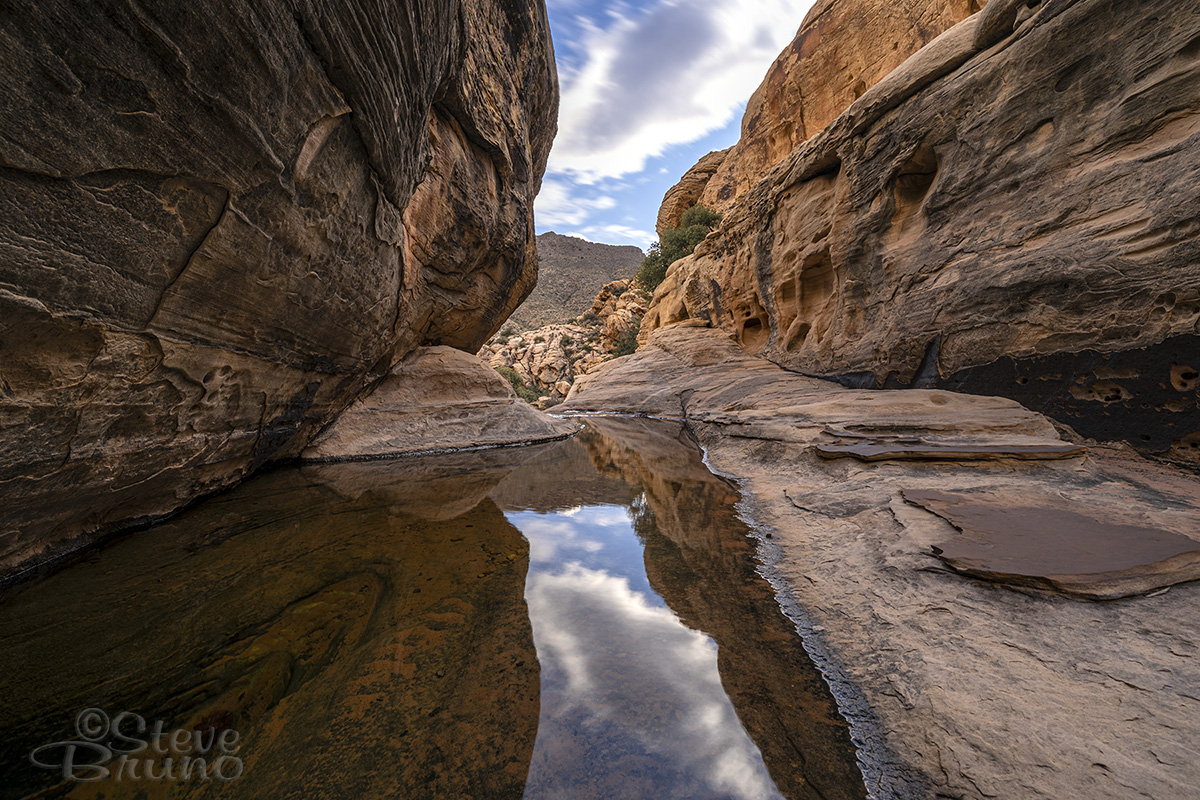
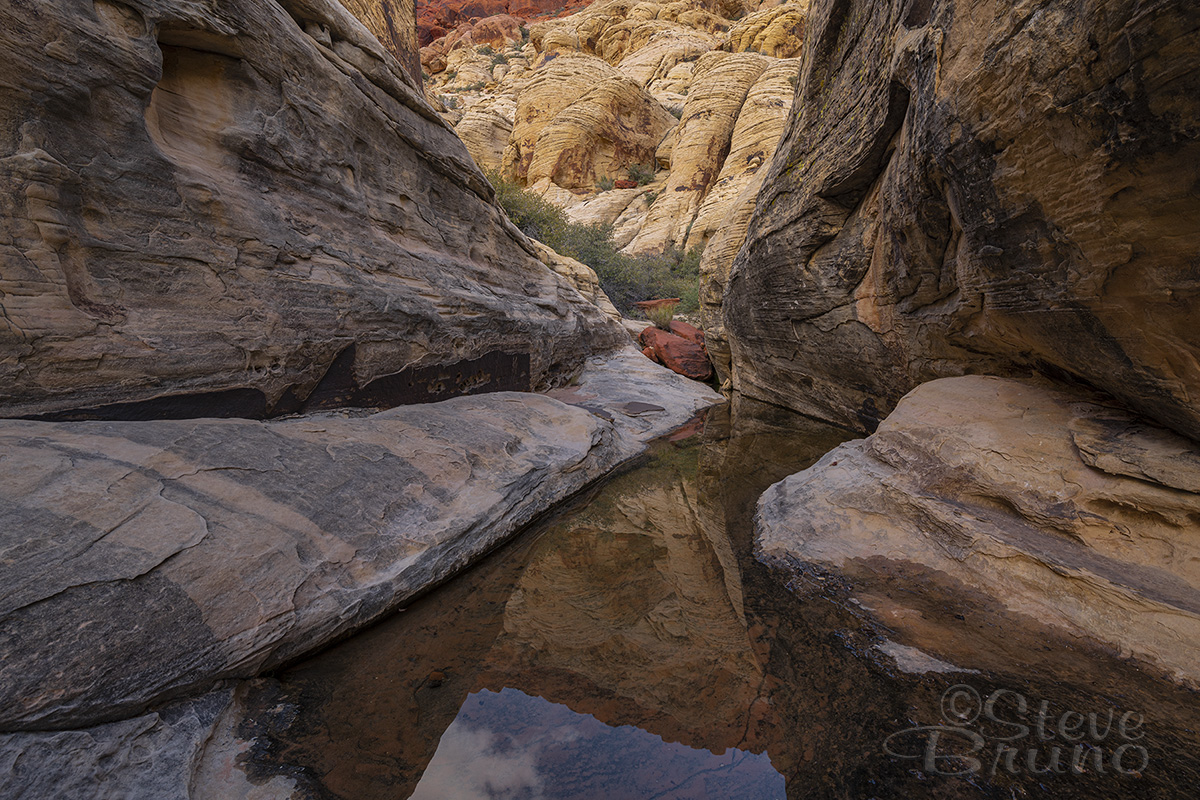
While many National Parks and other recreational areas have closed, there are some which remain open. These may not be the desired locations which attract social media throngs, but those who’ve seen my work know I don’t really go there anyway. The first location (above) was after some areas had shut down, making this a more crowded parking lot than usual. Despite that, I had very few people on the trail I was on, and getting here requires a scramble, so I enjoyed the place to myself.
That area has since become off limits, as has the next spot, on a hike taken in March. While this area starts on a popular trail, it soon takes off to an old trail, which quickly fades and becomes a scrambling route. Again, social distancing didn’t apply here because there were no other groups.
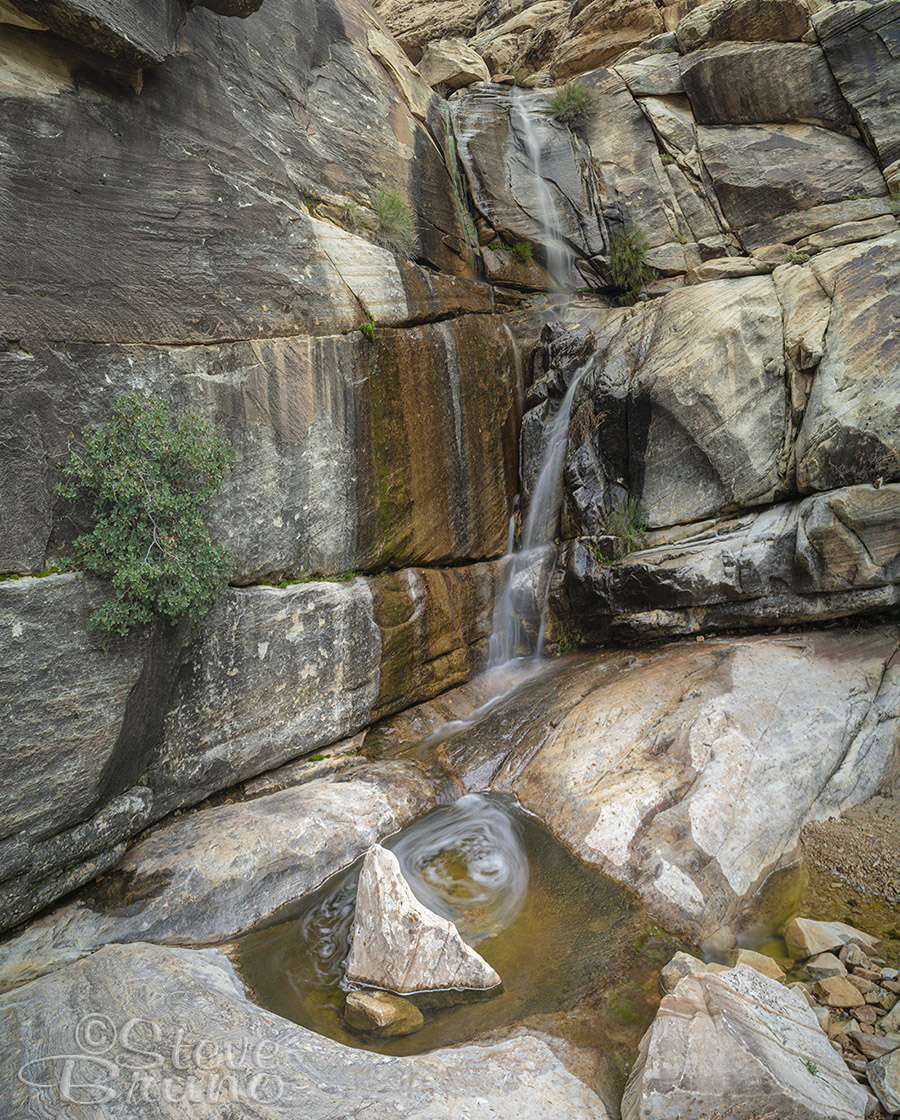

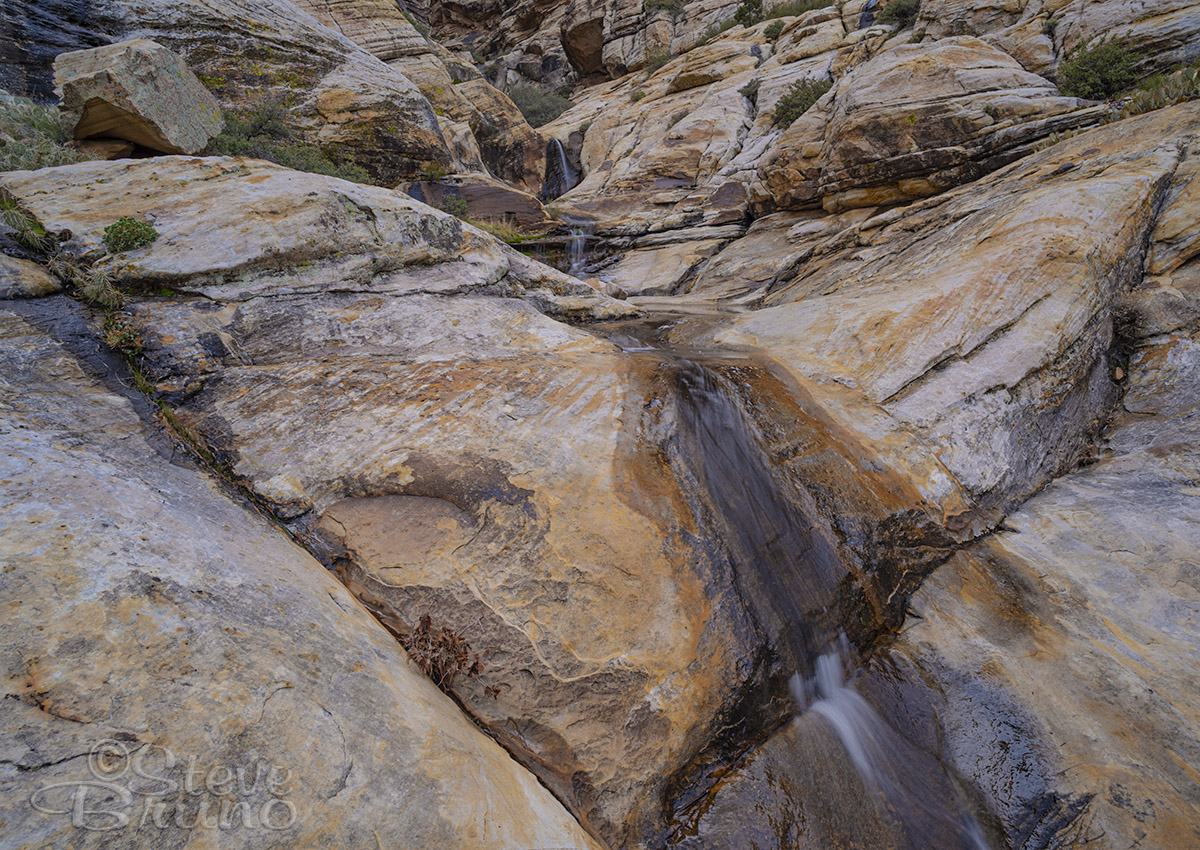
One of the remaining open trails has plenty of open space to absorb a higher number of hikers keeping distance between them. Leaving the trail and boulder hopping the creek also provides more privacy and the best views.
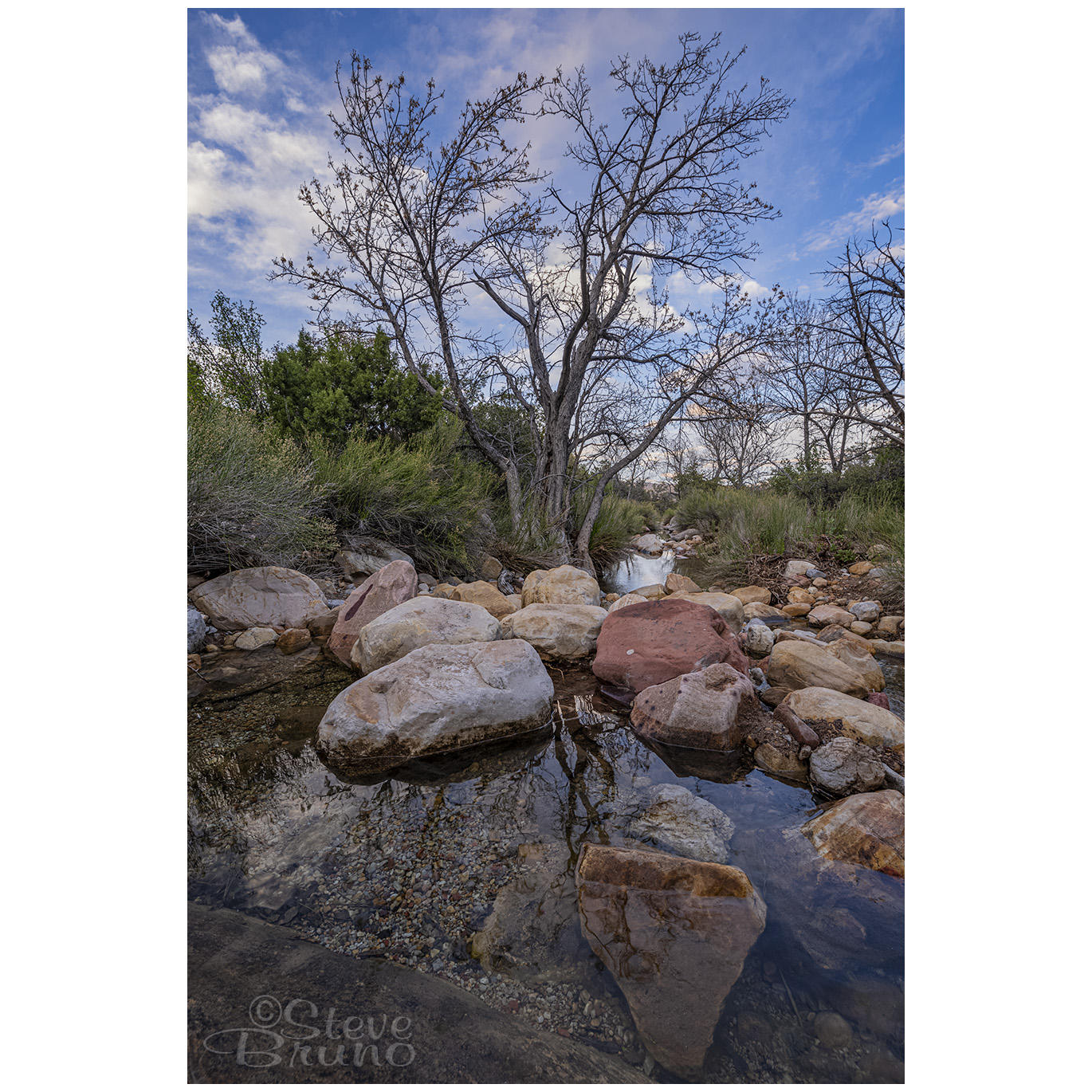
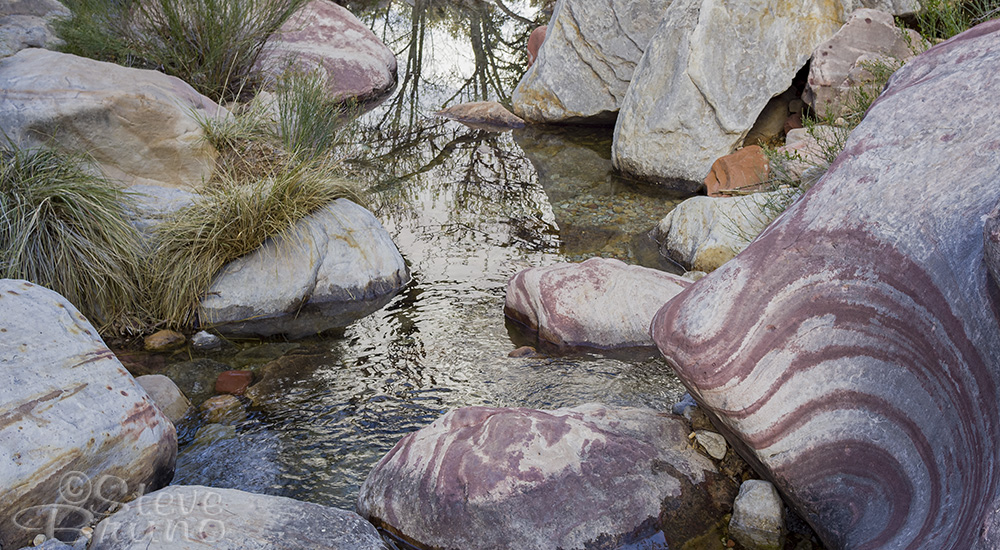
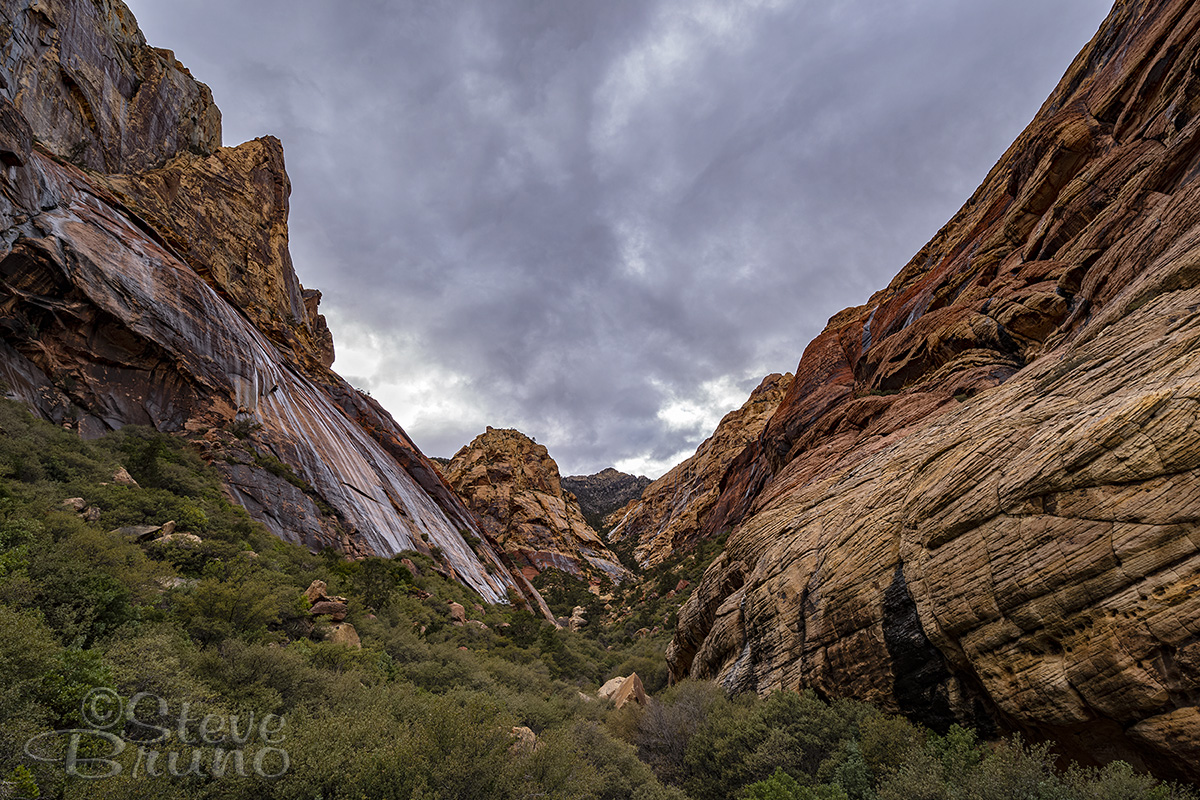
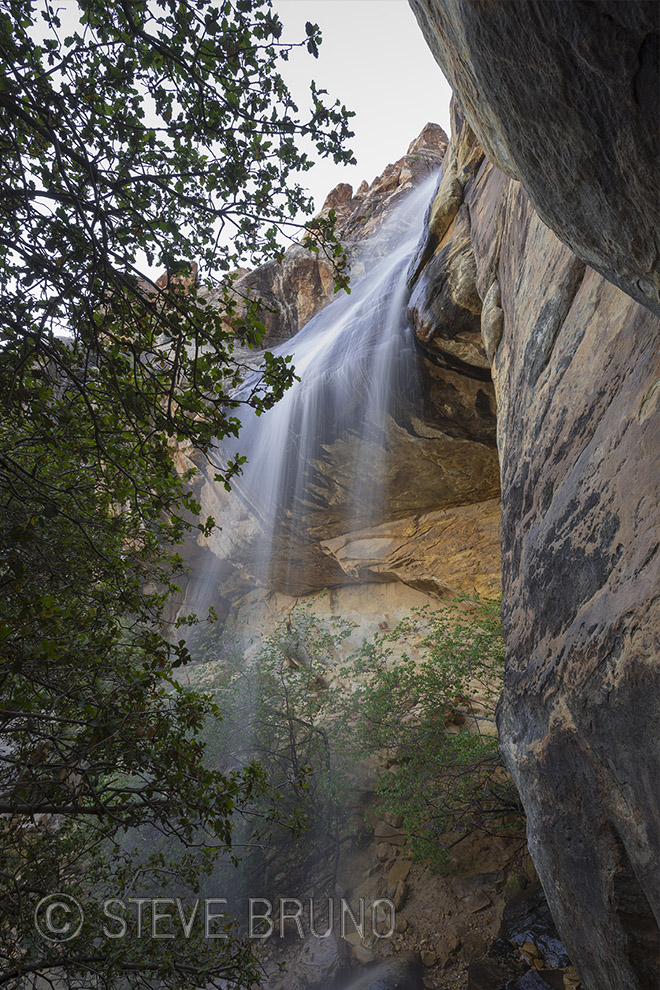
Higher up, this canyon becomes more rugged and takes on different characteristics. While most would have a different opinion on what constitutes a waterfall, I’m going to state that this is southern Nevada’s largest waterfall. It had been raining earlier, but only a light amount, and had been snowing above. This probably won’t be noticeable at this size, but there are small streams of water coming down on almost all the canyon walls in this scene. While the wall to the left is the most obvious, the water can be seen in many spots when standing here (and on my computer screen in full size). Waterfall or not, I like how this one came out.
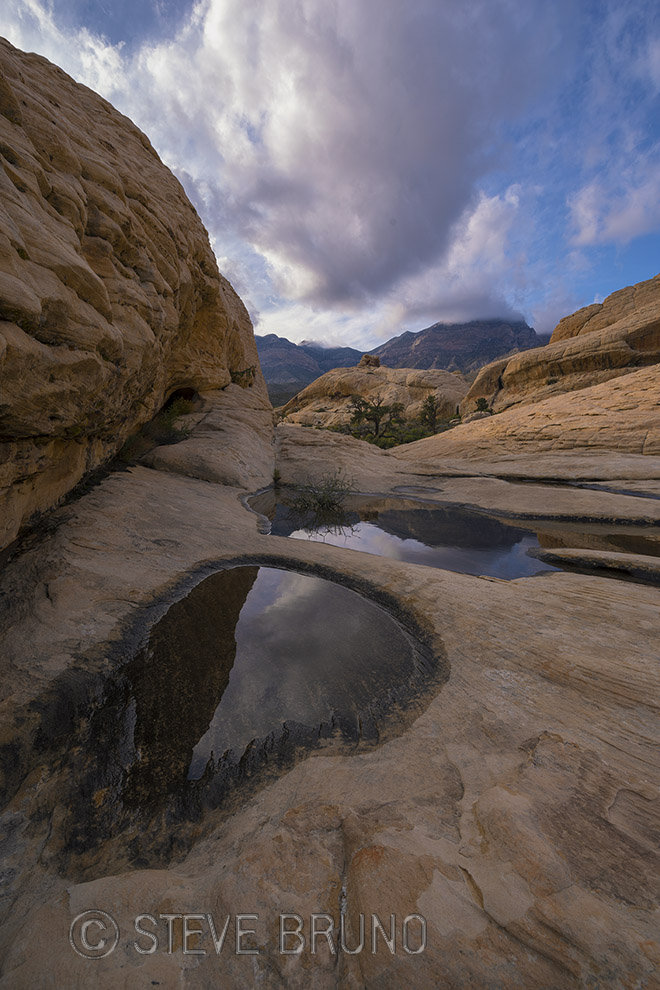
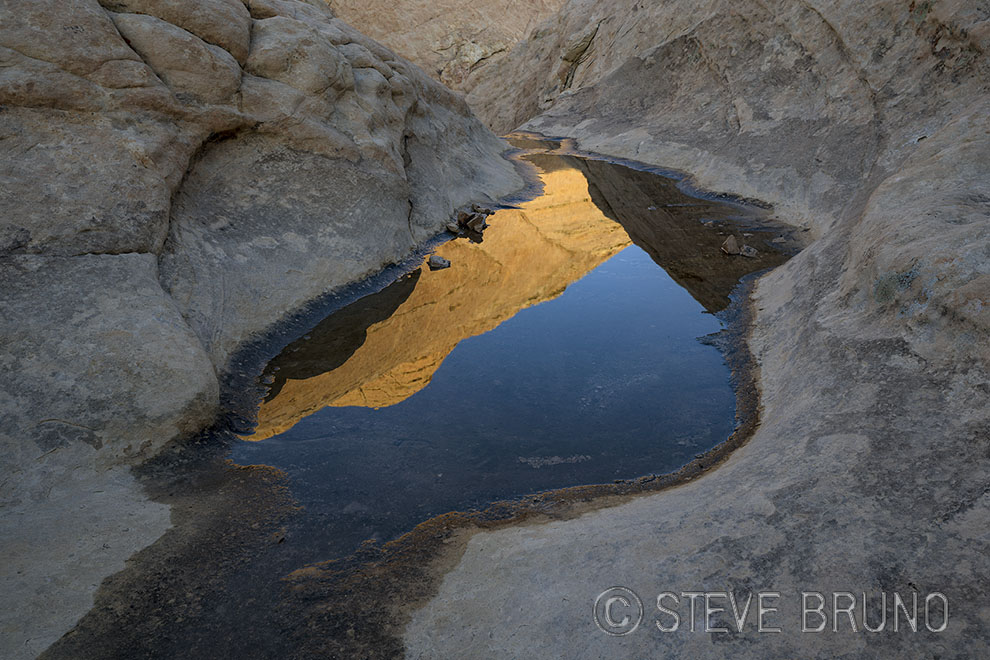
At the beginning of this month, we had our last winter storm. After it cleared out, I went to nearby Red Rock Canyon to catch the rainwater pools before they evaporated, and I posted the first of those shots already. After that first location, I hiked a little further to another great pool location. Although now starting to clear out completely, the remaining clouds were just right for the occasion.
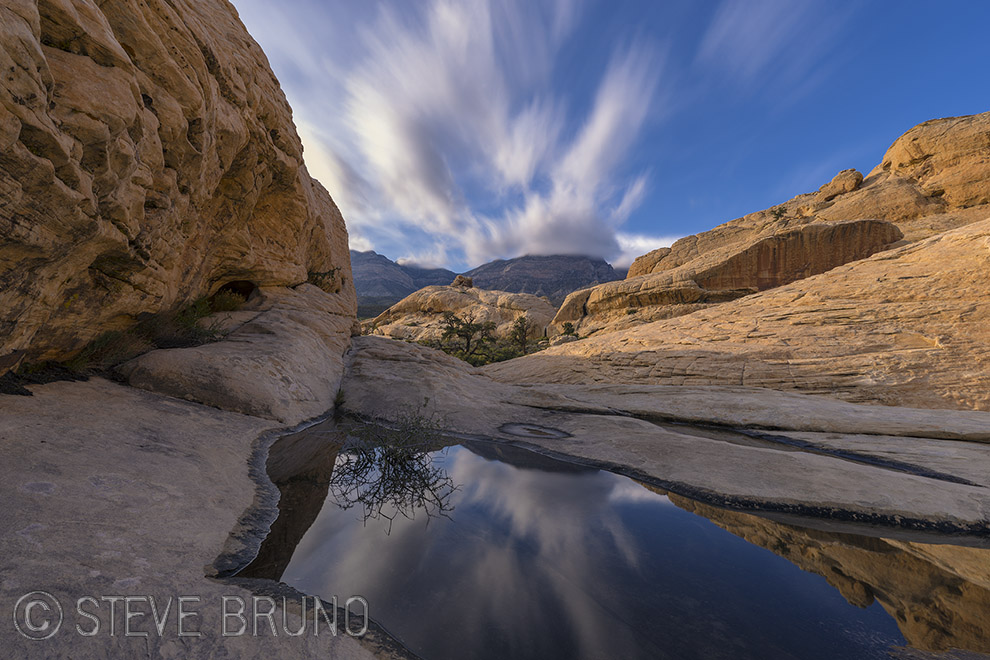
As I took the drive out, the creek crossings had running water, and i knew i had to return the next day to see the waterfalls. I had aspirations to get to another location, but it’s been years since I’ve seen this one running. By the time I finished taking photos and videos, it was too late to make it to my originally intended destination. The water was no longer visible on the drive, and the volume flowing in the falls would probably be gone by the next day.
For this week’s Daily Post Challenge: Liquid
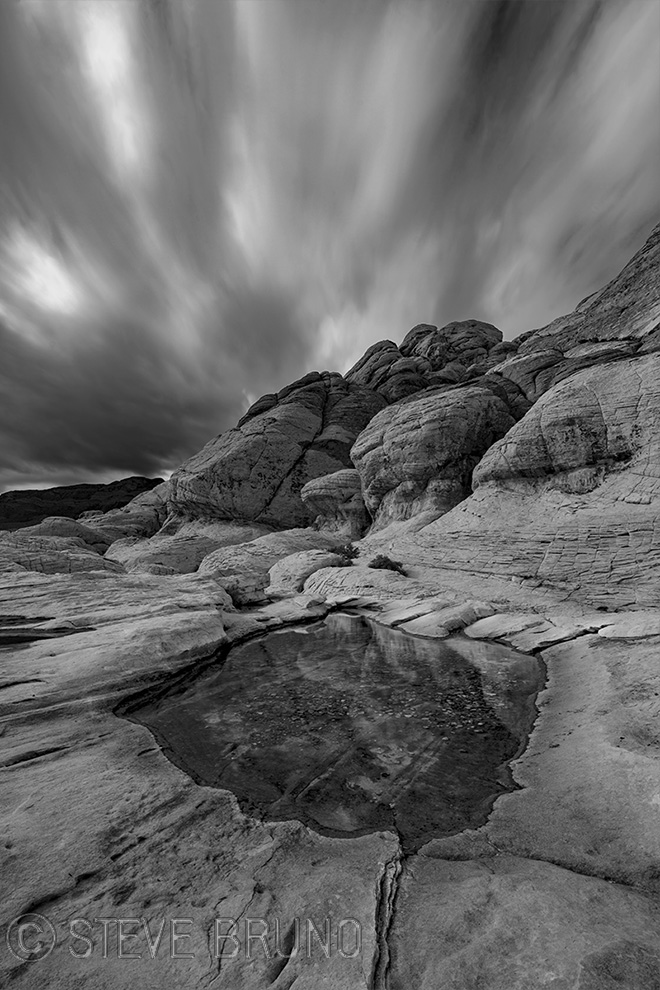
Last week we had a late season winter storm which brought snow to the mountains and a decent amount of rain to lower elevations. I went out to hike around the rainwater pools before they evaporated, and was fortunate to have plenty of fast-moving clouds for long-exposure photos. This is my contribution to Leanne Cole’s Monochrome Madness this week. To see what other photographers have contributed, or instructions to join in, please visit Leanne’s website.

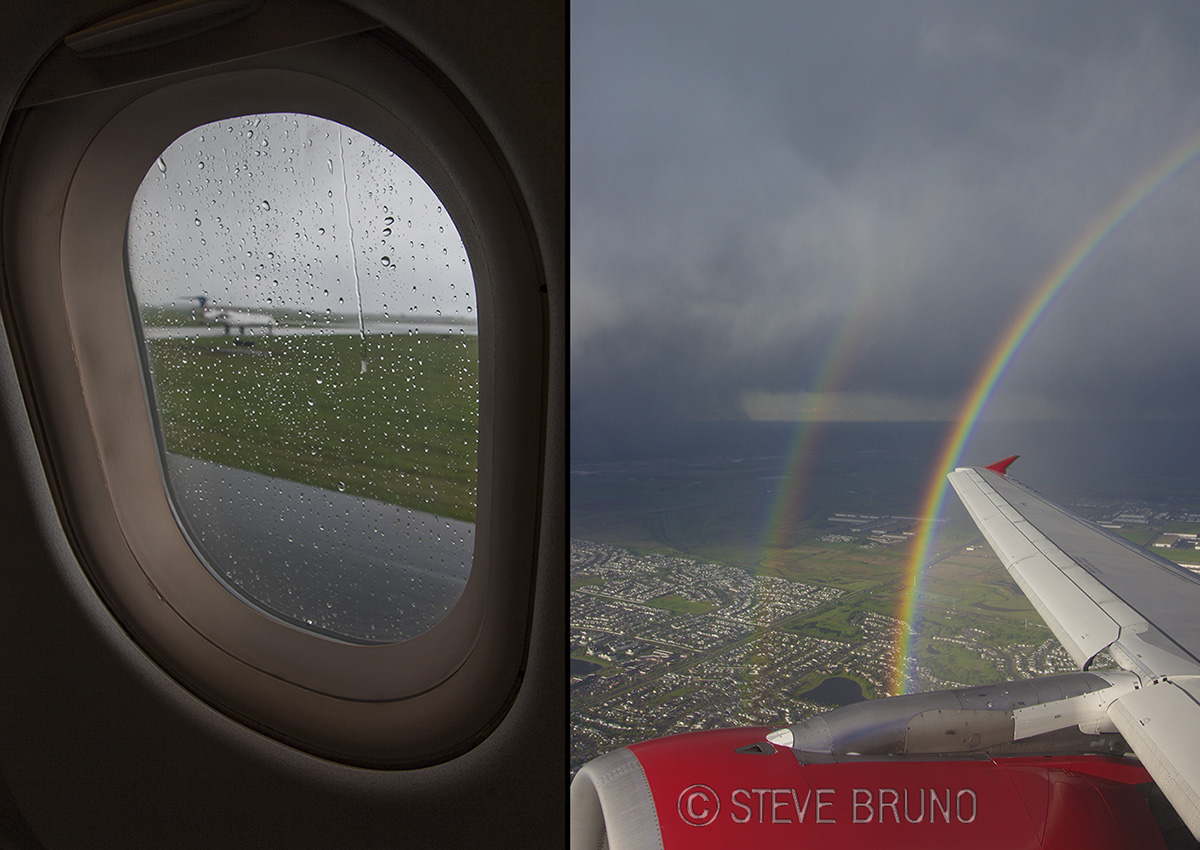
There’s no better place to capture photographs of rain than a rain forest. I certainly would be hesitant to bring out my DSLR under these conditions, so this is where I have learned to appreciate my phone’s camera. I’m not sure how well it shows up, but there were plenty of large drops coming down when I took this shot near Hilo last summer.
Takeoffs and landings near thunderstorms can be on the turbulent side, but occasionally there’s a visual reward for being this close. I’m sure I was the only person hoping we would sit on the runway longer because I knew the delay would give this view. We were just a couple minutes off from seeing this one full circle.
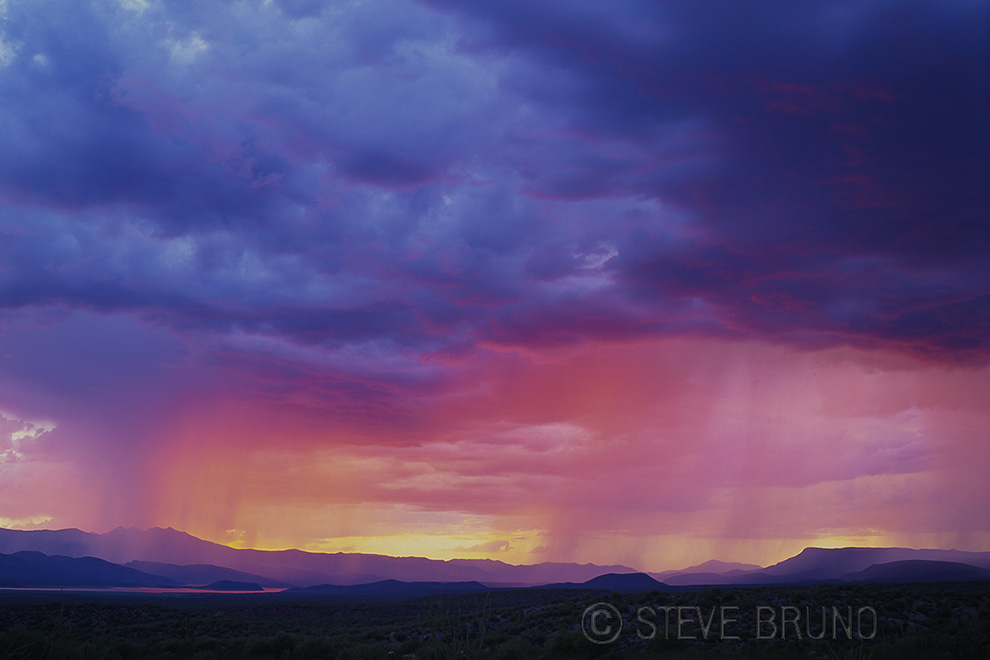
As you know by now, I’ve spent a significant amount of time in the desert, and I still have a sense of fascination when the rain showers move through. There’s a unique scent that permeates the air, and a sense of freshness with the rain settling the dust. Summer storms frequently arrive just in time for sunset, providing memorable light shows.

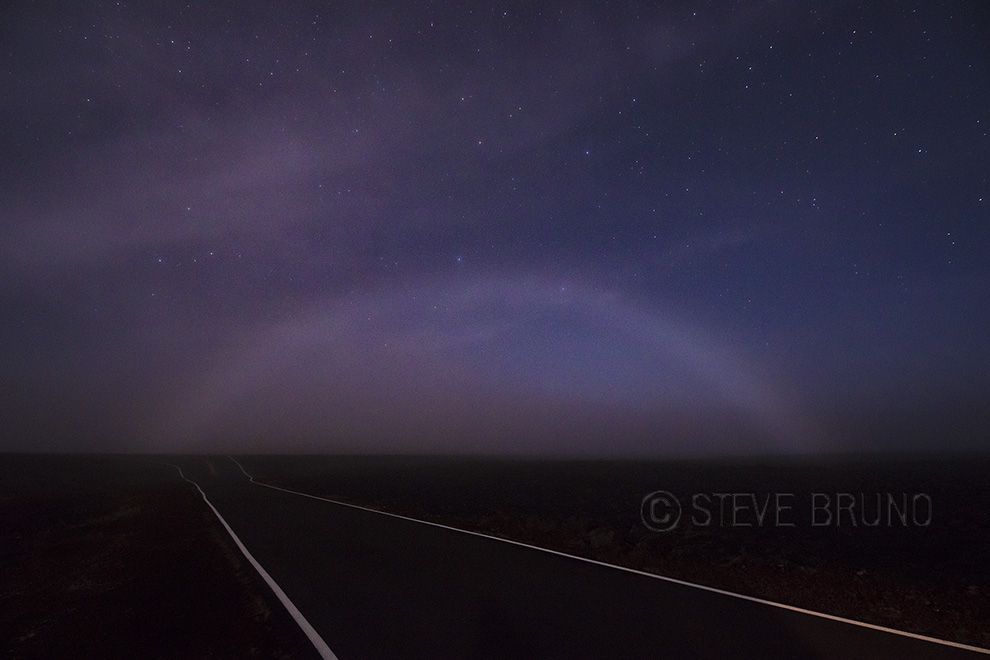
While in Hawaii last summer, I made two nighttime crossings on the road near Mauna Kea. On the first one, the skies were clear and the moon had set for the night. The stars were incredible to witness, and I posted that shot about a week ago. On my second trip, I was driving through fog as I made the ascent. Somewhere near the summit, I pulled over. There was still a still a light haze present, but I could see stars, despite the fact that the moon was still visible. As I looked away from the moon, I saw this….I call it a moonbow.
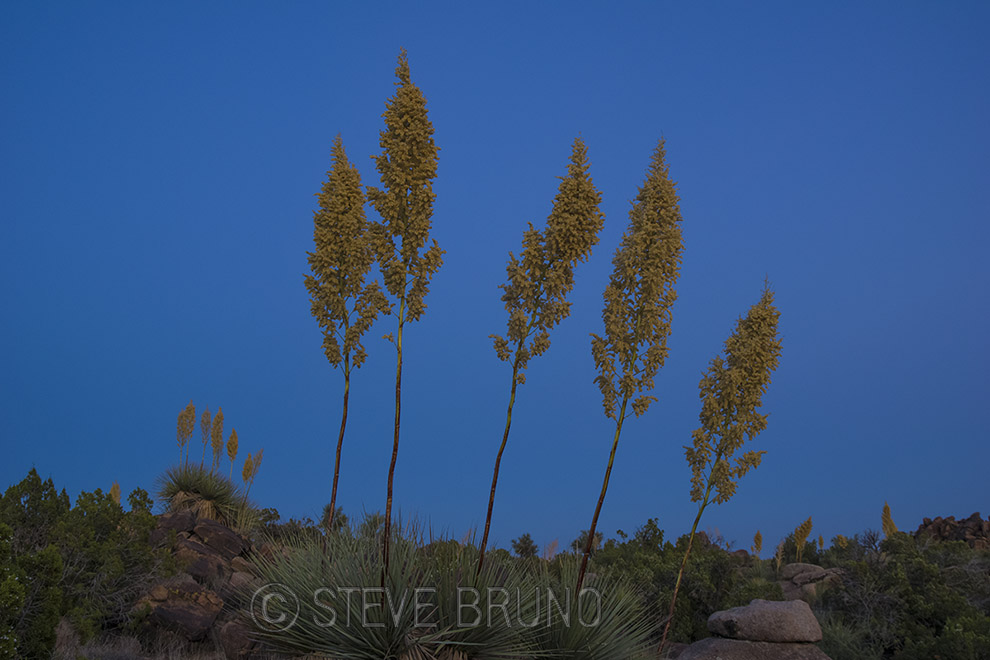
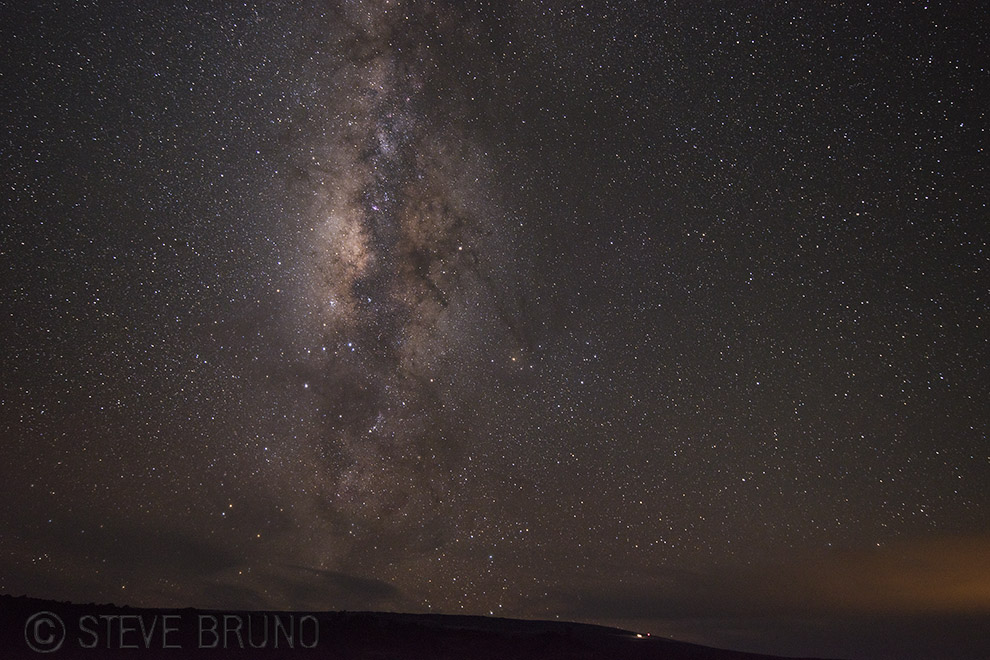
Just because the sun has gone down for the night doesn’t mean it’s time to put away the camera. For some of us, it’s the opposite. This is when the best photos can happen, starting with the blue hour (above). Once the blue hour has passed, you might be lucky enough to catch some stars.
While some don’t venture into the great outdoors after dark, city streets can always provide subjects for your camera. Perhaps you will even encounter some ghosts.
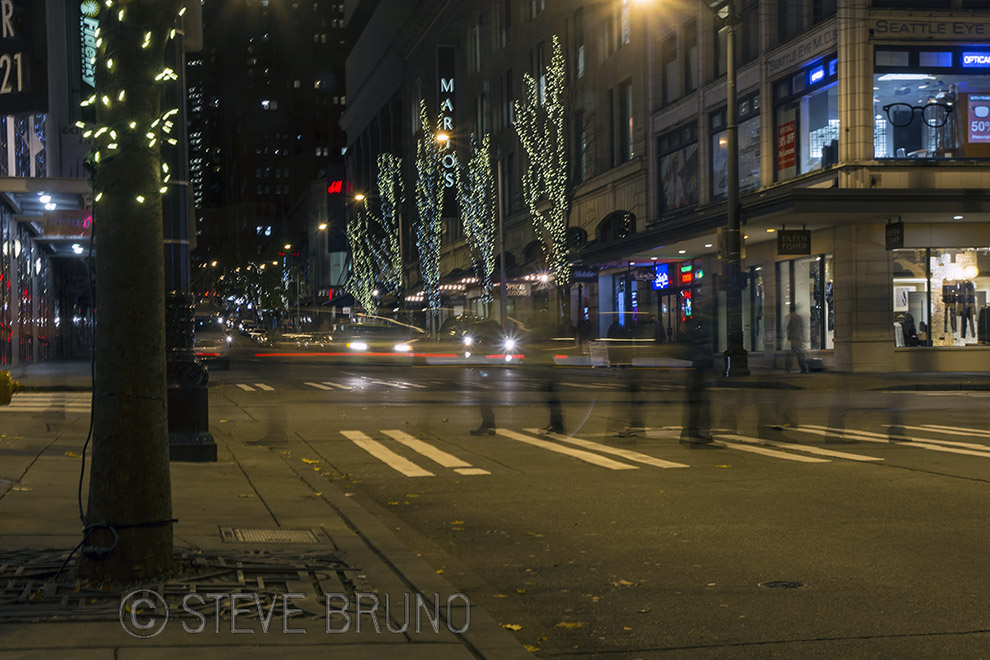
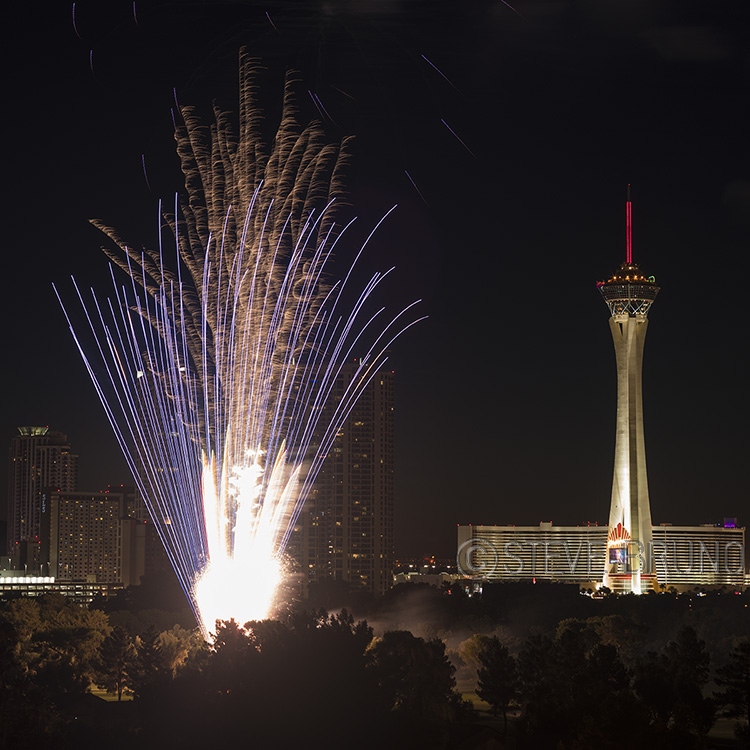
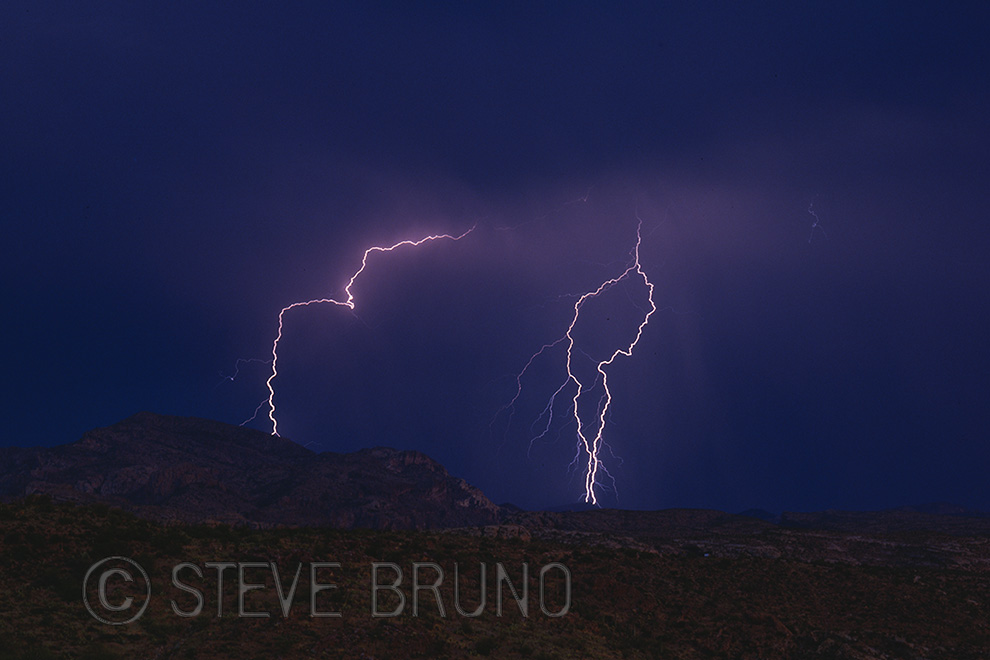
It wouldn’t be much fun watching fireworks in daylight, whether manmade or natural.
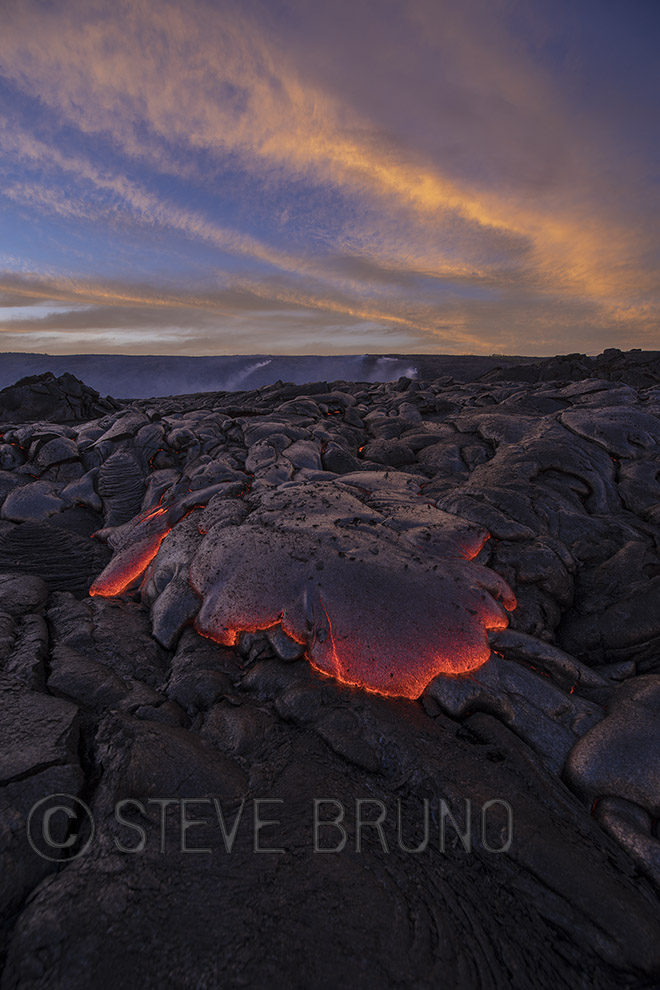
If you ever have a chance to witness lava flows up close, you will want to do this after sunset. It’s quite difficult to see the lava underneath the surface, and you might be on top of it before you realize where it’s at.

“Get along little doggie!”
Or in this case, coyote. At least that’s my best guess after an online search. My first impression was bobcat tracks, but those turned out to be much different in shape. This photo alone might be enough for a story, but yesterday turned out to be too good of a day to stop there.
SUNDAY’S HIKE
The initial weather forecast called for the storm to be out of here before noon on Sunday. I set my alarm, but then rechecked the forecast one more time. The official weather station on Mount Charleston was at 37 degrees, and the satellite image gave me the impression the event was moving out quicker. With that in mind, I changed the alarm to an earlier time, thinking the sunrise might be spectacular. Upon shutting the alarm off and falling back to sleep, I awoke closer to my original plan, and decided there might still be some something worthwhile to photograph. This just meant I would be joining all the weekend warriors.
As we headed up the mountain, we began to drive through a low cloud cover. Even the tailgaters eased off as visibility became very limited. Just before approaching the ski area, we emerged with a clear view. I pulled off to the side of the road, as the freshly coated Mummy Mountain had great light hitting it. In the time it took for me to cross the road and open up my tripod, the light was gone. The fog we had driven through was racing up the mountainside. Little did I know at the time that this was the last bit of blue sky I would see for the day. That’s Mummy Mountain’s outline in the upper left corner.
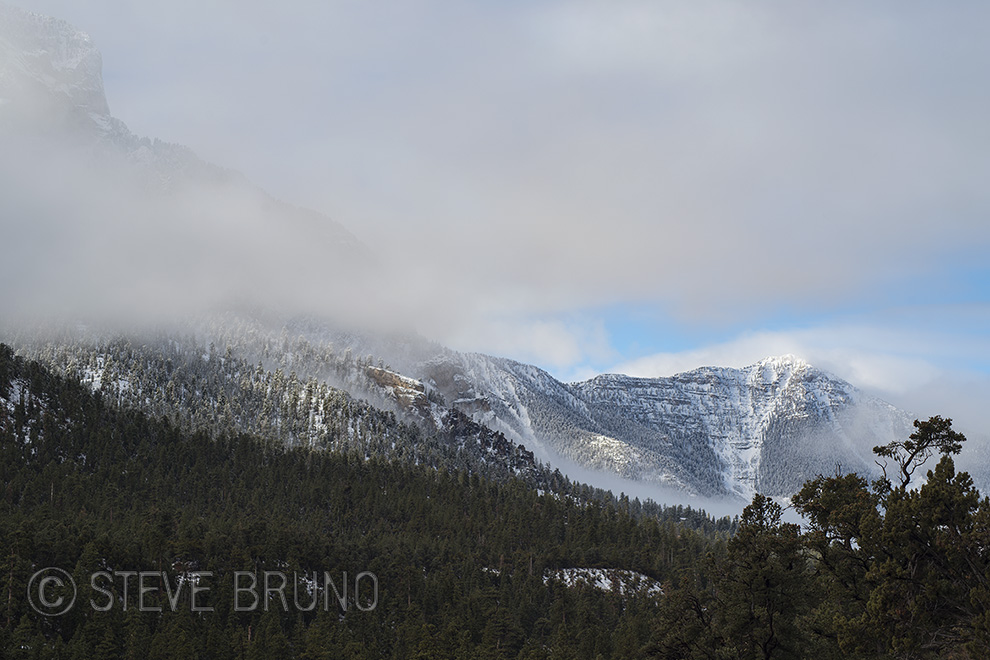
Although I was a little disappointed, this was the view everyone else was getting, and I came out to hike a trail I’ve been on several times before – one that would take me up into the snow and the bristlecone pines. When I reached the parking area, there was a vehicle with three young men already returning. I was still reasonably early, and it wasn’t long before their tracks were no longer visible, and my feet were laying down the only marks in the snow. This desert dweller hasn’t been in the altitude much lately, and my stops were numerous. Taking photos was a good excuse to lengthen my stops, because I know I can’t take a steady picture without a tripod when I’m breathing that hard. Especially detail shots with a telephoto lens.

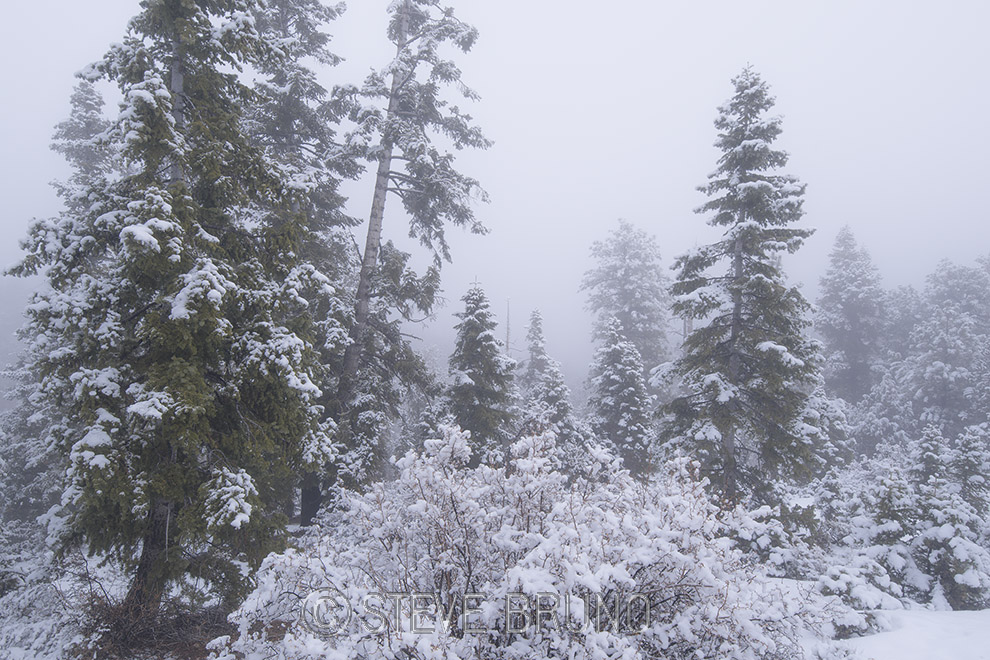
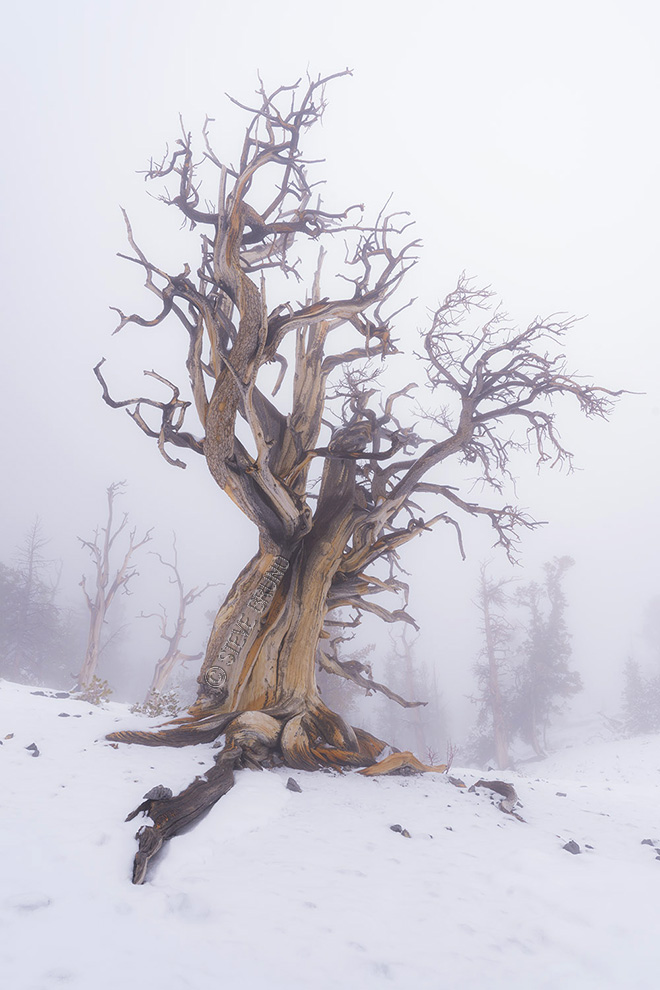
The fog was varying in its density, and with each thinning stage, I thought that was going to be it. The trail started around 8300 feet, and I knew I was up over 9000 feet. The temps were too warm for the snow, and I could see clumps falling off branches all around me. That’s when I came across the tracks. Fortunately my lingering photographer’s pace was allowing other hikers to catch up to me on the trail, many with big dogs, and I knew my chances of becoming breakfast were diminishing. In this area were many trees with intriguing shapes, standing eerily in the fog. I took numerous shots in this area, then continued. In a short time I arrived at the largest bristlecone pine on the trail, perhaps the largest I have ever seen. Around this time the sun became visible, although the fog was still there. I don’t think I have ever seen this tree under more perfect conditions.
I continued along to an area I have stopped before. The fog gave this group a different light than any previous visit.
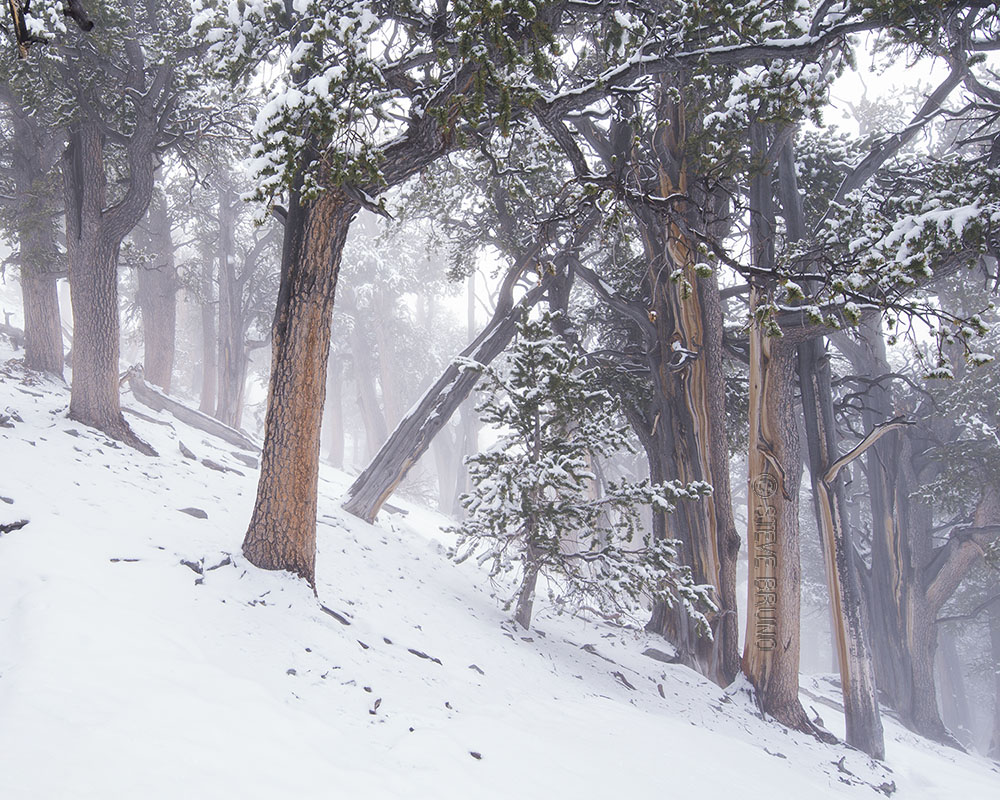
I tried continuing further, but this part of the trail, now around 9500 feet, had a little deeper snowfall. And a steeper pitch with a slight sideways pitch. That was becoming too much work without spikes under my shoes, so I headed back. This turned out to be excellent timing, as the fog was making a comeback. The trail was getting slippery and/or muddy in spots, I was starting to feel the fatigue of mountain air. I could barely see the forest in the canyon right in front of me.
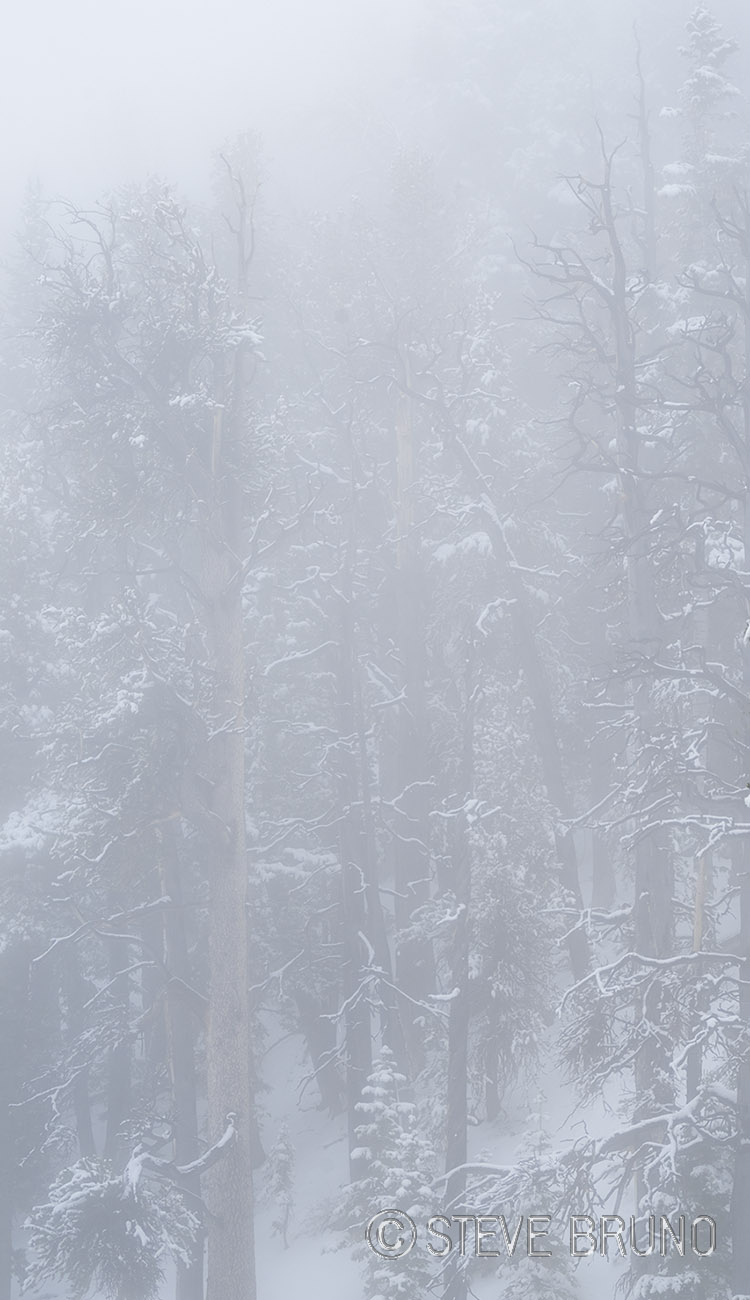
I made one final stop, and as I did the fog was now leaving many microdrops on my camera, though not my lens. Those made for some excellent b&w images which I will post soon. It was close to 2:00 when I finished, and the conditions were not what I was anticipating, but certainly made for an awesome day.
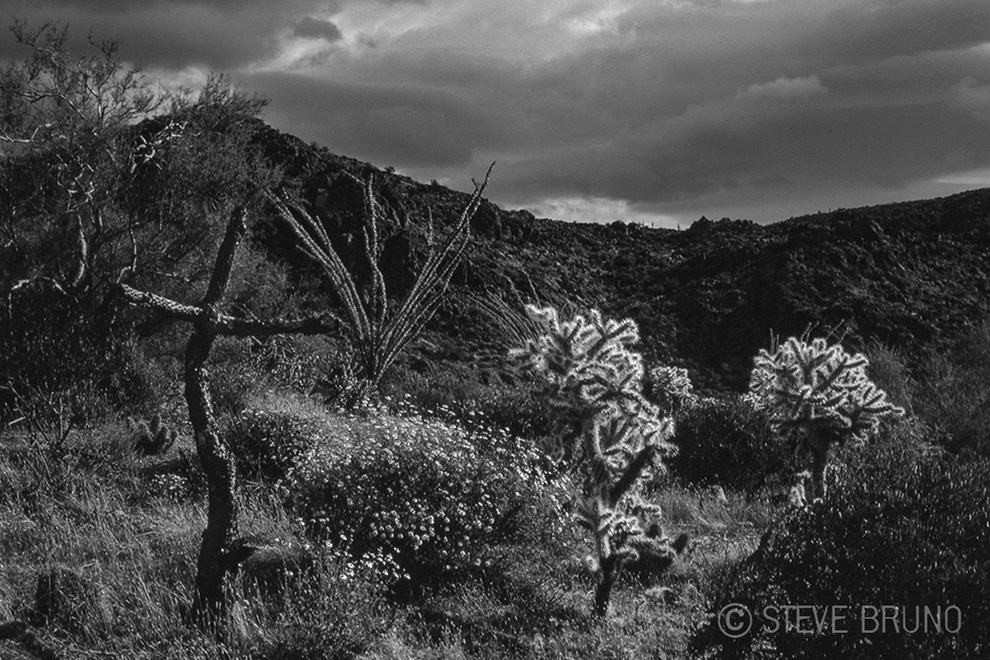
Life in the desert moves at a slow pace. Without much water, growth is slow, and subsequently, so is death. This dying cholla cactus appears to have marked its own grave, but will eventually succumb to the elements and gravity. The younger, healthier ones (right portion of frame) are bright yellow or green and are easy to notice and avoid. During their life, they eventually drop several sections. In the course of time those begin to camouflage themselves, browning to match the stones beneath, and still just as painful. Walking through a dense cholla forest is like navigating a minefield. If you manage to get too close to one, you will swear you have been bitten by something.
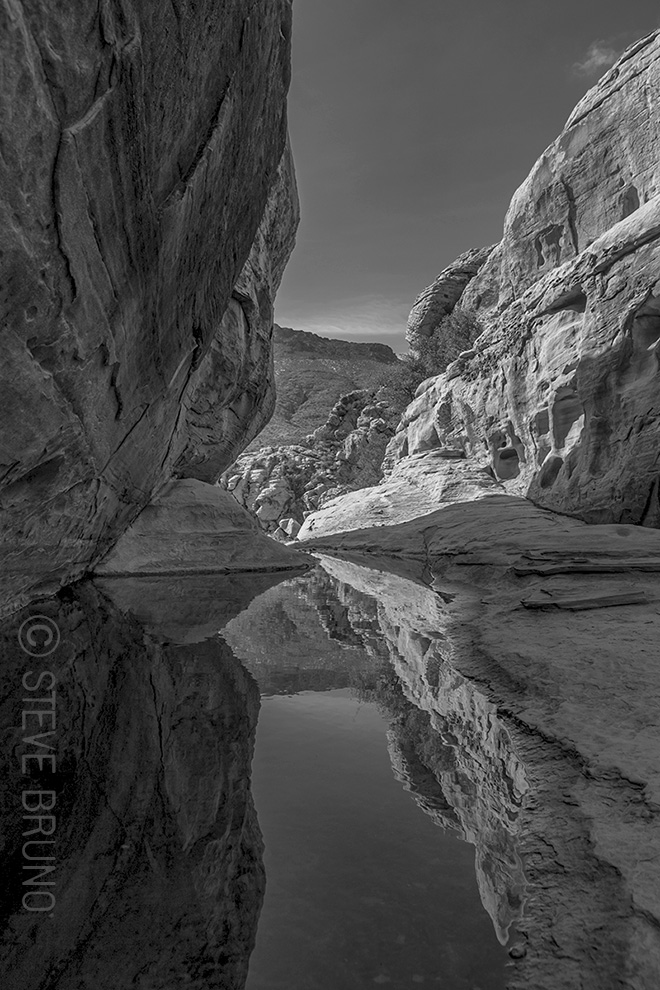
Water is the planet’s most precious resource, especially here in the desert. Last month we finally had a day of rain that put an end to a string of 116 days without measurable rain at the official weather gauge in Las Vegas. The previous rainfall was a trace…..enough to wet the pavement, but not enough for the insects or birds to get a drink. Go back another five days to when there were numbers on the rain gauge. That’s 121 days. One third of a year. At a time of year that is supposed to be the wettest. Similar stats have taken place throughout the southwest.
As each month draws to a close, it seems the news people tell us how it was the hottest (January, February, March, etc.) on record, or at least a top five. In 2017, the temperature never dropped below freezing, which has never happened here before. The doubters of global warming will tell you it’s because we are adding more concrete, thus raising temperatures where the official readings are taken. I assure you, no one is building near our airport. Even more remote places are showing elevated average readings.
The photo above is from a previous winter, and is from a lesser-known part of Red Rock Canyon, west of Las Vegas. It’s probably a good thing that there is not a marked trail to get here. This is my contribution to Leanne Cole’s Monochrome Madness this week. To see what other photographers have contributed, or instructions to join in, please visit Leanne’s website.
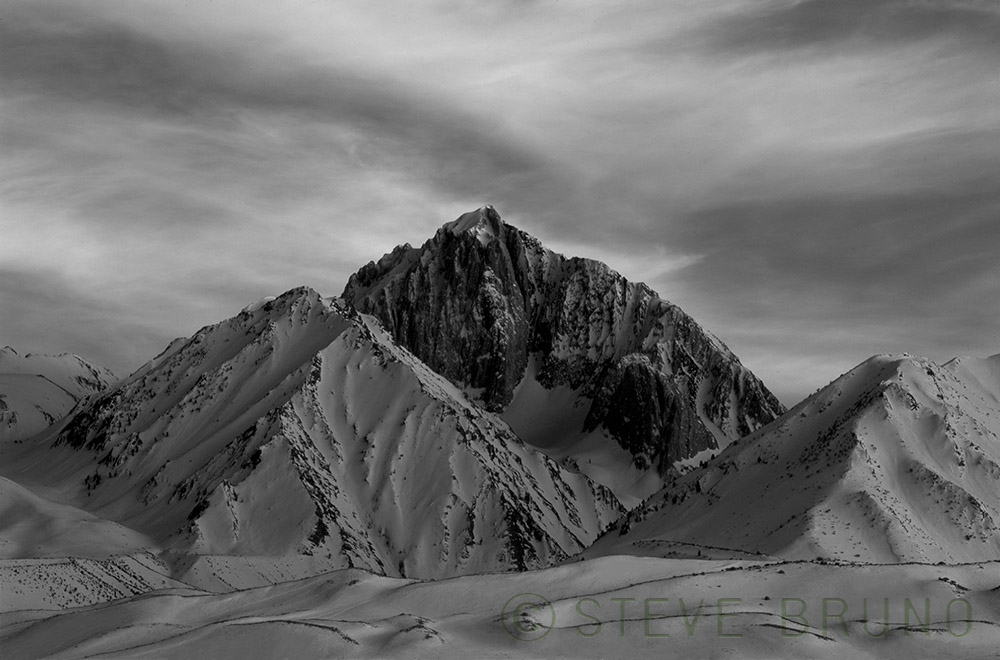
As we approach winter in the northern hemisphere, scenes like this should be common. Instead, the nightly news talks about fires in California, and how the firefighters will be on the job until Christmas, and now perhaps until New Year’s Day. Here’s hoping for rain and snow soon for our neighbors in California.
This image is from the Mammoth region of the Sierra Nevada Mountains, and is my contribution to Leanne Cole’s Monochrome Madness this week. To see what other photographers have contributed, or instructions to join in, please visit Leanne’s website.
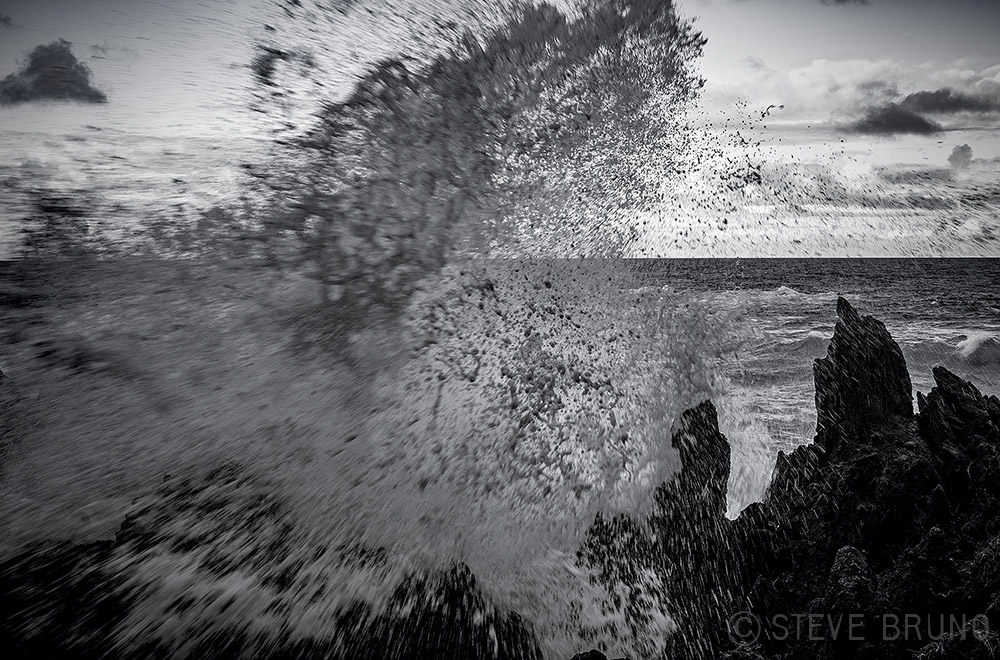
On my first full day on the big island of Hawaii this summer, I set out to return to some locations that I had visited my previous time there. I hadn’t checked the weather before I set out, so I was unaware that a tropical storm was a couple hundred miles offshore. The first place I stopped at was too wet to get out for pictures, and I thought the day might be a bust. I was pleasantly surprised to drive a little further, and see drier conditions for another spot with fond memories.
I chose my first location cautiously because the waves were more robust than my last visit. The area I picked didn’t have a single drop of water anywhere under my feet. Nonetheless, I waited about 10 minutes and watched wave activity before unpacking the camera and tripod. That first spot was on a ledge about 15 feet above ocean level, and the bigger waves splashed close to that height, but all towards the left. I spent over half an hour there, getting some great stills and video. Afterwards, I moved to some other areas along this point where the water was calm by comparison.
I thought I was almost done, but returned to the first spot, just slightly further back. The contrast between the close rock formations and the ones slightly further, with occasional light splashes of water, gave me a different perspective. I had my shutter release cable attached and my drive on high speed, because you never know what you might get with water splashing. You can always delete the boring ones.
All I will say is that I heard this one coming. Instinct told me to keep holding the shutter. This is not a telephoto shot, but actually a bit of a wide angle lens. Somewhere under all that airborne water is the spot I had been standing earlier.
This is my contribution to Leanne Cole’s Monochrome Madness this week. In the first week of the month, there is a theme, with this theme being up in the air. To see what other photographers have contributed, or instructions to join in, please visit Leanne’s website.
 Steve Bruno Photo
You must be logged in to post a comment.