Back when I shot with a large-format view camera, I would certainly agree with Mr. Adams. Now that I use a camera that can shoot hundreds of frames in a day, oddly enough, I still agree.
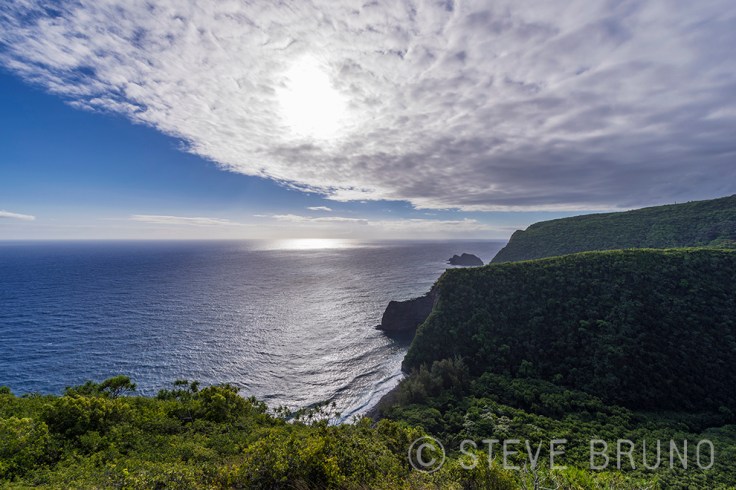
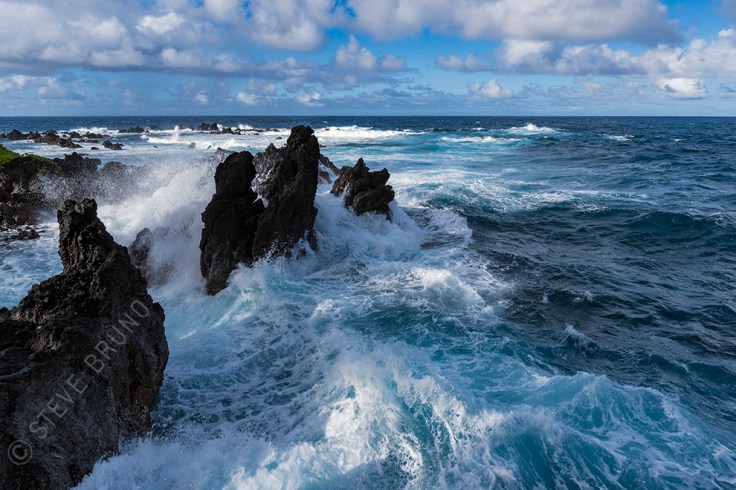
I spent time in Hawaii this summer, and I’m sure I have twelve photographs that I like from just the first couple days. When I look at all of the images I have captured this year, and try to envision those which I will still cherish years from now, the process of choosing twelve became clearer. My time in nature was limited this year, but I made those moments count. In some situations I had similar lighting or compositions where I couldn’t really define one shot as a clear favorite, but in the end, I think I’m very happy with these 12.
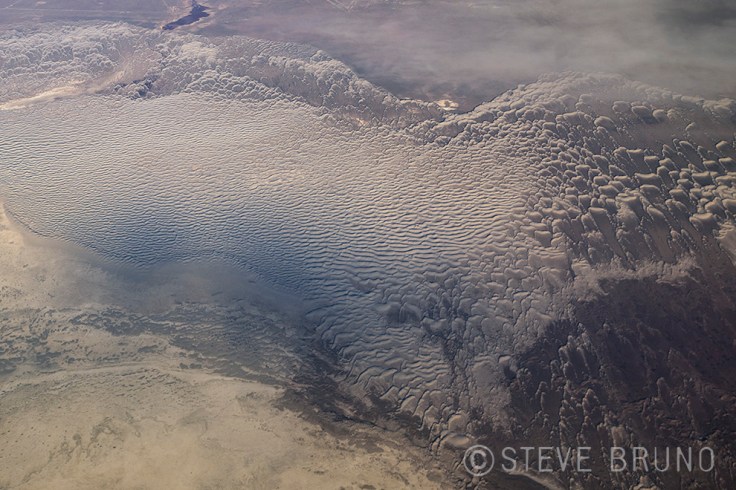
I don’t own a drone, but I love taking photos from airplanes. This photo from over White Sands, New Mexico looks amazing at full size, with all the dunes at the edge looking like bubbling foam.
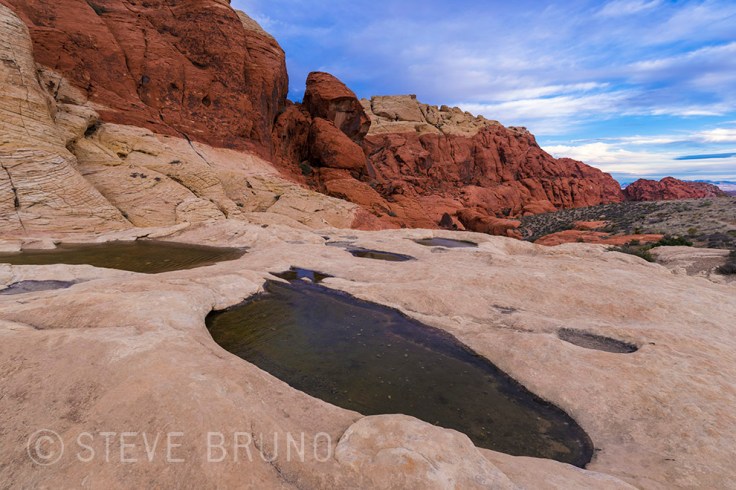
My ‘backyard’ location of Red Rock Canyon didn’t see me as much as in years past, yet I had plenty of images which made the A list.
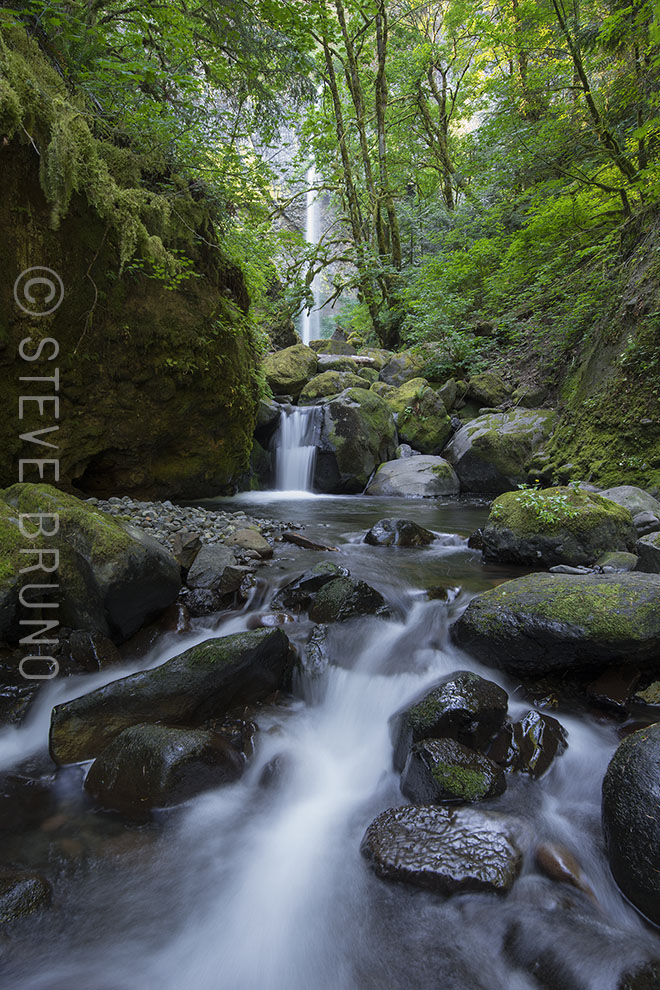
Oregon was another place I spent some time last summer. Although the trip was mainly for a family gathering, I had time afterwards to head to the trails in the Columbia River Gorge.
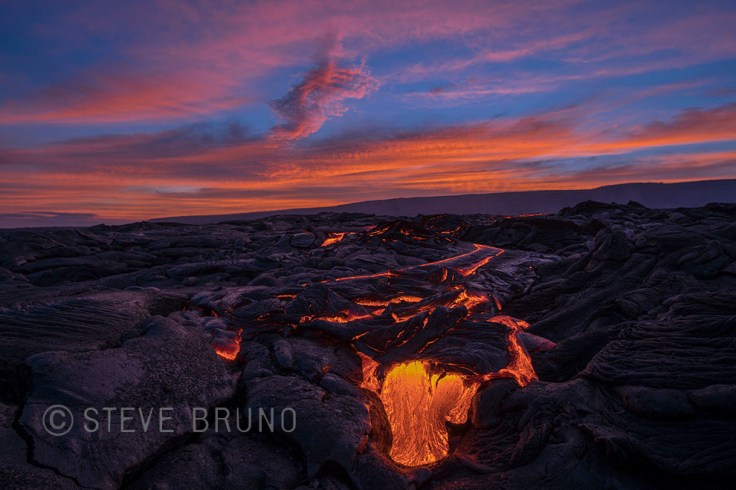
As I mentioned earlier, Hawaii was part of my travels this year, and gave me many great photo opportunities. My time on the lava fields at sunset certainly stands out as one of my favorite experiences, not just for this year, but for a lifetime.
Since I primarily take photographs of nature, my detail shots are mostly in the form of plant life. Even if I lived somewhere besides the desert, I think I would still be fascinated with cacti. Sometimes they’re shaped bizarrely, sometimes perfectly symmetrical. And when you move in close (but not too close) they provide elaborate details. Most would be vulnerable to damage from insects, birds, and animals if it weren’t for the defense mechanisms – all those thorns.
While many of you live in climates where flowers thrive, we are provided with only a limited showing of those. Even in the driest of years, when the rest of the desert is stingy with blossoms, the cactus bloom.
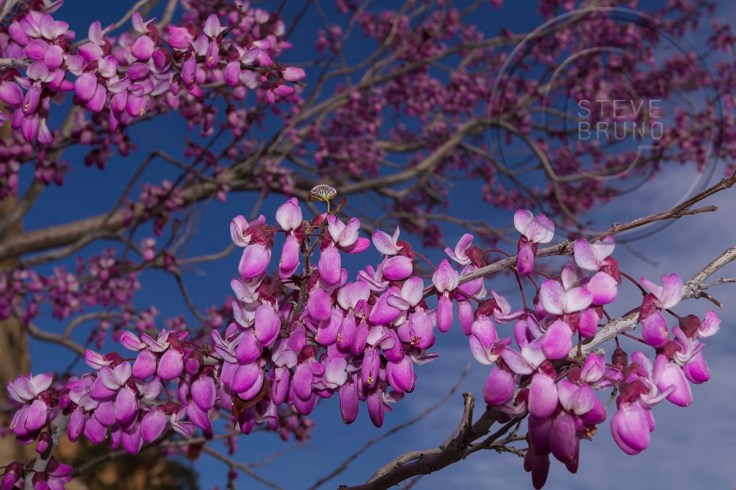
Trees are the other guaranteed bloomers around here, such as this redbud from nearby Red Rock Canyon.
In bloom or not, trees can be fascinating subjects, such as this one from Hawaii with a very entangled root system, or this detail of a bristlecone pine tree.
In the southwest, details of canyon walls can make for good photos, such as this one of cross-bedded sandstone in Valley of Fire State Park, or this etched detail in Fletcher Canyon.
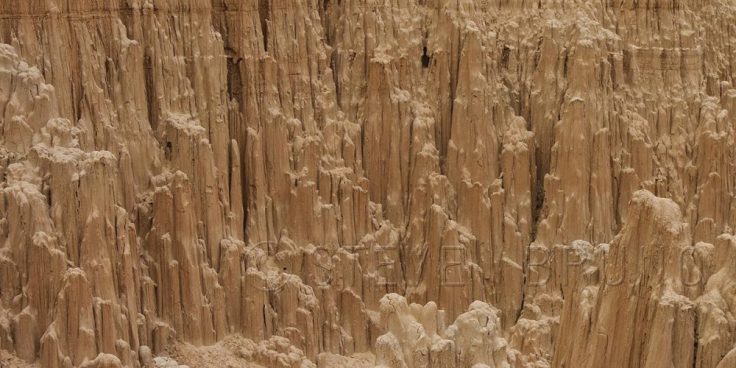
When I think of detailed shots, the first thing that comes to mind are close-up or macro images. But sometimes, there are landscapes that have so much going on, that it’s hard to not just look for all the details. This one is from Cathedral Gorge State Park, Nevada.
Textures in eroded clay and sand in Cathedral Gorge State Park, Nevada. Photo by Steve Bruno.
For this week’s challenge, I thought it would be easy to come across many photos fitting the category. Emphasizing the foreground in landscape photography is one of the standard rules. Moving in close doesn’t necessarily equate to showing what’s beneath your feet, however.
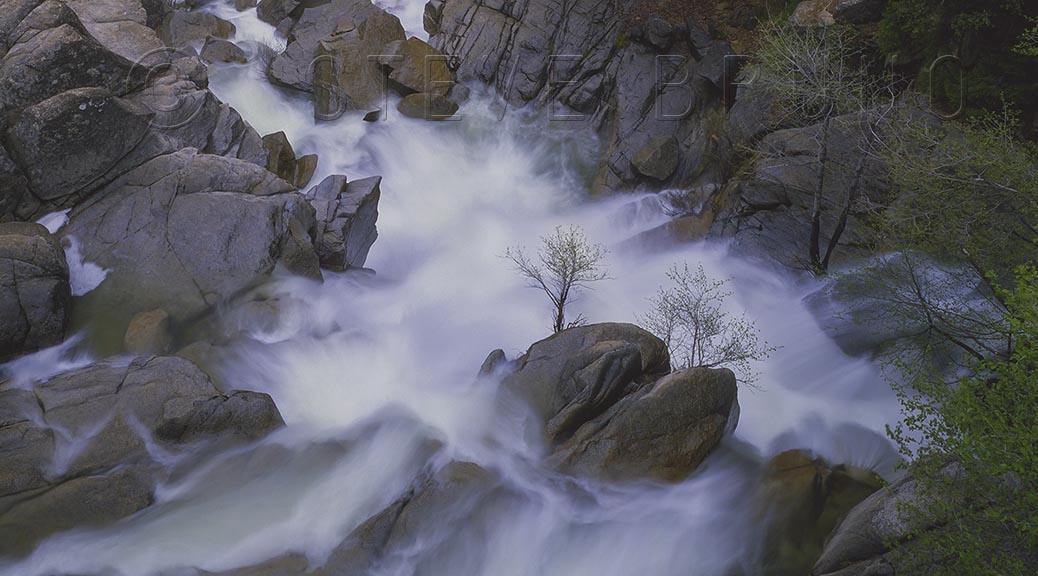
The featured image, taken in Yosemite National Park, is a location where everything was below my feet. I had a great vantage point where three creeks came together, providing a different perspective on tumbling water.
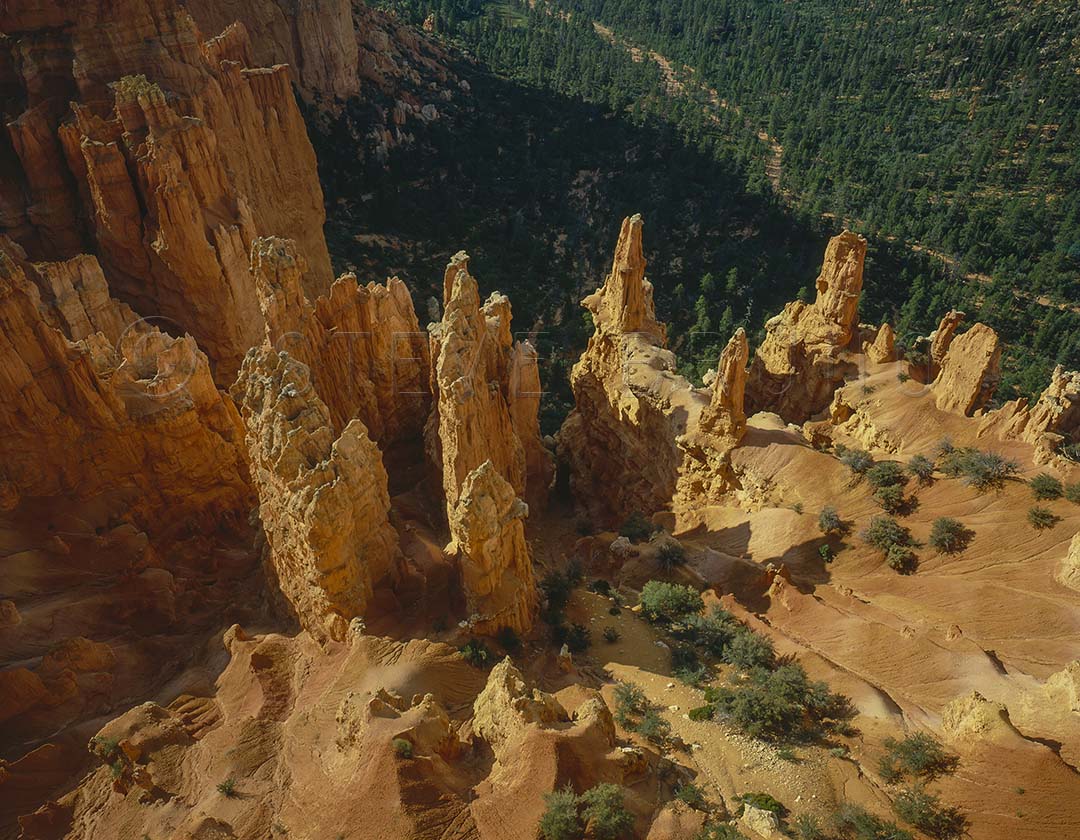
At Bryce Canyon National Park, I usually prefer to hike down amongst the formations, but this has been a favorite from the rims. I have often been asked where I was standing to get this one. Since then, I think erosion has made this spot off limits.
Overlook at Bryce Canyon National Park, Utah by Steve Bruno
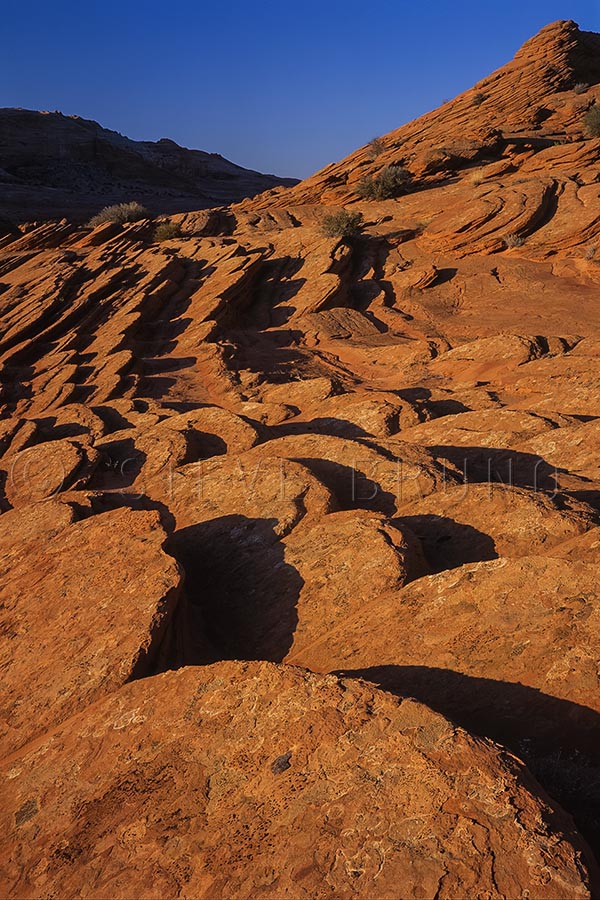
Not far from Bryce, in the Vermillion Cliffs Wilderness, I encountered these sandstone discs embedded in the ground, on edge. This repetitive pattern was under my feet for some distance.
Sandstone discs line the hills of Vermillion Cliffs Wilderness, northern Arizona by Steve Bruno
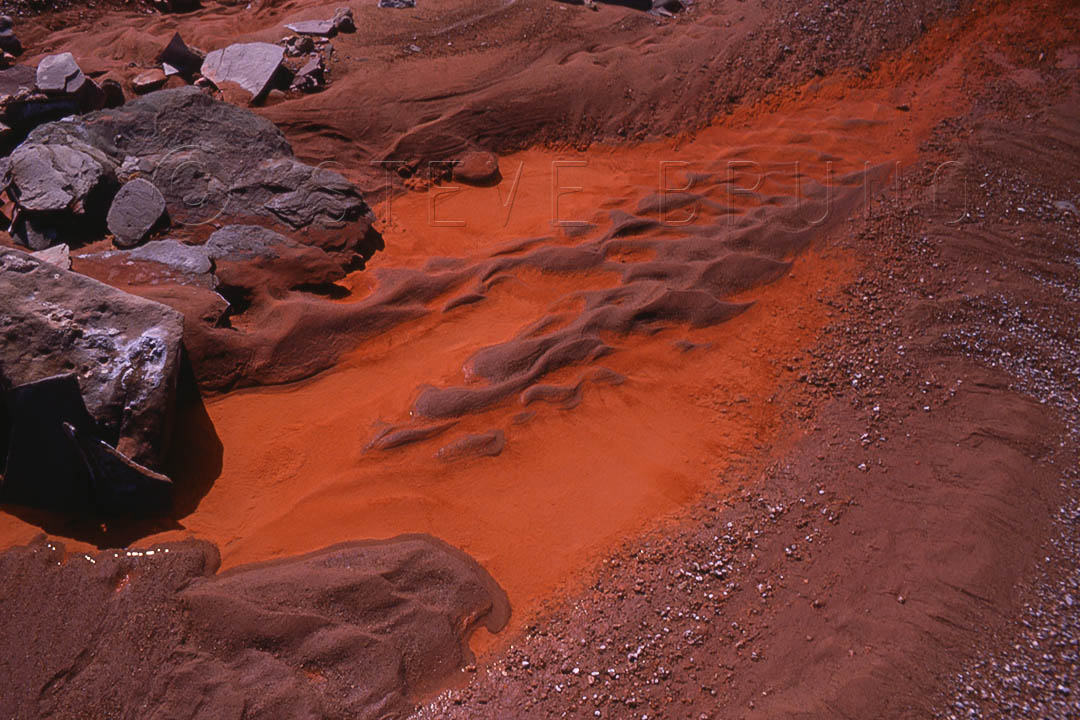
The Painted Desert was a well chosen name, which becomes more obvious when you see it after a rain. These patterns were in a wash where the water was still standing in limited pockets. A polarizer was used to remove the glare and allowed the color come through.
Wash patterns after a rain in Petrified Forest National Park by Steve Bruno
Getting down close to the ground was the best way to get photos of these little goslings, seen on one of my trips to Calgary, Alberta, Canada.
young goslings near the Bow River in Calgary, Alberta, Canada by Steve Bruno
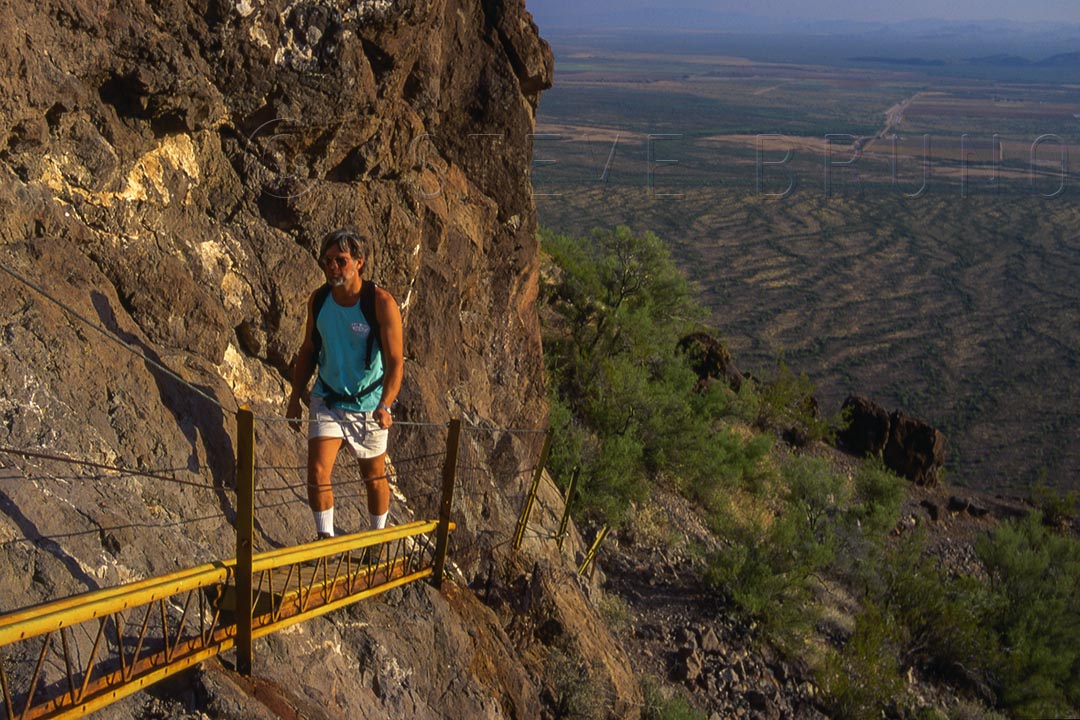
Most people are in disbelief when you tell them there is a great hiking trail right next to Interstate 10, which is arguably the most boring drive in the US. Picacho Peak rises about 1500 feet above the surrounding desert, and on the back side there’s a stretch with very little earth beneath your feet. Posts, cables and planks assist hikers in this steep section. Thrillseekers expecting something along the lines of Spain’s El Caminito del Rey will be disappointed.
Hiker on the built-up portion of the summit trail to Picacho Peak, Arizona by Steve Bruno
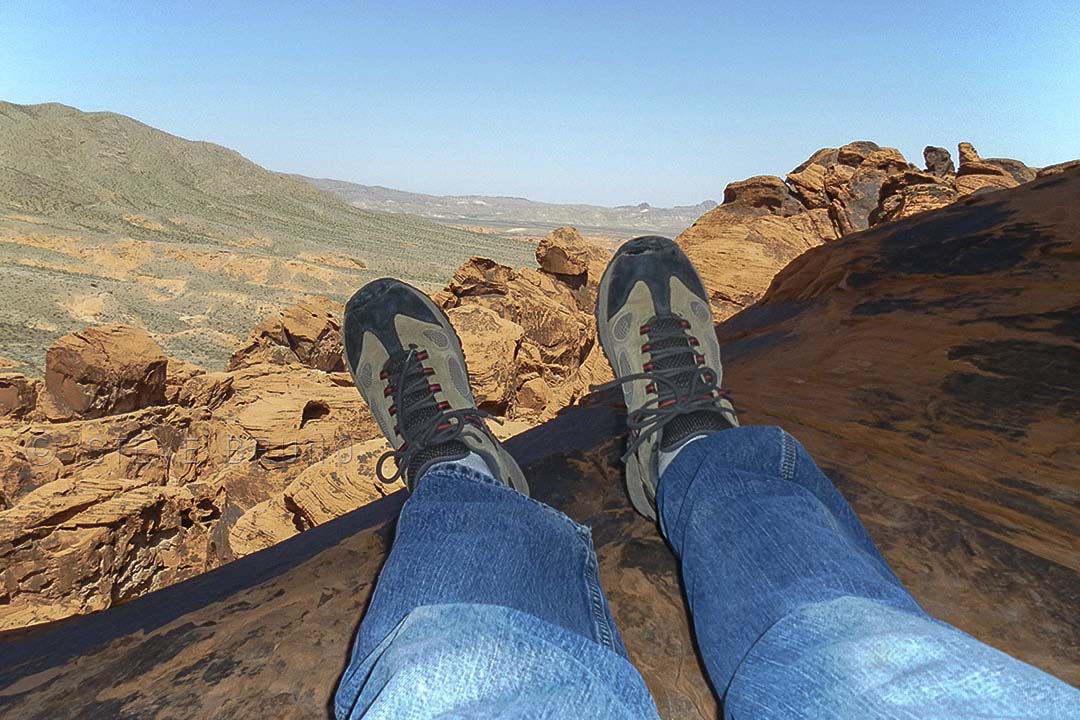
I know some people are big on taking foot-selfie’s wherever they go, but this is the only one I have. From under one of Valley of Fire State Park’s largest arches, where I brought my friend and accomplished hiker, Dave.
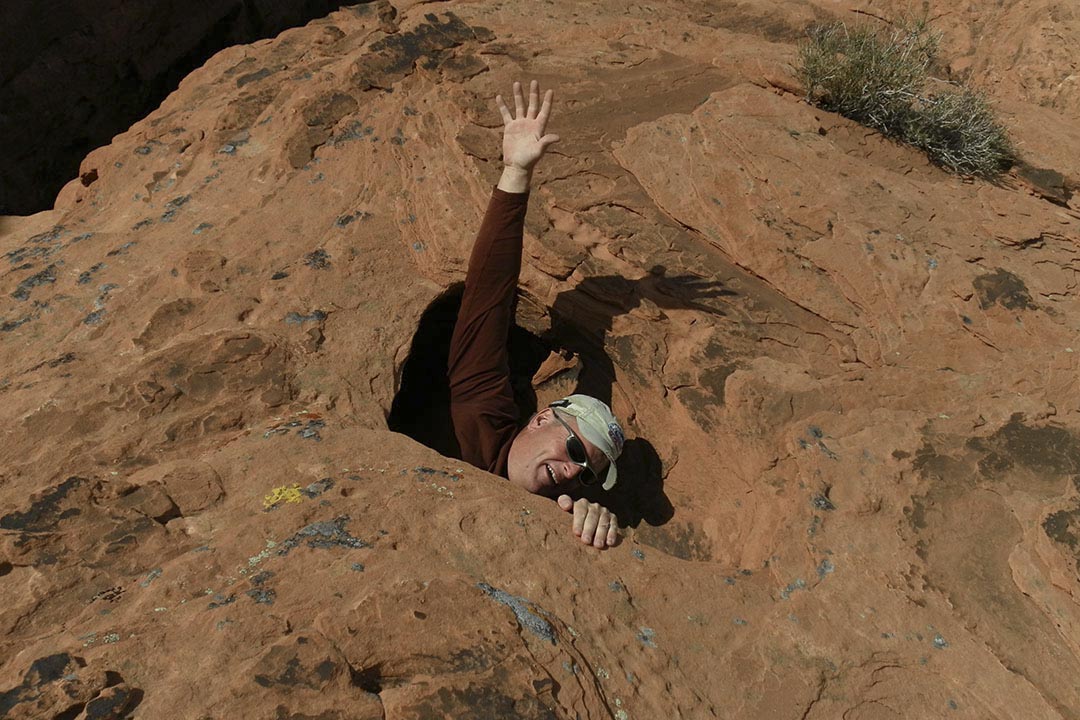
After the arch, Dave and I explored the large sandstone mass in the middle of the park, which I refer to as the park’s summit. Along the way, we came across some interesting potholes and pools. This one went down a short distance, then ejected from the small side canyon in the shaded area, upper left. Nothing under his feet there, and as we walked this area, we could hear some areas that had a hollow sound underneath.
Hiker swallowed up by sandstone manhole, Valley of Fire State Park, Nevada by Steve Bruno
Another great place to check out what’s beneath your feet is Mount Charleston, just west of Las Vegas. The red flowers are called Indian Paintbrush, and this is a squirrel’s perspective on them.
Indian Paintbrush flowers in early summer on Mount Charleston, Nevada by Steve Bruno
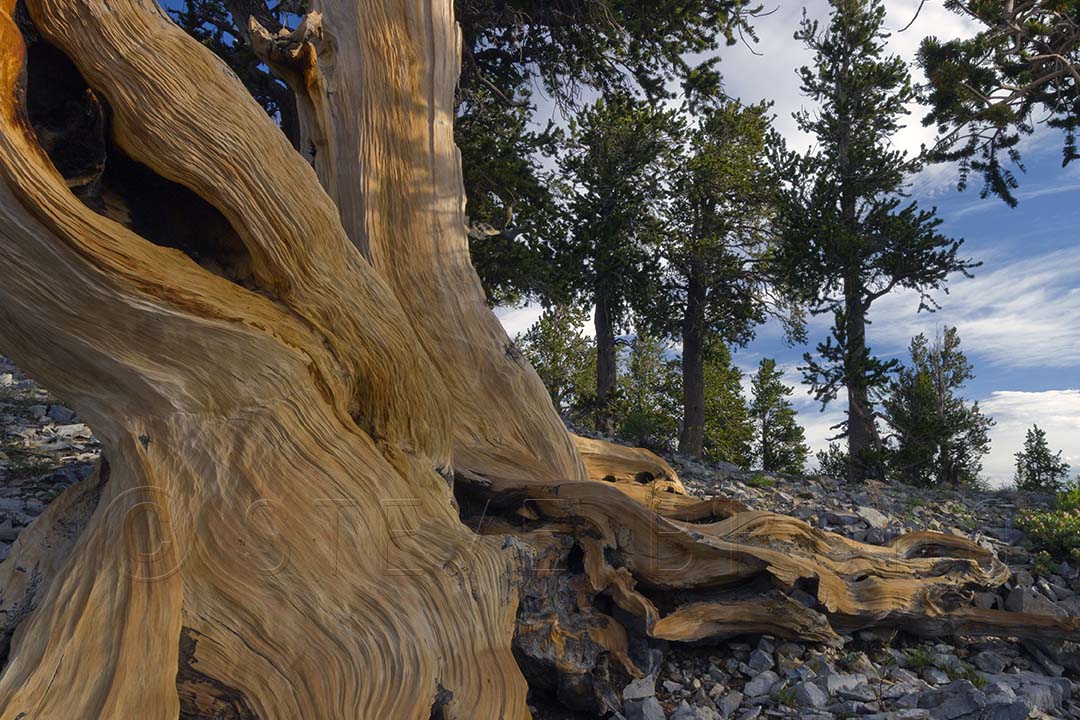
Also on the mountain you will come across both of Nevada’s state trees. This one, the bristlecone pine, is characterized by distinct coloring and patterns, and can live to be 5000 years old.
The base of a bristlecone pine tree on Mount Charleston, Nevada by Steve Bruno.
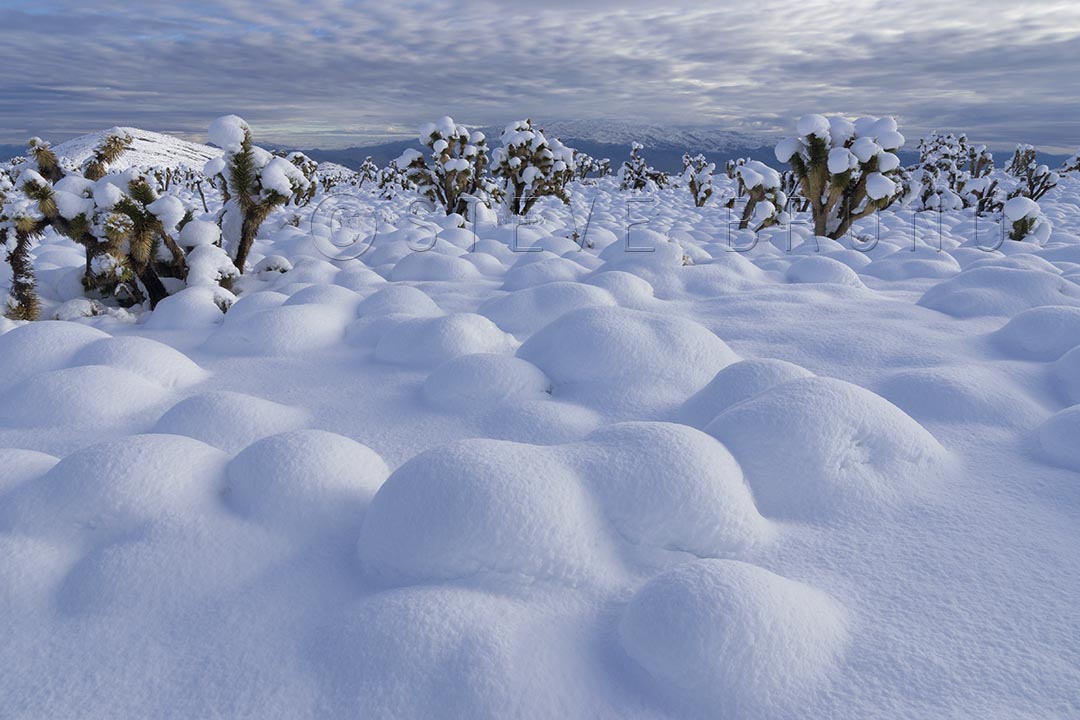
At the base of Mount Charleston, there are thousands of joshua trees. I wasn’t quite sure what was lurking under all that snow, however. Rocks? Bushes? Frozen bunnies?
Winter buries the desert at the base of Mount Charleston, Nevada by Steve Bruno









 Steve Bruno Photo
You must be logged in to post a comment.