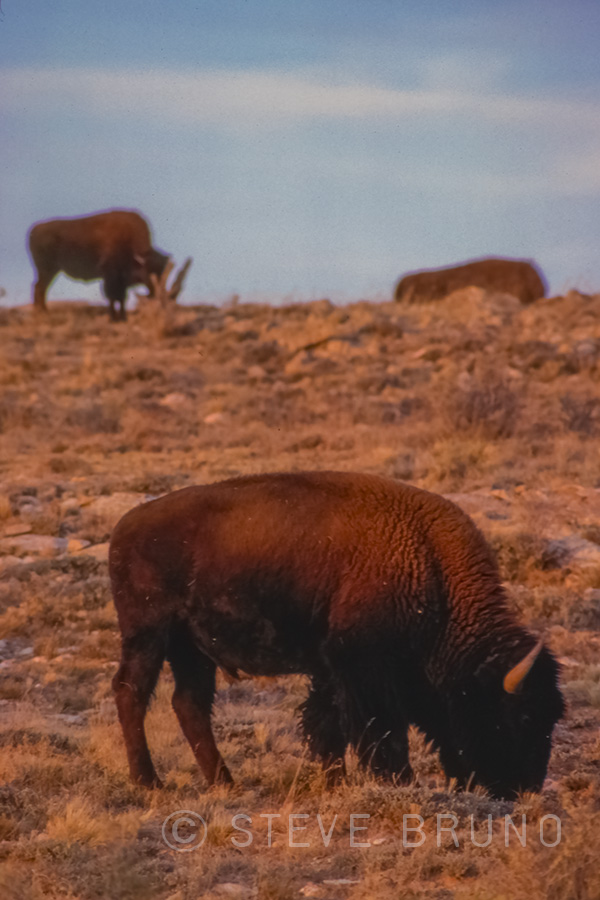
There are 2 places in Arizona where you can find buffalo. One of them, House Rock Valley Ranch, has no fences. The Grand Canyon, Kaibab Plateau, and Vermillion Cliffs all form a natural perimeter. With that much land to cover, don’t expect coming here for animal sightings.
On my first visit to House Rock Valley, I had my brother and his daughter along. She got excited when she saw the sign about the buffalo ranch, but we let her know about the vastness of the property so her hopes were not too high. We drove many miles out to where we set up camp overlooking Marble Canyon, then drove back slightly for another overlook. When we came across a road junction which we had crossed not more than an hour before, there were 5 buffalo standing in the road. Collectively, they easily outweighed my vehicle, so we just sat and watched. After a minute or so, they got bored with the standoff, and started to move along the side of the road. We drove slowly beside them, and then they picked up their pace. We matched them. They continued to pick up their pace, at which point I noticed we were driving 35mph. We were on a fairly smooth road, they weren’t! After about a minute of running with the herd, they peeled away until we lost sight of them.
A few years later I returned to House Rock Valley. This time was specifically to cover the buffalo, and unfortunately, it was hunting season. The herd’s numbers are maintained, and only a handful of permits are issued each year. These buffalo know when it’s hunting season, and become scarce. Rising from the valley at about a 45 degree angle, the Kaibab Plateau has some twisting, sheer walled canyons. The buffalo traverse these canyons like bighorn sheep, and the hunters can’t follow. I met with the manager of the ranch, and he was full of information about these animals. One story he relayed was about the animals’ ability to leave no trace. There are no reliable water sources here, so they have placed water tanks about in several spots. In hunting season, the buffalo will enter from one side, then step on a rock or clump of grass, get their drink, walk around to the other side of the tank, all the while being selective as to where they step, and not leave a track within ten feet. Is it any wonder these animals were so revered by Native Americans?
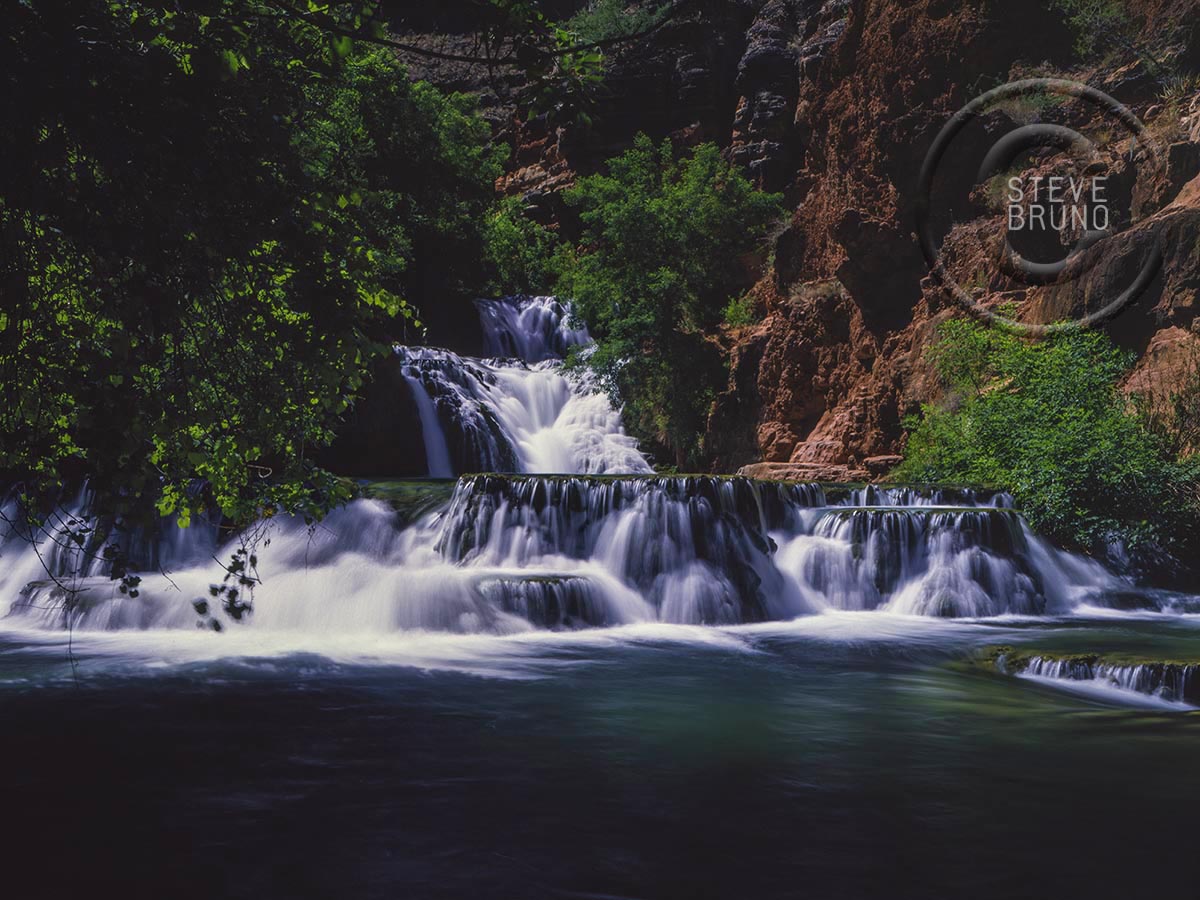
When I shot with a film camera, I always used the slowest, finest grained film. I would mostly shoot in the early or late parts of the day, and when moving water was the subject, this meant getting a blurred, dream-like effect. I always thought this was a magical look to the waterfalls or streams.
I’ve been to many national parks and other special places in the country, but there’s one place that has always stood out. In the Havasupai Indian Reservation in the western part of the Grand Canyon, you will hike a canyon that is similar to the others in the region, but once you come to the first of many waterfalls, this canyon takes on a magical feeling.
This week’s Daily Post Challenge theme is Mirror, and as with many bloggers, I have photos of calm bodies of water. Who can resist pointing the camera towards nature’s reflections? Those weren’t the only ones I came across, and I realized I have more of these than I initially thought I would. Here are some of my favorites.
I usually had my camera along with the dogs out for an excursion, and in these shots, I noticed some reflections.
One happy dog
Another happy dog
In modern buildings, the glass surfaces almost always offer a mirrored image, and here are a couple favorites from Calgary, Alberta.
Calgary Tower looking down 9 Ave SW – Calgary, Alberta
The Bow, Calgary’s tallest building, reflects summer afternoon skies
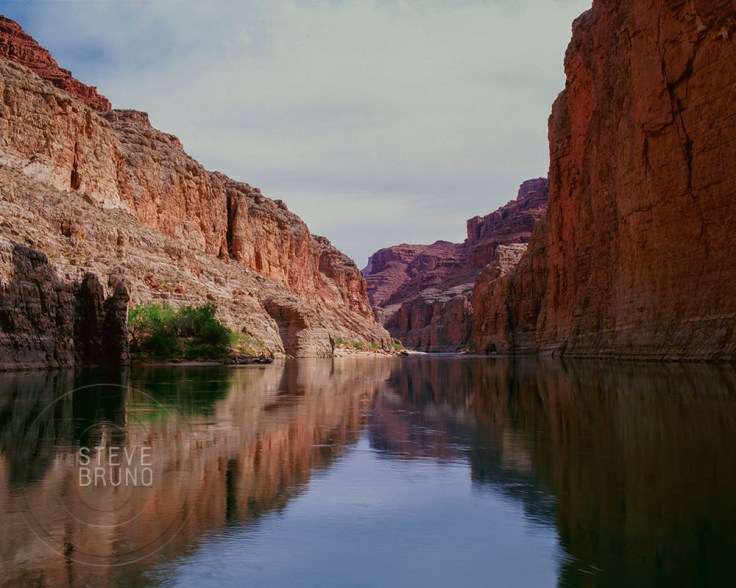
With that much volume of water in motion, large rivers seem like an unlikely place to find a mirrored surface. Despite that, early morning on the Colorado River in Marble Canyon in Grand Canyon, Arizona can look like this.
In my backyard (relatively speaking), I have a couple spots I enjoy hiking in Red Rock Canyon, where I came across these mirrored surfaces.
Small pool reflects cliffs beyond at sunset in Red Rock Canyon, Nevada
Small stream in Calico Hills of Red Rock Nevada
One of my favorite places that I’ve ever hiked, West Clear Creek in Arizona, usually has a breeze moving through the canyon. Early mornings can be very calm, and pools can be glasslike.
reflections disappear into darkness in a deep part of West Clear Creek Canyon, Arizona
Forests and cliffs of West Clear Creek Canyon, Arizona
Mountain lakes with reflections appear to have proliferated my files without me being aware of it. Here are some in that category.
Maroon Bells, Colorado at sunrise
small lake in Rocky Mountain National Park, Colorado
aspen trees along a pond near Flagstaff, Arizona
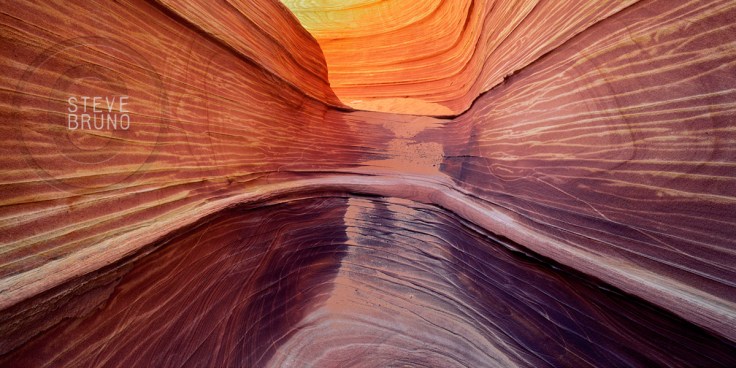
One image that always made me look twice was this one from Coyote Buttes. There is no water or reflection here, but I felt like the illusion was there.
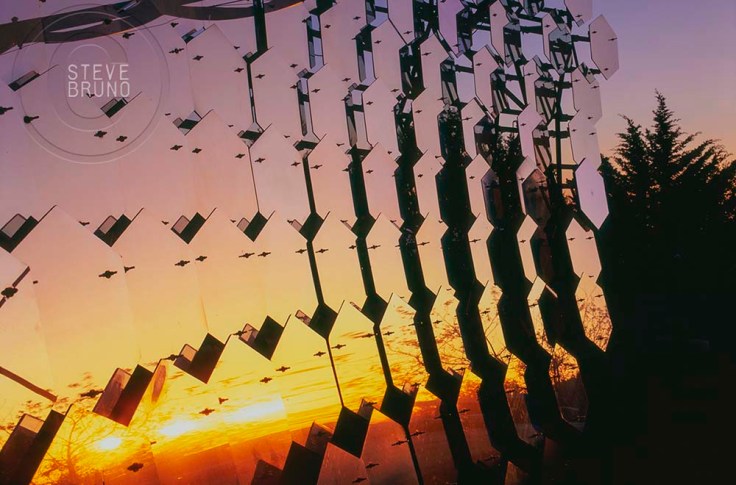
I have one photo of an actual mirror. This is the MMT (Multiple Mirror Telescope) at the Whipple Observatory on Mount Hopkins, Arizona. During daylight, this telescope dish is tilted down and pointing northward. This was around the summer solstice, and at sunset, when the sun was at its furthest point north. As I walked by, this cool mountain air had a hotspot about 20 degrees warmer from the sun just grazing the edge of this dish array. I can’t imagine the destruction if this thing were aimed in the slightest degree towards the sun.
Finally, a little bit about the featured image. That’s Saguaro Lake, on the outskirts of Phoenix, Arizona. It’s usually a crowded place, especially in summertime. This happened to be in winter, after a couple days of rain. It’s a fairly sizeable body of water, and this reflection has to be a rare moment, and the absence of people, even rarer. This photo will always have a special place in my memories. It was the first one I ever had published.
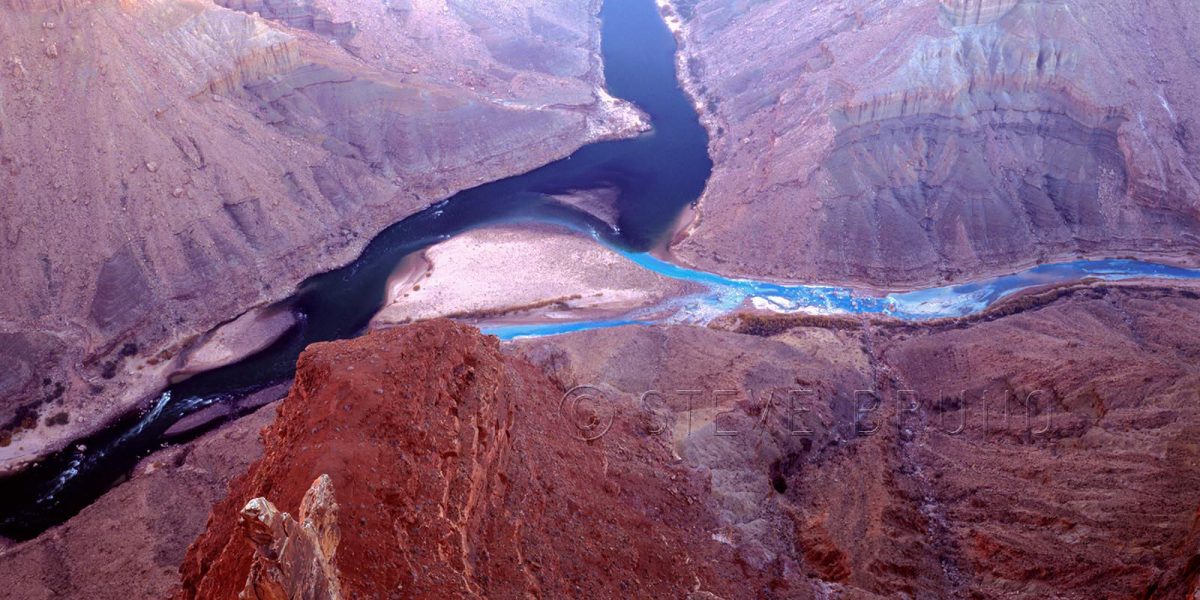
The Grand Canyon is one of earth’s special places, and even in special places you come across spots that are extra incredible. The photo above is the confluence of the Little Colorado and Colorado Rivers in Grand Canyon National Park, Arizona. During the majority of the year it looks like this. The turquoise colored waters of the Little Colorado, coming in from the right, are fed from a highly mineralized spring about six miles upstream. The Colorado’s waters come from Glen Canyon Dam, which filters out most of the sediment, leaving a deep green hue to the water, when the sunlight hits it. If there is a flood in the vicinity, either, or both, will turn muddy before returning to this two tone mix.
For this week’s challenge, I thought the changing of the Little Colorado’s waters after mixing with the larger volume of the main river showed the visual aspect of change. But there’s a far deeper issue of change at stake. The photo above is in National Park property, but about a mile east, just outside the right edge of the frame, is the boundary with the Navajo Indian Reservation.
A project called the Grand Canyon Escalade is still being considered to be built in the Navajo lands at the edge of the national park. The project’s main feature would be a gondola estimated to bring up to 10,000 people a day into the canyon. At the bottom would be restaurants, shops, an amphitheater and elevated riverwalk. You can also add toilets and garbage to that list. On the rim would be hotels and an RV center plus more of the previously mentioned items. They seem to have omitted where the water supply would be coming from.
The Escalade idea came from developer R. Lamar Whitmer, with the project offices based in Scottsdale, Arizona. Mr. Whitmer has several arguments for his cause, including making this area “accessible to those who might never get to enjoy the tranquil isolation at the bottom of the canyon”. Have you been to Mather Point on the South Rim, Mr. Whitmer? There can easily be a thousand people there at sunset, and the words “tranquil isolation” are the furthest thing from my mind. I can’t imagine experiencing tranquil isolation with thousands of strangers in this tight little pocket of the canyon. That is where raft trips fill the need quite well.
The major selling point of this project was jobs for the Navajo Nation, where unemployment is incredibly high. Nobody could possibly be against that, or could they? Written into the contract is a non-compete clause for 40,000 acres along access roads. It seems all those jewelry stands run by nearby families would have to go, among others. And how about that corporate address? I would have an easier time believing that the Navajos’ best interests were at stake if it was based in Window Rock, or Cameron, or even Flagstaff. Are the Navajo workers supposed to move or commute to Scottsdale? Or are the Navajos not even being considered for corporate level jobs?
This project is completely in the hands of the people of the Navajo Nation. There is nothing that US citizens or the US government can legally do to prevent this from becoming reality. The nearby Hopi tribe has no say in the matter, either. The spring which feeds the Little Colorado is one of the Hopis’ most sacred sites. Fortunately, newly elected Navajo President, Russell Begaye, is against the Grand Canyon Escalade. This is probably the best news to come about since this idea first started. His predecessor was completely for it.
In addition to the impact in the immediate area, this eyesore will be visible from many points along the South Rim, and those points on the eastern drive of the North Rim. The spot I was standing, even though considered backcountry, used to have a rough road leading all the way out to the overlook. Very few people knew of this, but it only took a couple of disrespectful people, having bonfires and leaving trash, to make it so you have to walk the last five miles now. I wonder what the impact will be when the numbers are in the thousands?
I really don’t want to add this to my historical photograph collection.
In response to The Daily Post’s weekly photo challenge: “Change.”
I posted a bunch of creepy critters in the Close-Up challenge. If you missed those, you can find them here. That made me search harder for some different creepy images.
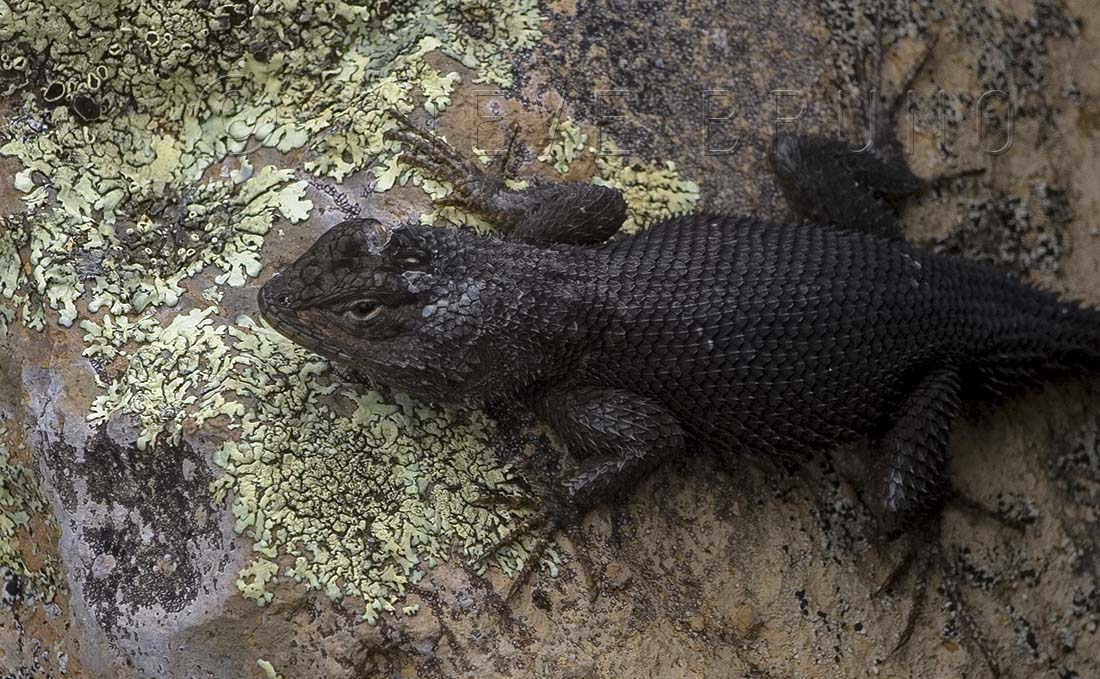
Initially. I have this lizard which I came across in the Chiricahua Mountains of southeastern Arizona. Probably not that creepy until you look at the gash on the top of its head. He was a fairly sizeable creature, but it makes me wonder what thinks of him as dinner.
Lizard with a gash on its head, southeastern Arizona, photo by Steve Bruno
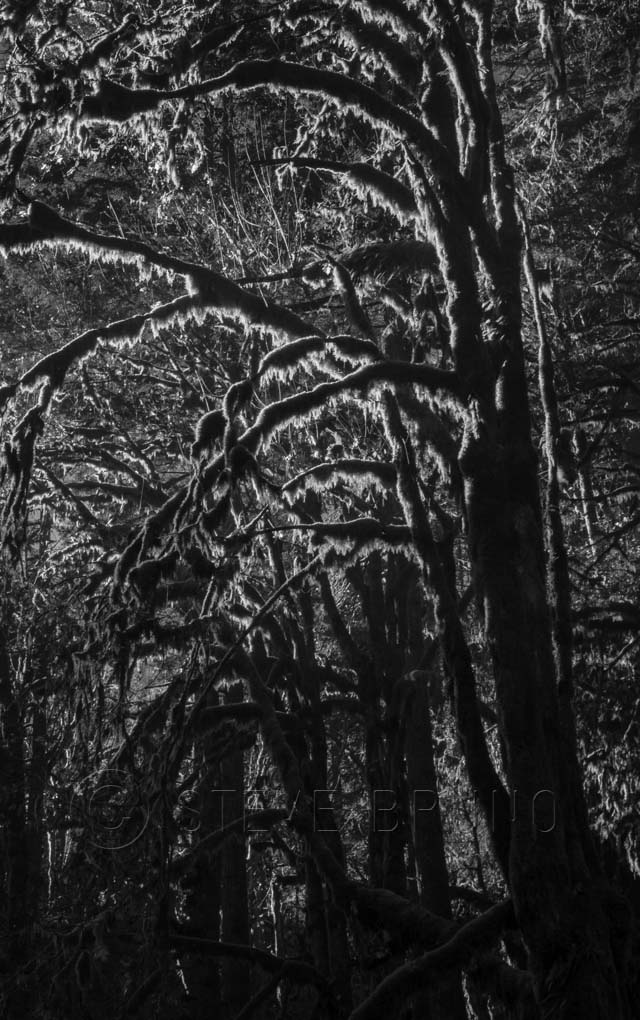
Dark forests can be creepy, and one of the darkest I ever came across was in Hawaii, of all places. I didn’t take any photos there, but this one, with the moss hanging from the branches, is from last year in Oregon.
Sunlight filters through the moss covered forest in central Oregon, photo by Steve Bruno
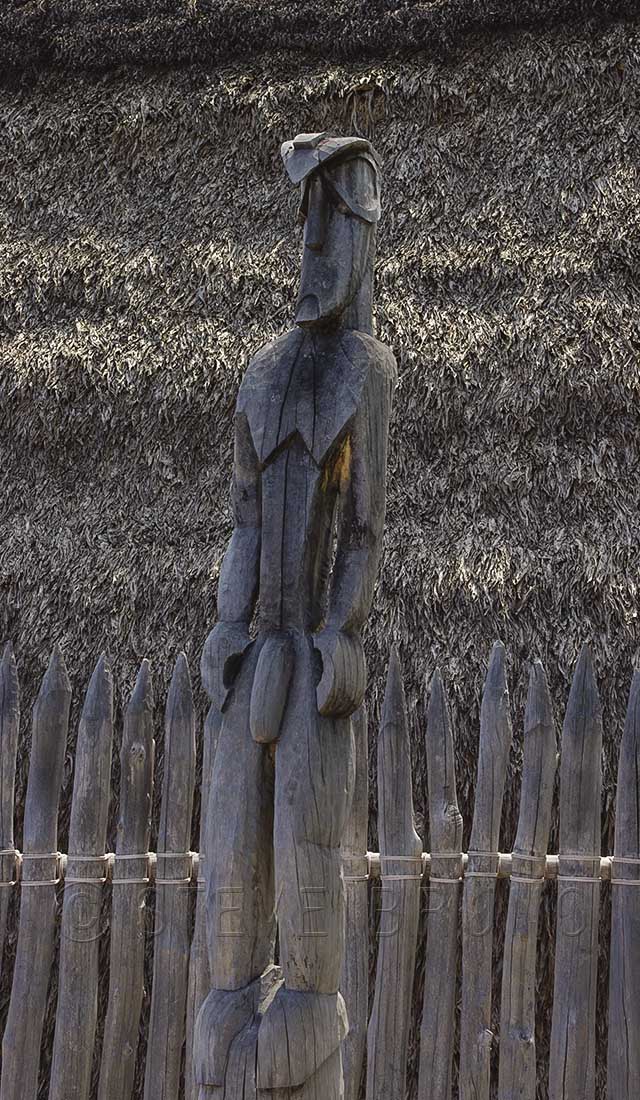
At Pu’uhonua o Honaunau National Historical Park in Hawaii, there are many carvings. Most of these are genderless with ugly faces with large teeth, which would imply they were there to scare off intruders. The creator of this one decided it was scarier to have a relatively featureless face and a large penis. That’s creepy!
Carved statue in Pu’uhonua o Honaunau National Historical Park, Hawaii by Steve Bruno
Other symbols, created by a different civilization are equally bizarre. In the Grand Canyon, this panel of pictographs has some creepy characters on it. In addition to the large symbols, there are 5 faces which are nothing more than 3 dots and a line on top (4 lines for number 1). Two eyes and a mouth is my guess, but it’s more like a nose on 4 and 5. There’s also the ghostly white symbol on the far left. I’m not sure how the two deer ended up on this one. This panel is, fortunately, out of reach of anybody today, so this is how it was created over 700 years ago.
Strange panel of pictographs in the Grand Canyon, Arizona by Steve Bruno
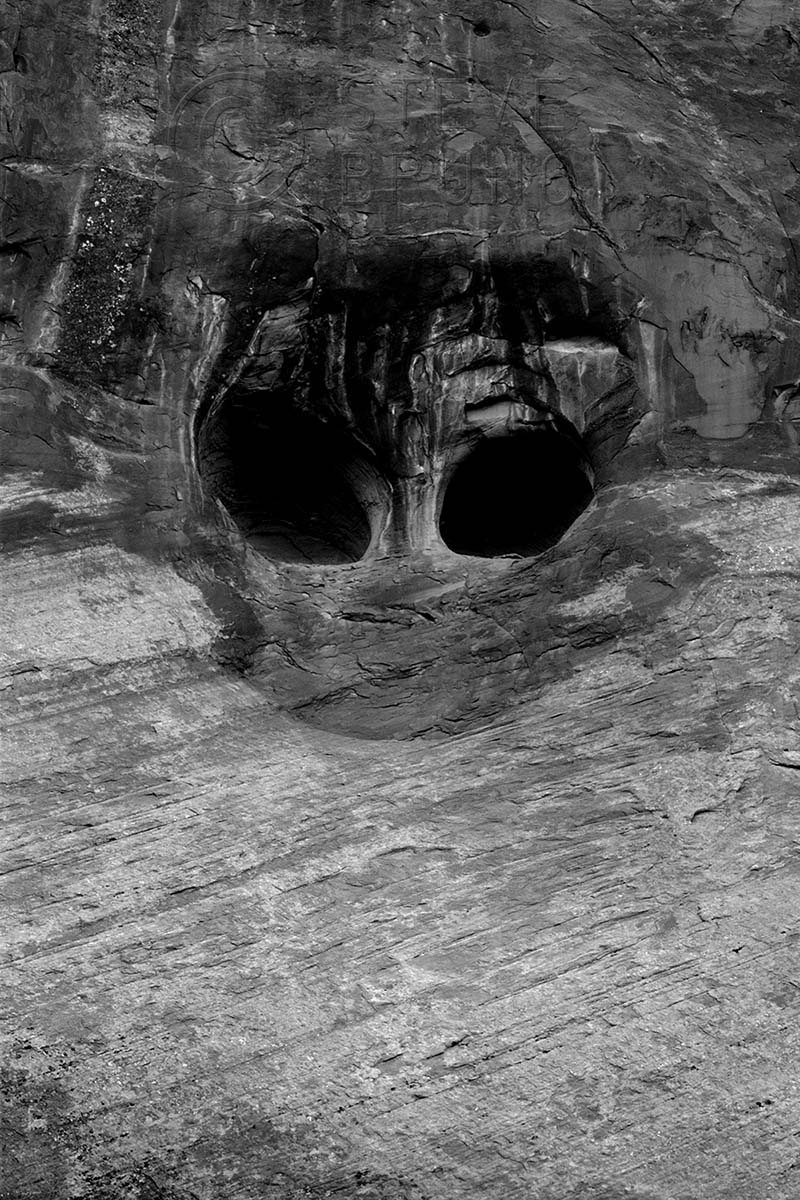
By far, the creepiest site I have ever encountered was this pair of grottos in the canyons near Moab, Utah. The dark features around the two grottos suggest a rather alien-like face, and I couldn’t help but have the feeling I was being watched.
Canyon walls near Moab, Utah appear to have eyes. Photo by Steve Bruno
I walked down to the viewing area of Grand Canyon’s Point Imperial where there were a dozen or so tourists. I spotted the ranger amongst them, yet by himself. “Excuse me, but where can I find the complaint department?”
Everybody’s head turned. Complain? About the Grand Canyon? What has this guy been smoking?
Without hesitation the ranger replied, “Right here!”
“Simply put” I said, “bark beetles”
The ranger and I engaged in a conversation for several minutes where he explained the park service’s approach to the fires and the beetles. I brought up the fact that there have been ways of exterminating the beetles for many years, but I realized he was just the messenger. After decades of a policy that put out fires as quickly as possible, land managers have figured out it is best to let nature run her course.
Translation: We’re going to let the wildfires burn the beetles out of existence.
I thanked the ranger for his time, but as I looked around I just felt nauseous.
A couple who had been there several years before were sitting, listening, on a nearby bench. “We thought we were driving through a toothpick factory” they commented, “We just wanted to cry!” I conversed with them for a while, sharing our feelings for a once spectacular place that has lost its luster.
The ‘toothpick factory’ they were alluding to was actually outside the park boundary, in Kaibab National Forest. As I drove in I couldn’t help but feel saddened. Mile after mile of completely scorched forest had an eerie feeling to it, even in the middle of the day. That fire’s damage stopped before the Grand Canyon park boundary, and I remember having a sense of relief, thinking that the national park’s forests were spared. But that was not the case. Separate fires have left their mark, leaving the forest unrecognizable from its former appearance. It’s downright ugly in places. I honestly felt a couple bulldozers would help.
If you haven’t been there before, I should explain. The North Rim of the Grand Canyon used to be a package deal. The journey started at the town (gas station, restaurant, hotel) of Jacob Lake. From there it’s about thirty miles to the national park boundary. Driving across the Kaibab Plateau and its pine and aspen forests, mixed with small lakes and open meadows, you got the feeling that you were entering a special world long before arrival at the park’s gate. On my previous visits, I could swear they had landscapers working at night. I had never seen a forest that immaculate before. It wasn’t just that it was clean, there was something in the way the trees were arranged, as though it had been planned. It seemed to other forests how Augusta National is to other golf courses.
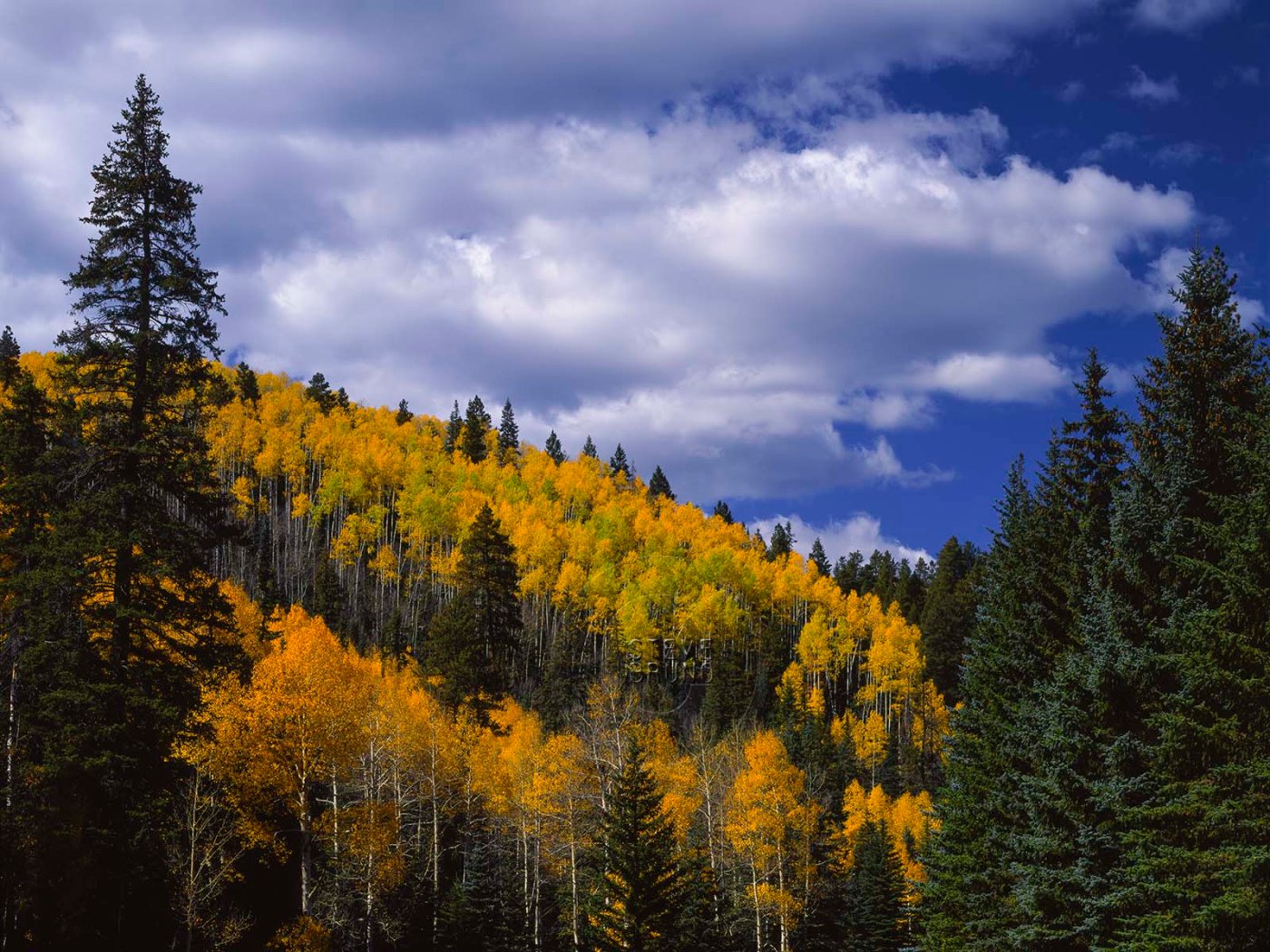
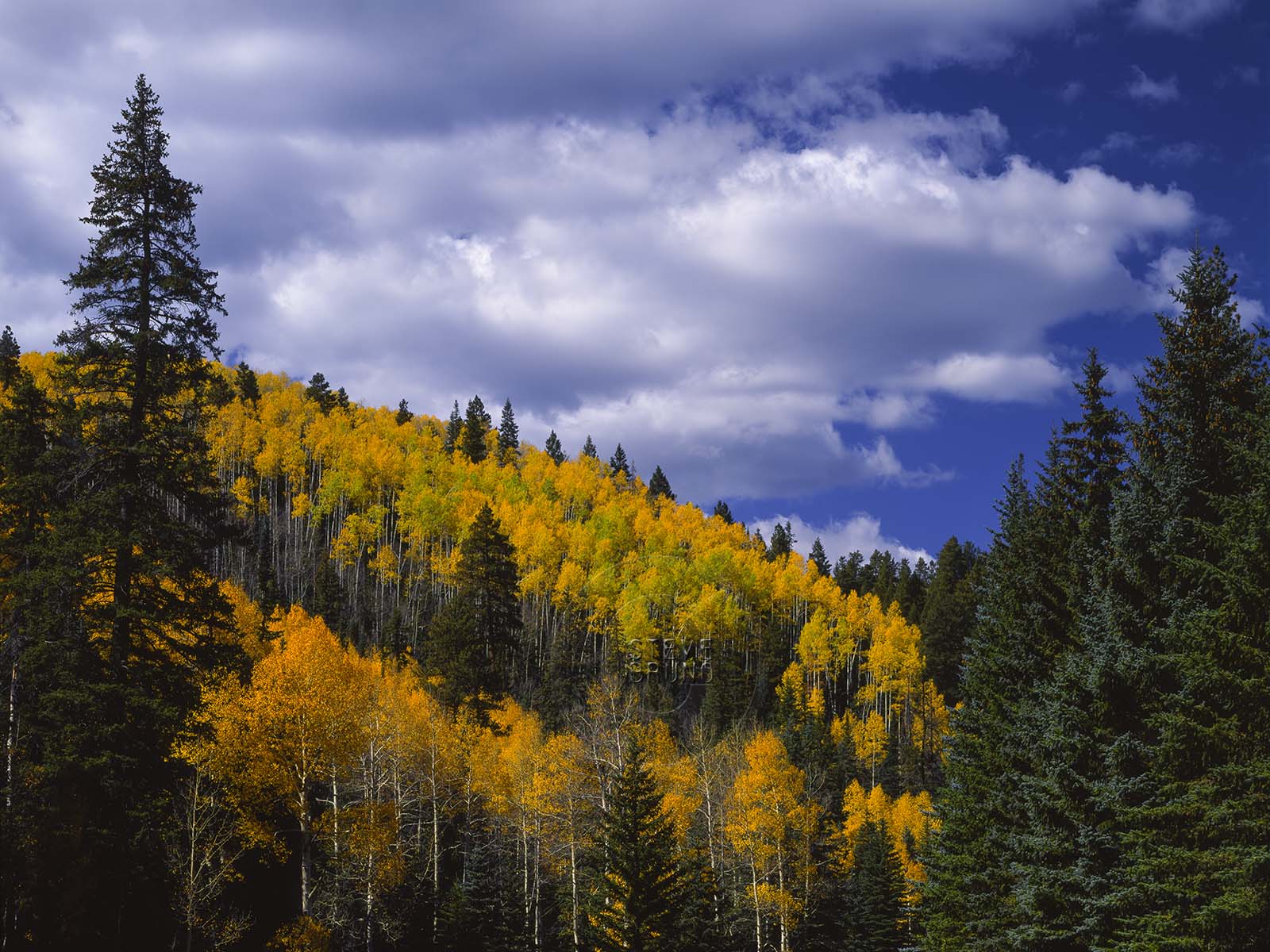
Autumn was a magical time here, especially near where the road to Point Imperial left the road to Cape Royal. Aspens lit up the forest with their golden hues, sometimes lingering to reach a shade of pumpkin or tomato. Two cars would be crammed into the pullouts designed for one. Occasionally, people might not even pull completely off the road, just getting out of the vehicle to snap a quick pic or two. Nobody honked their horns in a petulant rush. Everybody slowed down to admire this gem of a forest. And the Grand Canyon was still three miles away – yes, THE Grand Canyon!
Forest in autumn near the junction of the roads to Cape Royal and Point Imperial by Steve Bruno, 1992
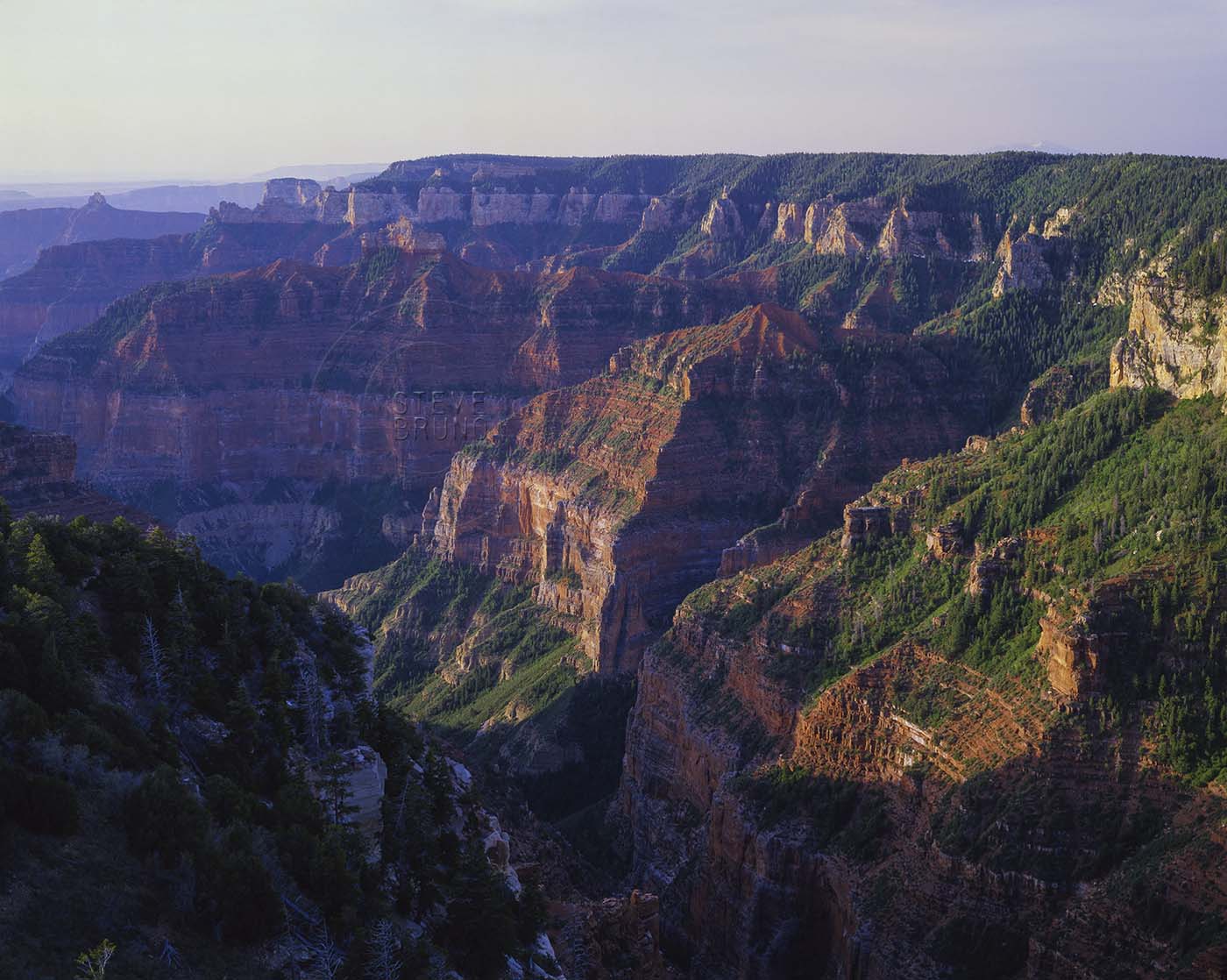
As the road continued to Point Imperial, it offered hints of what lay beyond, finally terminating in a forest of ponderosa pine. These majestic trees towered to the skies, giving a visitor the impression there was a touch of redwood mixed into the DNA here. Between all that shade and the encompassing view, it used to be a great place to have a picnic lunch.
The fire line stopped on this point, and now I think there are two tall pines left. To the north, where the small brush is growing back, it looks like an overgrown weed field. The Grand Canyon is still there, relatively the same. I say relatively because evidence of bark beetles is visible as one looks towards the south. Lush green trees protected from all else by sheer cliffs, are starting to brown. A lightning strike is the only chance this pocket of forest has of catching fire and eliminating the beetles. That seems like it would only be trading one shade of brown for another, but at least the forest might have a chance to recover. That is not an option for beetle devastated trees. Several generations of visitors will get to view this slow, lingering death.
Grand Canyon looking south and east from Point Imperial by Steve Bruno, 1988
Fires are a natural and healthy process for the longevity of our forests. Public land management officials have come to the realization that dense undergrowth is the fuel for intense fires, and make efforts to clean out that growth. Drought may be something out of our control, but the bark beetles are not. The Grand Canyon is not the only place subjected to this damage. Forests throughout the western US are being destroyed by the insects, leaving them unhealthy and prone to massive fires.
In the famous words of Smokey the Bear, “Only YOU can prevent forest fires!”
I wonder if Smokey knew about bark beetles? Are WE supposed to be doing something about those?
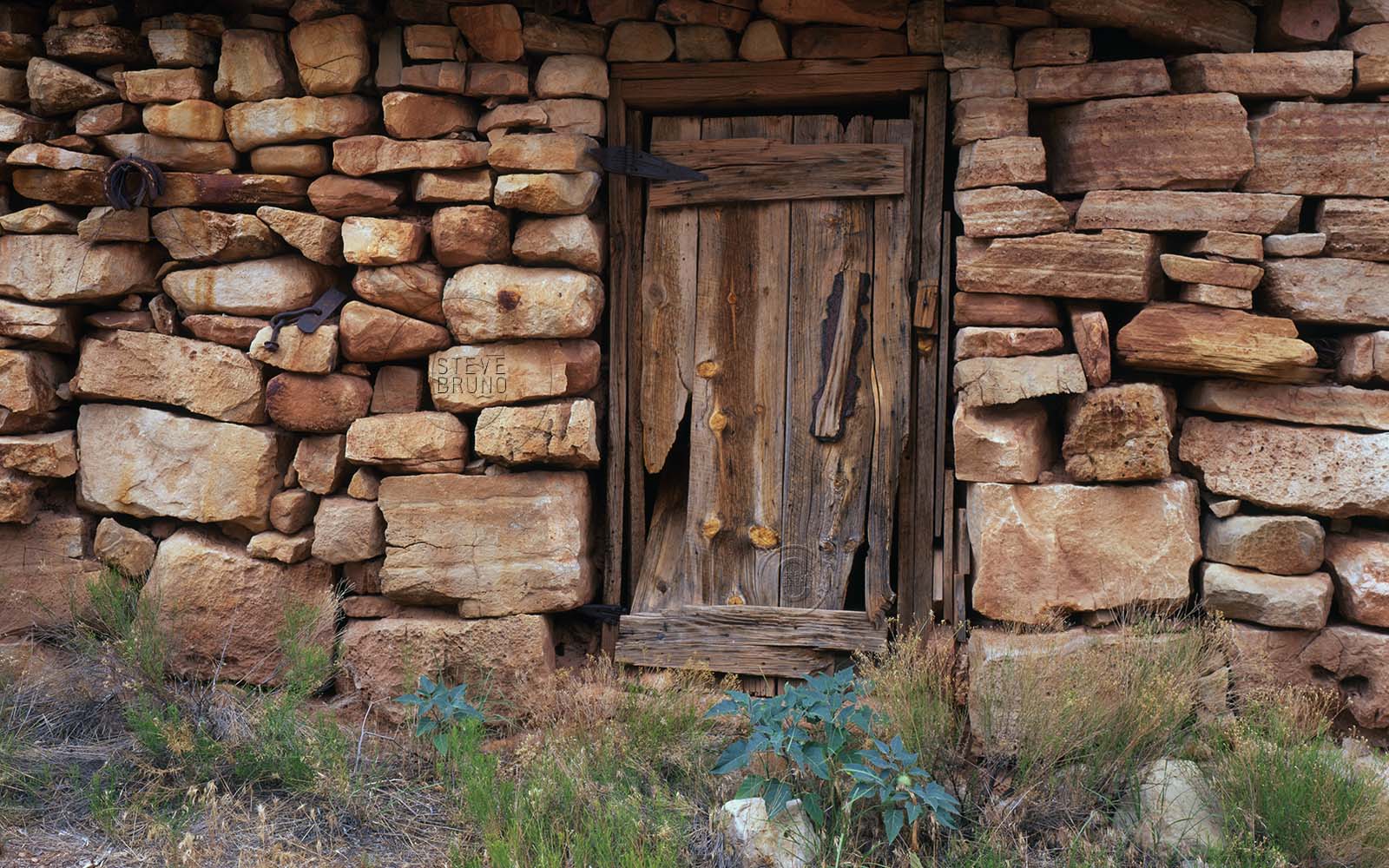
Door to Eddie’s Place in the Kanab Creek Wilderness, western Grand Canyon by Steve Bruno
Welcome to Eddie’s Place. There are no roads here, and you will have hiked at least ten miles to get here. Deep in the Kanab Creek Wilderness on Grand Canyon’s western edge, the building comes as a surprise along the route to most visitors. Eddie was a veteran who returned with leprosy, and was given the chance to live out his years far away from society. This was long before any wilderness designation was assigned to the region. It’s been over ten years since I visited last, but I have a feeling this durable structure is still intact. I feel sorry for the mule that had to bring in the cast iron stove, however.
In response to The Daily Post’s weekly photo challenge: “Door.”
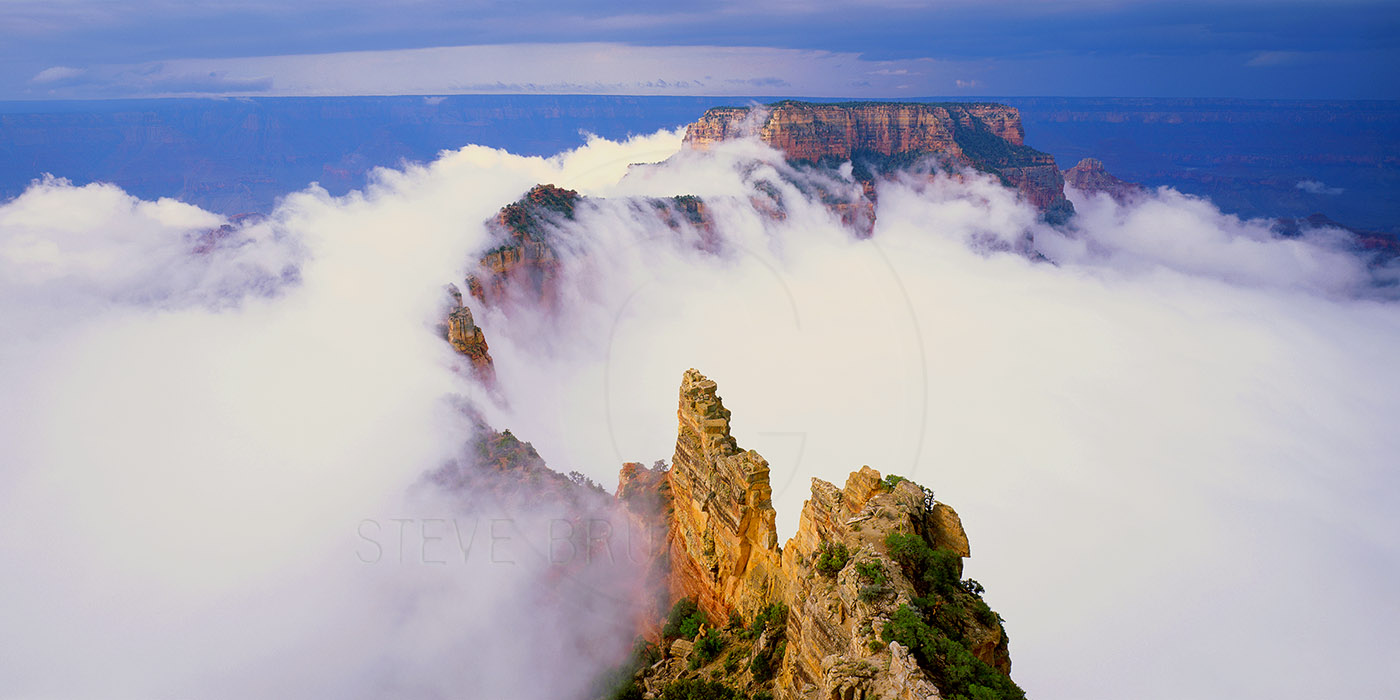
I had several photographs that I considered posting for the ‘ephemeral’ challenge, and this was one of the runner-ups. Besides, it has a story. I’ve spent many days at the Grand Canyon. Months, if you tallied them all up. This was the most spectacular morning I have ever seen there, and this image was my reward for waiting it out.
The Grand Canyon has inversions, about once every several years according to the National Park Service. On those occasions, the whole thing fills with fog and lasts a while and doesn’t offer much of a view into the canyon. This wasn’t one of those events, but in a single still frame it may appear that way.
This morning started like any other. I got up at dark o’clock, crawled out of the sleeping bag, put on appropriate clothing and started my truck (my home on wheels at times). My sleep had been interrupted several times through the night by thunderstorms. Just when I thought they couldn’t get any worse, they did. I was camped in familiar territory in the National Forest outside the park boundary because it is a quiet spot – from people, anyway.
Cape Royal is the last stop on the North Rim Drive. It is only a couple miles away from the North Rim Village as the crow flies, but twenty-something miles for those of us in a vehicle. As I walked out to the point the sky had become less black, and I could see that there was potentially going to be a window in the clouds for the sun to make a grand entrance. The air was still wet, but it wasn’t raining. It was more like the wind was sucking away raindrops from the storms that were a couple miles away to the west, right about where the village and my campsite were. Meteorologists have a term for this, they call it ‘training’. One strong thunderstorm rolls through and sets up a favorable environment for others to follow. I think this one had four engines, because the caboose was nowhere in sight.
This was still the film era. There were no weather seals on my 4×5 camera, and those errant raindrops weren’t going away. As sunrise was getting near, I could see that the opening in the clouds was still there, but if the sun came through it was probably going to be muted. The overall look was still very gray and hazy. The thing that struck me as odd was the lack of people. The parking lot has room for over a hundred vehicles and I’ve seen it full, especially at sunset. Cape Royal is a great spot anytime because of its sweeping view and options for photographs.
Commence act one. The skies in my proximity were ugly, but the sun streamed across the Painted Desert with no obstructions. I was cringing. Raindrops were still drifting in from the west, and as long as that was happening, I couldn’t get a shot. As the sun hit them, they produced a full distinct double rainbow in a purple sky. It was absolutely insane looking! The spectacle lasted for at least five minutes before the color started to shift, and the spectrum became less intense. After another five minutes, the sun slid into the lip of the cloud cover and act two of the show began. All the cliffs below me were wet and glowing from the early morning sun. The colors were more intense than I had ever seen there. Rainwater pockets on all the mesa tops glistened like topaz crystals were strewn about, and I still wasn’t getting any shots. Neither was anybody else, because there still was nobody else.
Act two wrapped up and I wasn’t sure there was going to be an act three. It was back to being ugly gray with no more potential windows visible. But the air had dried out. Now? Really? I was so frustrated at the timing of it all. I knew I had witnessed a special morning there but had nothing to show for it. I headed back to my vehicle for some breakfast. Intermission, as I like to call it. Nothing to do but wait out the morning, and the vantage point from Cape Royal was the perfect place to catch any indication of a change in the light. The smell of rain-soaked sage and pine filled the air, I still had the place to myself, and the peacefulness of it all was refreshing.
Breakfast was over, and the sun started to win its battle against the clouds, making it brighter and warmer. I grabbed my camera and headed back out to the point. Enter act three. All that moisture below needed to escape into the atmosphere, and that warm late-summer sun was hitting stride. Slowly, little patches of fog began to congregate below me. There didn’t appear to be any more threat of raindrops, so I had my camera on its tripod. Despite it being well past sunrise, the colors were getting better. I began capturing images as the collection of cloudlets was gaining strength. Finally, as one big mass, they begin to lift, and roll across the mesa immediately below me. I was using a panoramic roll film back and clicking as fast as that camera would allow. The entire process would have been a spectacular time-lapse film clip, but I was glad to be capturing images at last. Then, almost as quickly as it came together, it all broke back into fragments and was dissipating. I was packing my camera up as I heard an enthusiastic voice on the rocks above me. “Hey, come see this!” the first of the sleeping villagers beckoned to the others. I felt like yelling out, “Show’s over – you missed it!”





 Steve Bruno Photo
You must be logged in to post a comment.