Search

Steve Bruno Photo

Tag

Arizona

Monochrome Madness: MM3-32

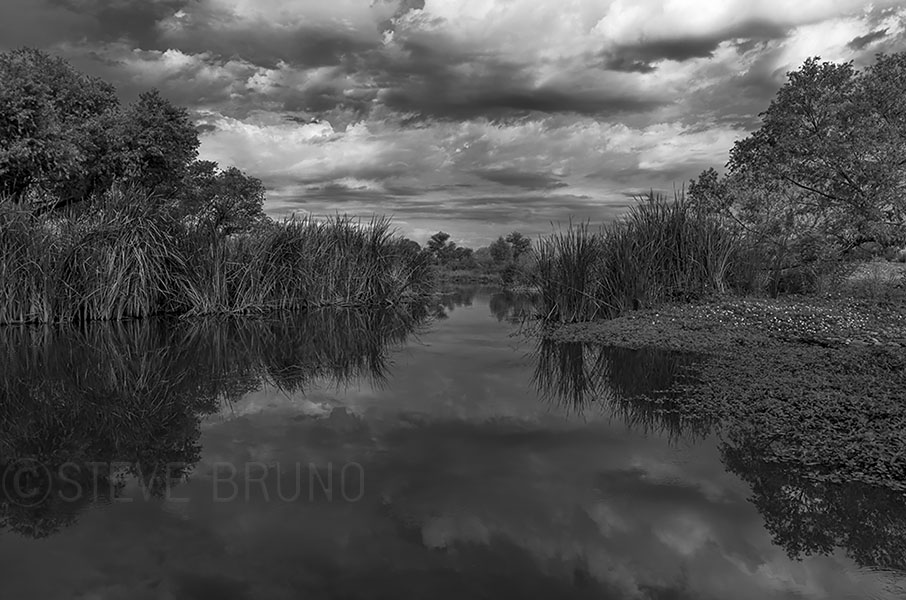
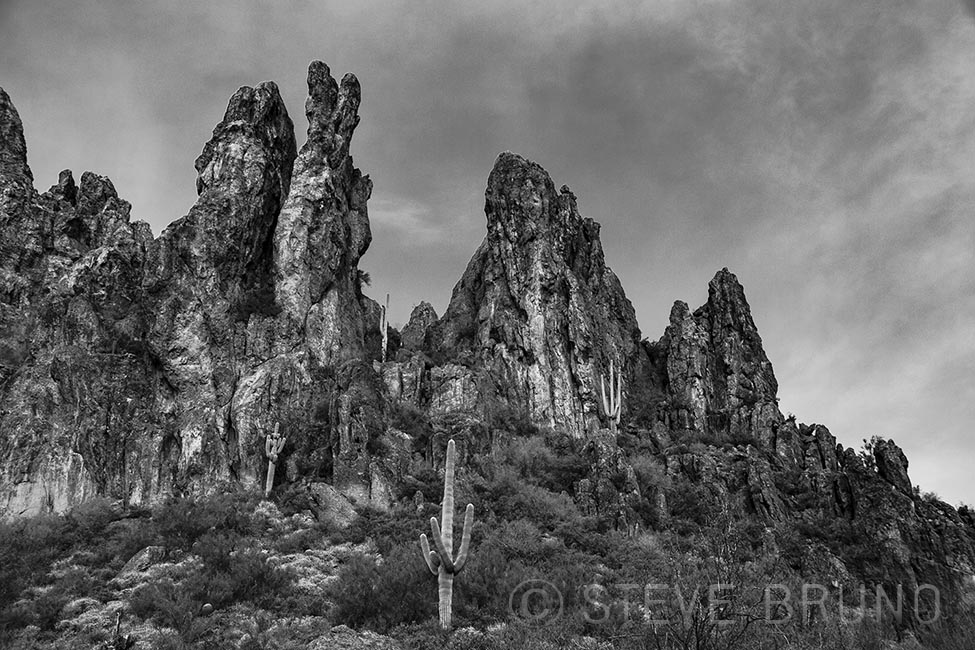
Thanksgiving week, and a chance to return to the place that kick started my passion for photography.  This location is in the Superstition Mountains, east of Phoenix, Arizona.  I’ve spent many days hiking around here, and this is from my most recent visit.  Whether it be family, friends, or other aspects of our lives, I hope all my readers have the opportunity to reflect on the things which we have to be appreciative of this Thanksgiving.

You can find this photo, and the contributions of other bloggers in this week’s Monochrome Madness hosted by Leanne Cole.

WPC: Magic

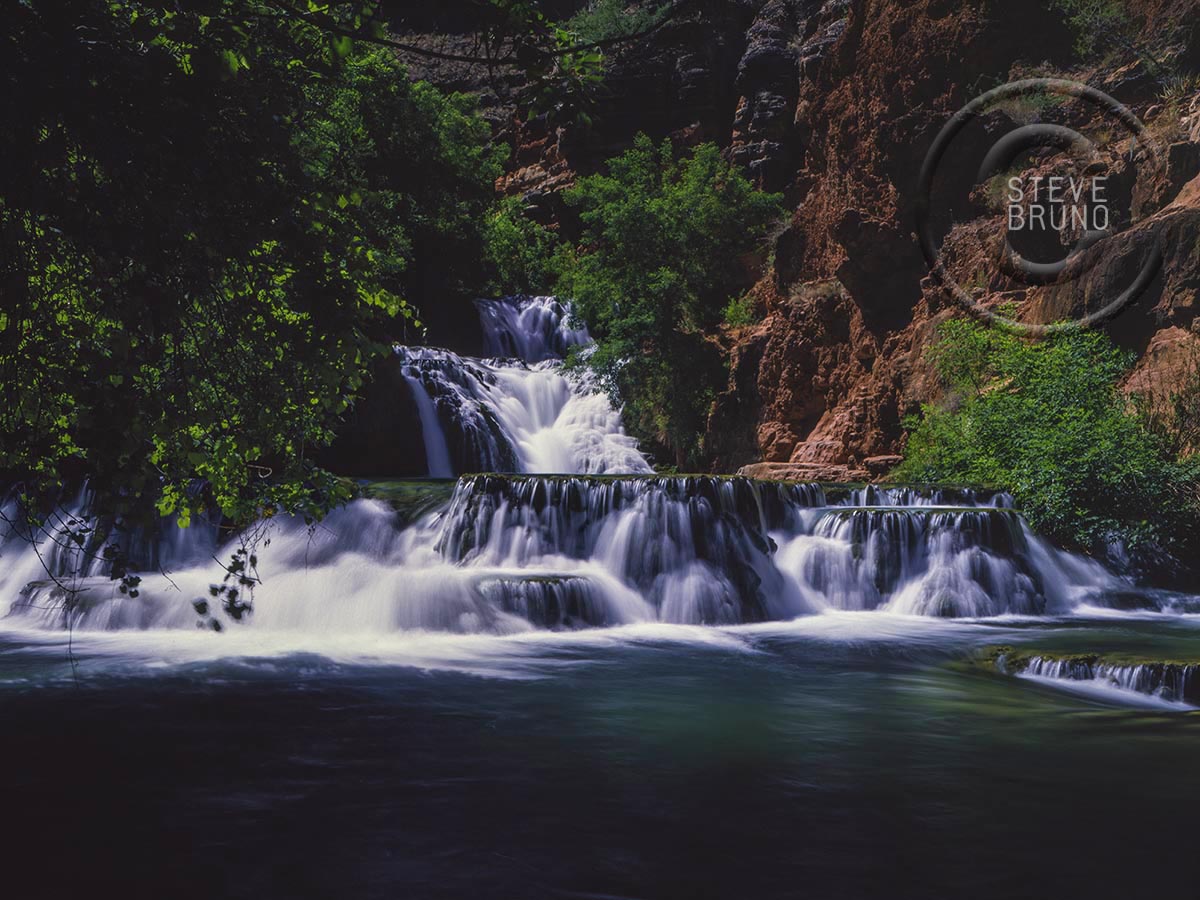
When I shot with a film camera, I always used the slowest, finest grained film.  I would mostly shoot in the early or late parts of the day, and when moving water was the subject, this meant getting a blurred, dream-like effect.  I always thought this was a magical look to the waterfalls or streams.

I’ve been to many national parks and other special places in the country, but there’s one place that has always stood out.  In the Havasupai Indian Reservation in the western part of the Grand Canyon, you will hike a canyon that is similar to the others in the region, but once you come to the first of many waterfalls, this canyon takes on a magical feeling.

For this week’s Daily Post Challenge of Magic, waterfalls in Havasu Canyon.

Monochrome Madness: MM3-28

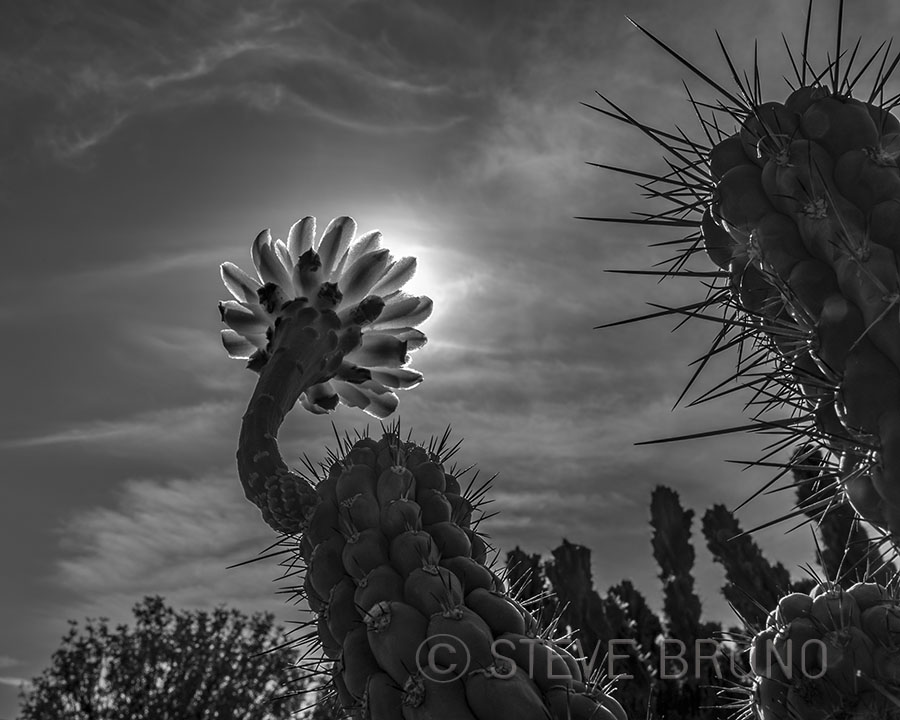
A couple days ago, I was visiting my mom, and couldn’t help notice she had a couple cacti in bloom in her yard.  Seemed out of place for late October, but it has been warm, and I’m sure she waters them from time to time.  One flower was within reach and photogenic, but I wanted a different approach.  There was no way for me to get behind this one, so I shot it like a selfie.  In a couple frames it was a selfie.  I was composing by just looking at the shadow of the flower across the lens, then realized I had to duck while maintaining the composition.  I suppose I could have set up a wireless card and a tablet, but that seemed like too much effort.  I got this shot without having to delete a bunch.

This is the photo that Leanne Cole has placed on this week’s Monochrome Madness.  You can check out her website to see other’s contributions and instructions to join in.

WPC: H2O

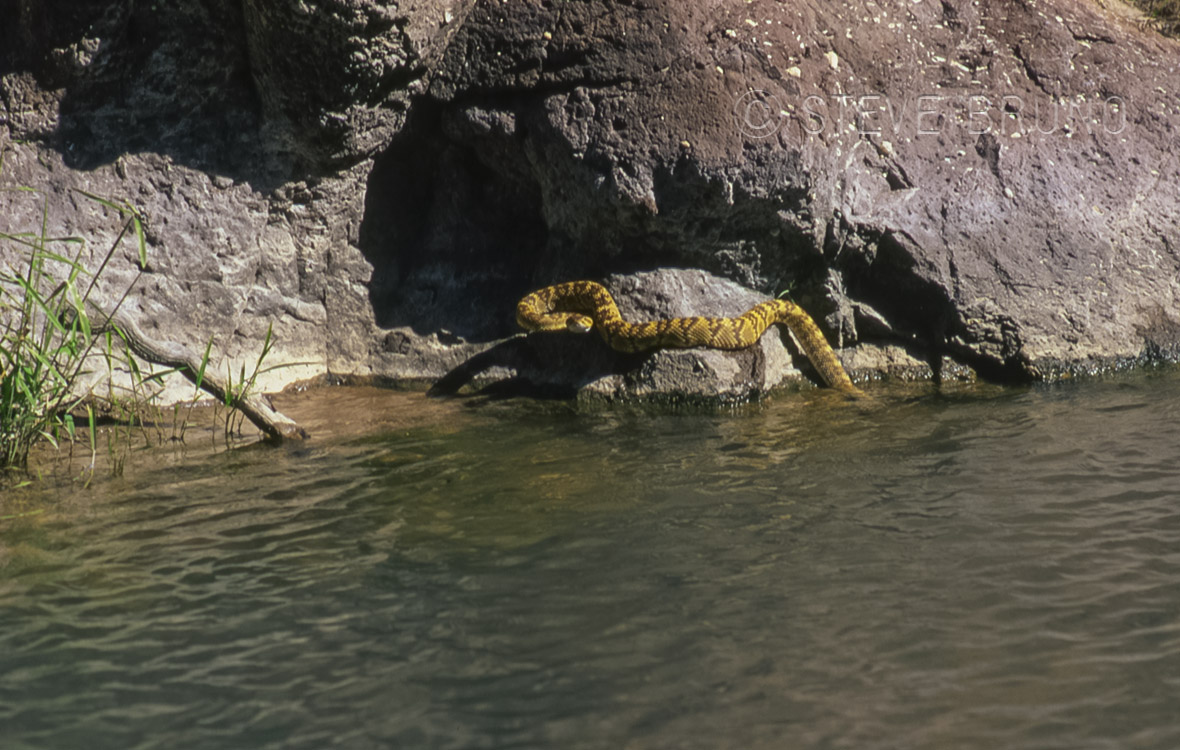
Canyon hikes are some of the best adventures in the desert southwest.  Some of these have year round water, and in those cases, no trail.  Much of the time will be spent hiking in the water, which is quite refreshing on hot days.  I always felt safe in the water with my guard down, and looked more alertly for the dangers along the rocky canyon bottoms.  That all changed at the moment of this photograph.

I was standing in the waters of the San Francisco River in eastern Arizona.  I had my large camera on a tripod in a spot about a foot deep in the river.  I was talking with my hiking partner when we both heard the disruption in the water behind me as though a fish had jumped up.  We both stood in disbelief as this rattlesnake slowly raised itself up on the ledge on the opposing bank.  We were on the shallow side of the river, but the snake had come out of a pool that was at least three feet deep.  We watched our steps everywhere after that!

The San Francisco River from a safer distance:

san-francisco-river-by-steve-bruno

WPC: Nostalgia

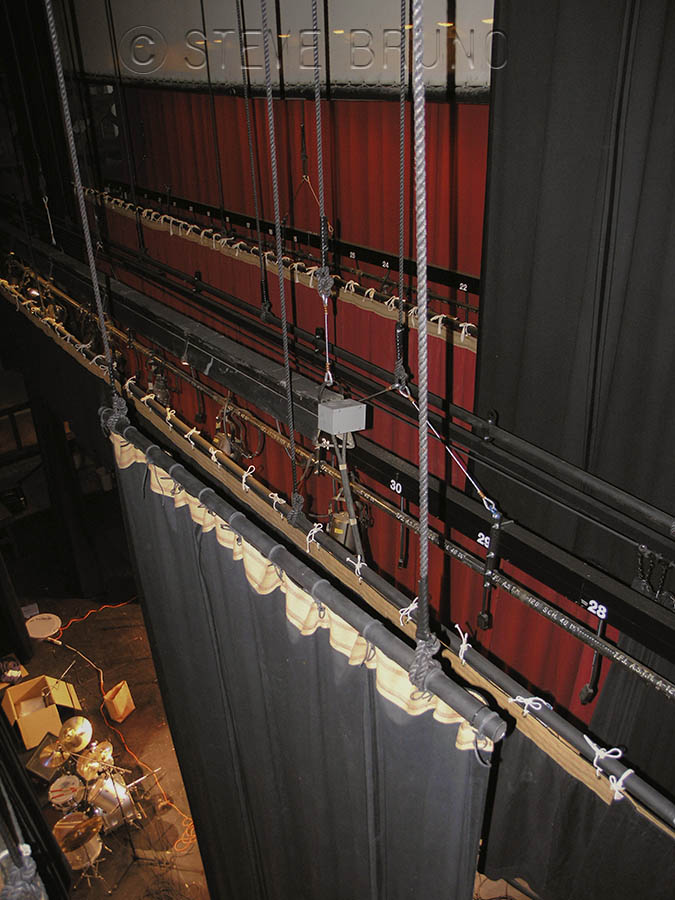
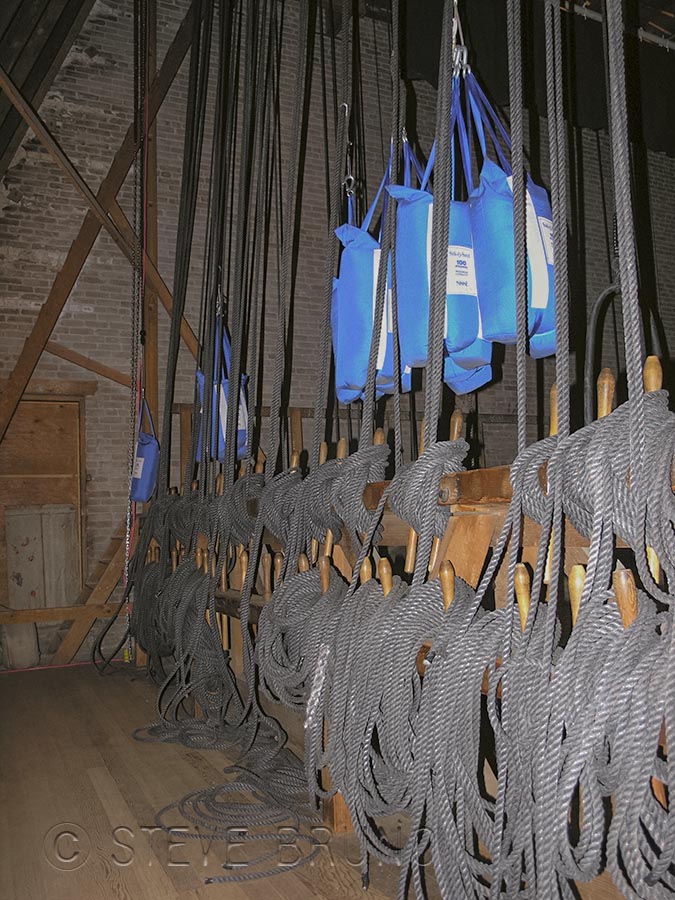
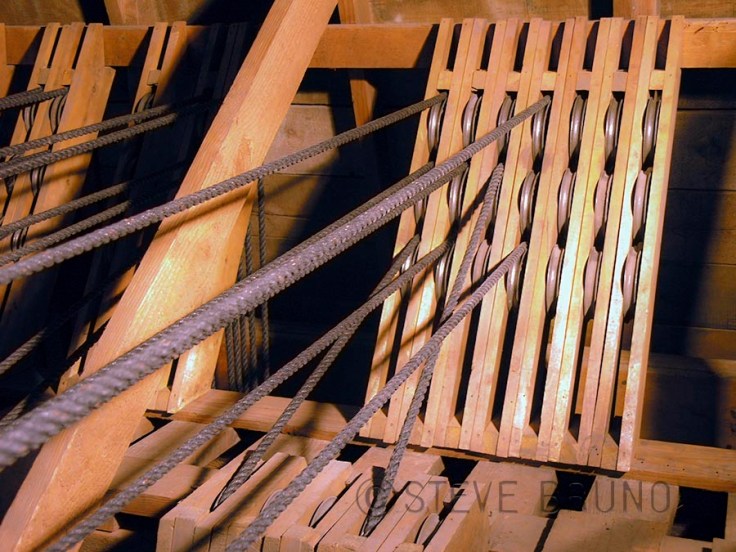
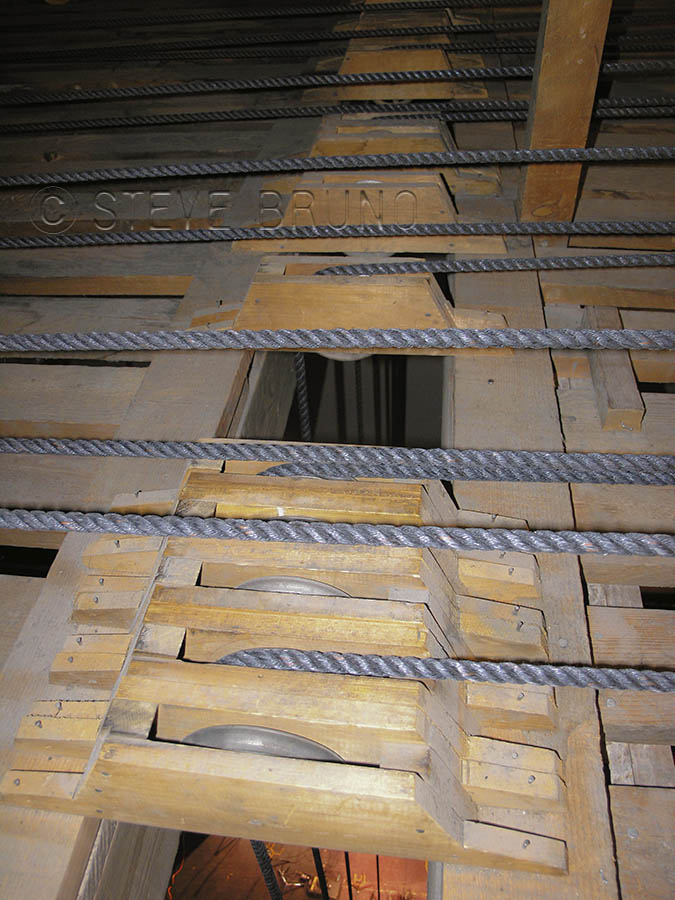
The Elks Theater in Prescott, Arizona is listed on the National Register of Historic Places.  These photos were taken at the end of 2005, after work was done to replace the aging ropes of the stage sets.  At the time, there were very few theaters still using this type of hoisting system, as most have moved to an electronic control panel, or at least a stage-level operating area with stacks of counterweights.

The theater has undergone renovations in the last few years, but I imagine the stage has remained intact.  It is one of the elements that makes the place unique and historic.  From what I’ve read, all the restoration has been going into the seating area, lobby, and exterior.

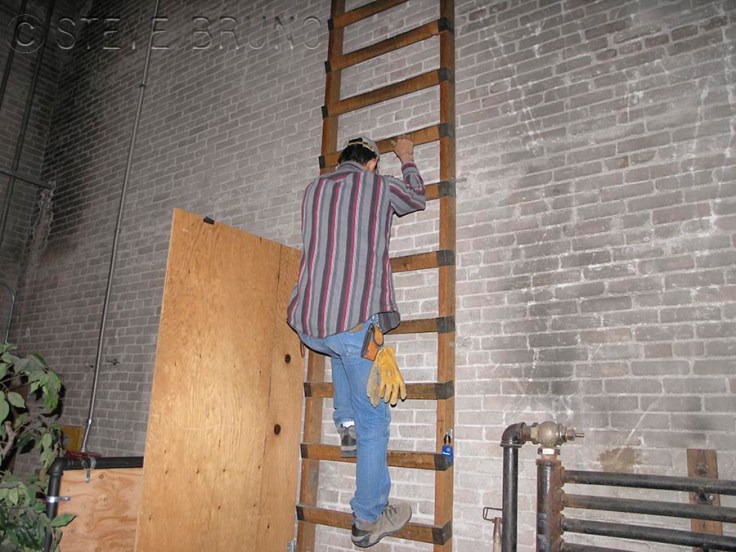
In the Elks Theater, the person operating the curtains and other stage sets has to climb this ladder to get to the operating platform.  The door (plywood panel) is normally locked against this ladder to prevent unauthorized access.

elks-02

Once on the elevated platform, all the ropes are tied off here.  The sandbags are the counterweight for the appropriate curtains or sets.

elks-01

Once on the platform, there is another ladder going up to the pulley system, where the ropes extend out across the stage and drop to the points where the pipes are tied off.

elks-03elks-05


In response to this week’s Daily Post Challenge:  Nostalgia

On The Trail Of A Stereotype

When I first started out in photography, I was fortunate to find a great stock agency to sign on with.  The woman who ran it was very knowledgeable and provided tips on what to shoot and more importantly, perspectives from which to shoot.  On one of my early visits, I asked for a list of subjects.  Saguaro cacti at sunset was one of the items on the list.

When I returned about a month or two later with material to review, her response was less than enthused.  She accepted a couple, but then said, “Can you find a postcard cactus?”  “A What?” I replied.  “A postcard cactus – you know, one with one arm on each side, but one side slightly lower.”

I had never heard that expression before, but apparently in the early days of postcards, someone had taken a picture of this type of cactus that sold very well.  People then came to expect that all saguaro cacti looked like that.  The state of Arizona has one on their standard issue license plate, but the previous red license plate had the perfect stereotype.

So the entire request went something like this:  One saguaro cactus (of the postcard variety) without any others nearby…..close enough to recognize, but not filling the frame…..at the right angle so as to not cut off the base…..with generic looking mountains in the background…..and a spectacular sunset.  Right.

In my travels, I eventually spotted a couple of these elusive cacti, but they were always in some location that involved scrambling – something I didn’t want to do with a flashlight.  I was looking for “road kill“.  The top shot is as close as I ever came to the complete request.  Along the way, I encountered many beautiful, unique saguaros.  One of these ended up being my best selling stock photograph by a huge margin.

For this week’s Daily Post Challenge: Quest

WPC: Edge

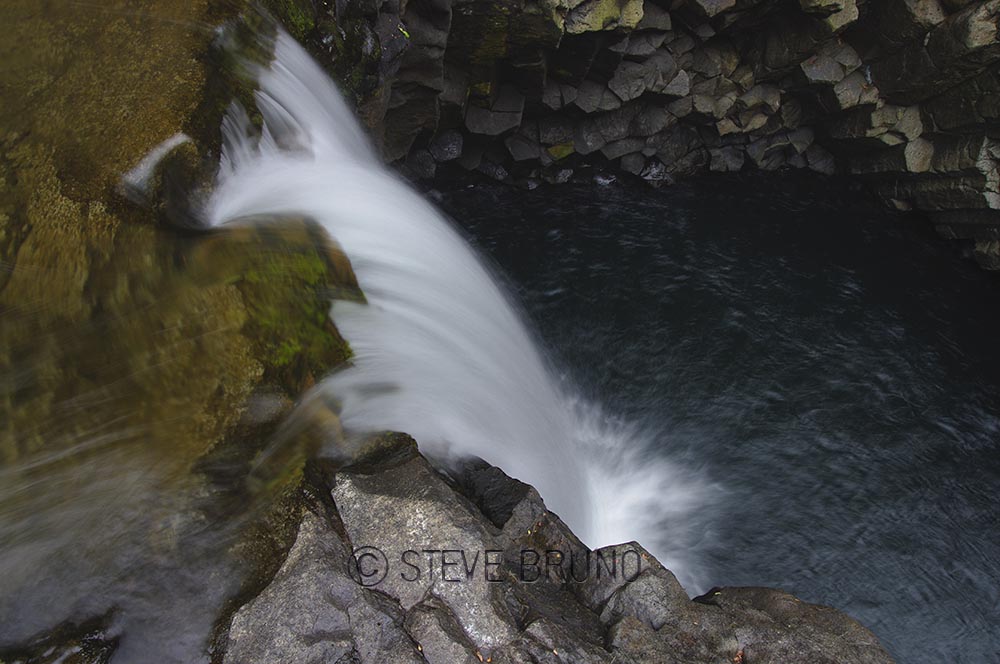
The Daily Post Challenge this week is Edge, and the first thing that came to mind was waterfalls going over the edge, but I haven’t come across too many that allow getting to this angle safely.

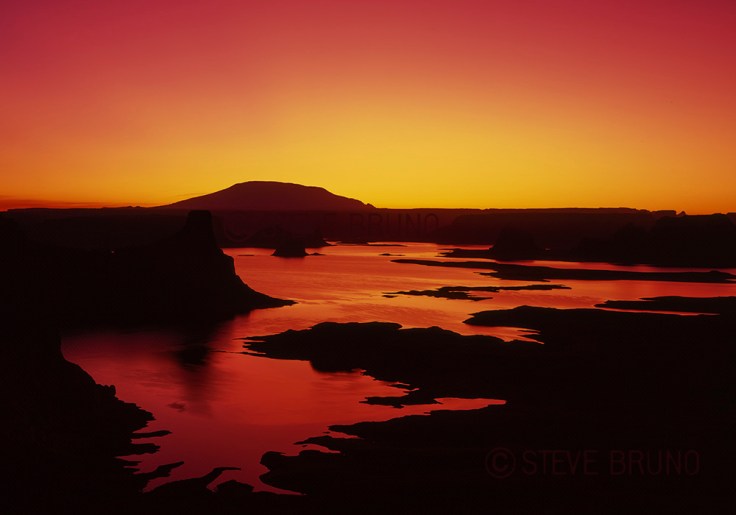
Lake Powell in southern Utah has more shoreline than the Pacific Ocean along the continental US.  In this early morning photo you can see the shoreline’s sinuous edges.

Lake Powell, Utah, shoreline, sunrise, Steve Bruno , gottatakemorepix

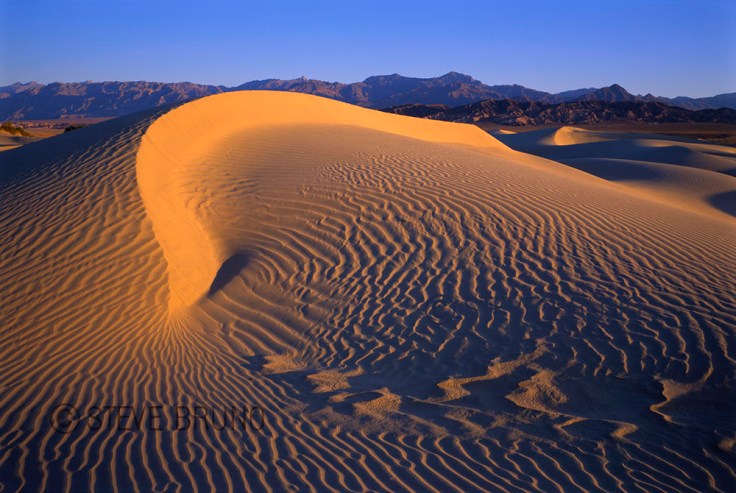
Sand dunes sometimes have well defined edges, such as this one shown here from Death Valley National Park, California.

Death Valley National Park, sand dunes, sunrise, Steve Bruno - gottatakemorepix

These massive boulders are hanging over the edge of a cliff along the drive up Mount Lemmon, just outside of Tucson, Arizona.

Mount Lemmon, Tucson, Arizona, rock formations, Steve Bruno, gottatakemorepix

There are few canyons in the desert southwest as impressive as Arizona’s Canyon de Chelly.  Spider Rock, shown here at the edge of darkness, can only be seen by walking to the edge of the canyon.

Canyon de Chelly National Monument, Arizona - Steve Bruno - gottatakemorepix

WPC: Mirror

This week’s Daily Post Challenge theme is Mirror, and as with many bloggers, I have photos of calm bodies of water. Who can resist pointing the camera towards nature’s reflections?  Those weren’t the only ones I came across, and I realized I have more of these than I initially thought I would.  Here are some of my favorites.

I usually had my camera along with the dogs out for an excursion, and in these shots, I noticed some reflections.

In modern buildings, the glass surfaces almost always offer a mirrored image, and here are a couple favorites from Calgary, Alberta.

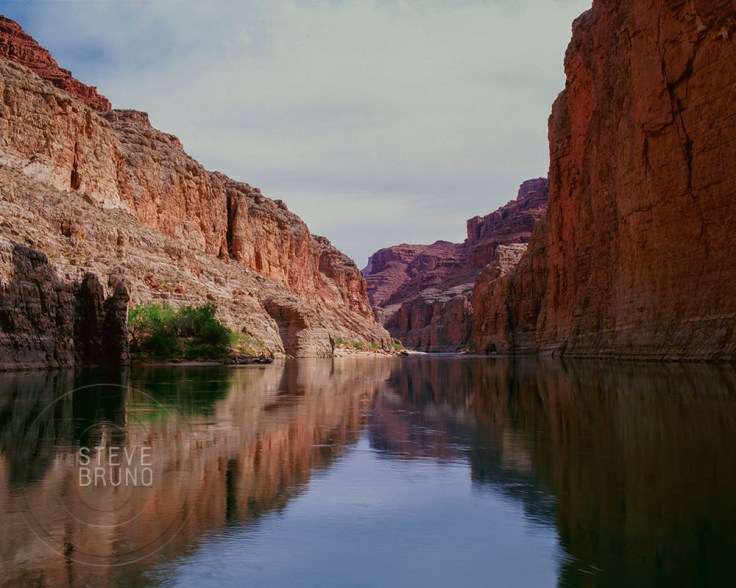
With that much volume of water in motion, large rivers seem like an unlikely place to find a mirrored surface. Despite that, early morning on the Colorado River in Marble Canyon in Grand Canyon, Arizona can look like this.

Colorado River reflections in Marble Canyon, Grand Canyon National Park - Steve Bruno - gottatakemorepix

In my backyard (relatively speaking), I have a couple spots I enjoy hiking in Red Rock Canyon, where I came across these mirrored surfaces.

One of my favorite places that I’ve ever hiked, West Clear Creek in Arizona, usually has a breeze moving through the canyon.  Early mornings can be very calm, and pools can be glasslike.

Mountain lakes with reflections appear to have proliferated my files without me being aware of it.  Here are some in that category.

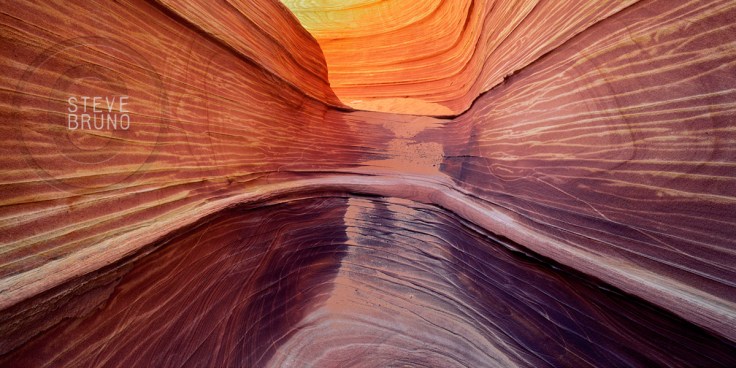
One image that always made me look twice was this one from Coyote Buttes.  There is no water or reflection here, but I felt like the illusion was there.

Coyote Buttes, The Wave - Steve Bruno - gottatakemorepix

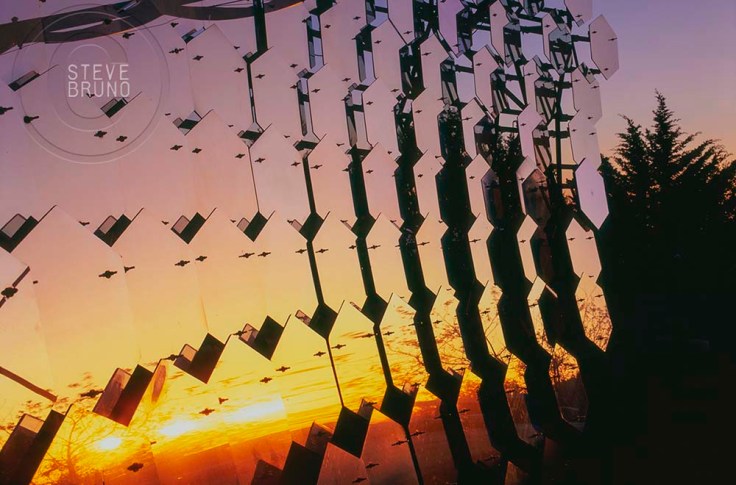
I have one photo of an actual mirror. This is the MMT (Multiple Mirror Telescope) at the Whipple Observatory on Mount Hopkins, Arizona.  During daylight, this telescope dish is tilted down and pointing northward.  This was around the summer solstice, and at sunset, when the sun was at its furthest point north.  As I walked by, this cool mountain air had a hotspot about 20 degrees warmer from the sun just grazing the edge of this dish array.  I can’t imagine the destruction if this thing were aimed in the slightest degree towards the sun.

MMT at Fred Lawrence Whipple Observatory, Arizona - Steve Bruno - gottatakemorepix

Finally, a little bit about the featured image.  That’s Saguaro Lake, on the outskirts of Phoenix, Arizona.  It’s usually a crowded place, especially in summertime.  This happened to be in winter, after a couple days of rain.  It’s a fairly sizeable body of water, and this reflection has to be a rare moment, and the absence of people, even rarer.  This photo will always have a special place in my memories.  It was the first one I ever had published.

WPC: Frame

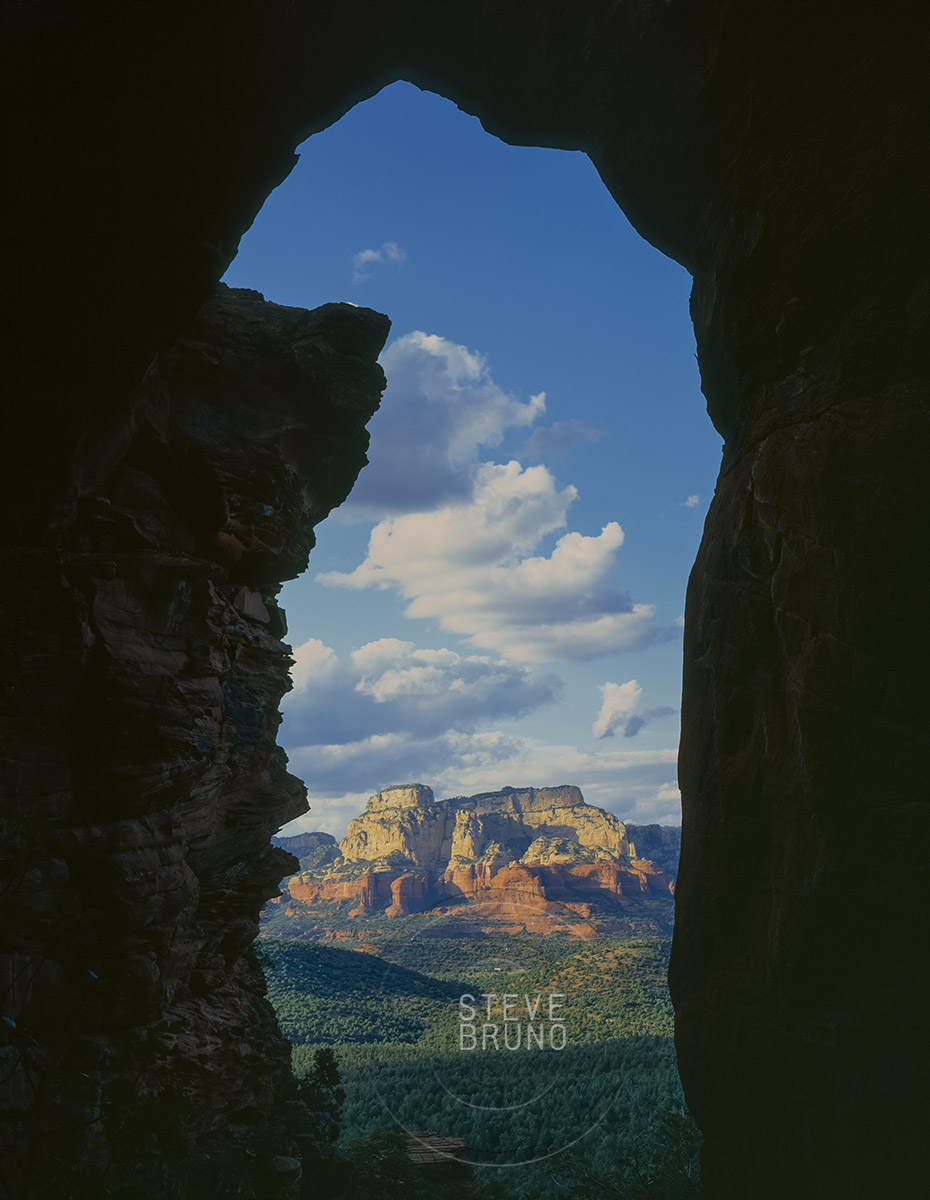
I find that natural arches usually frame the surrounding scenery very well.  The photo above was taken from underneath Devil’s Bridge, near Sedona, Arizona.  I was fortunate to have just the right amount of clouds helping to fill the frame.

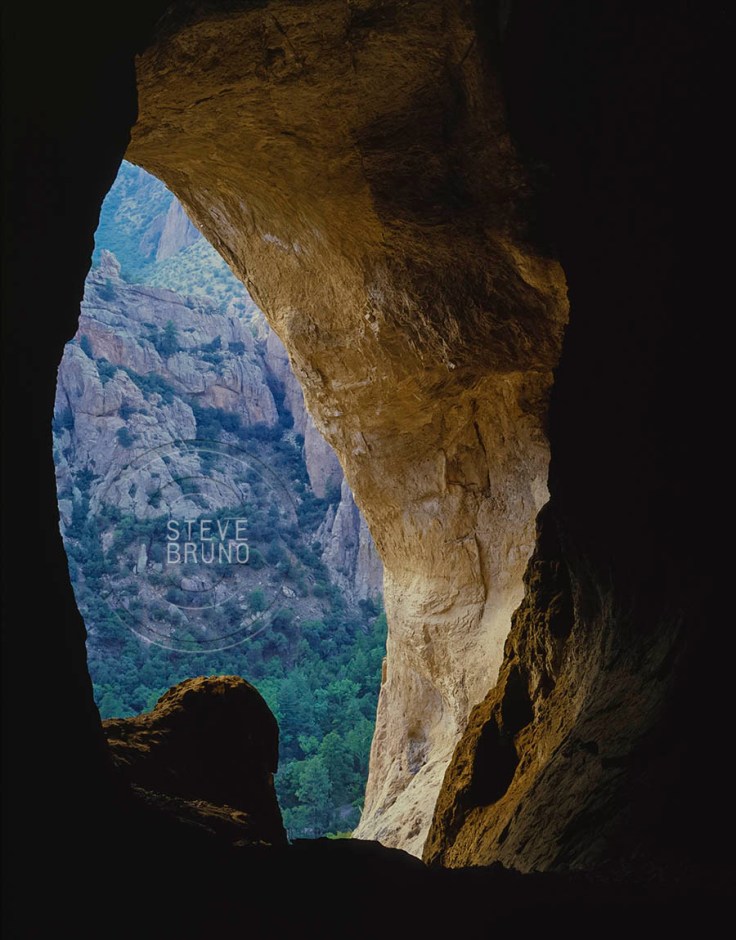
Cave Creek Canyon, in the far southeastern corner of Arizona, is named for all the openings that dot the canyon walls.  From far inside one of the larger openings, looking back into the canyon, I loved how this shot is framed.

Cave Creek Canyon Chiricahua Mountains - Steve Bruno

Historical Photographs, Part IV

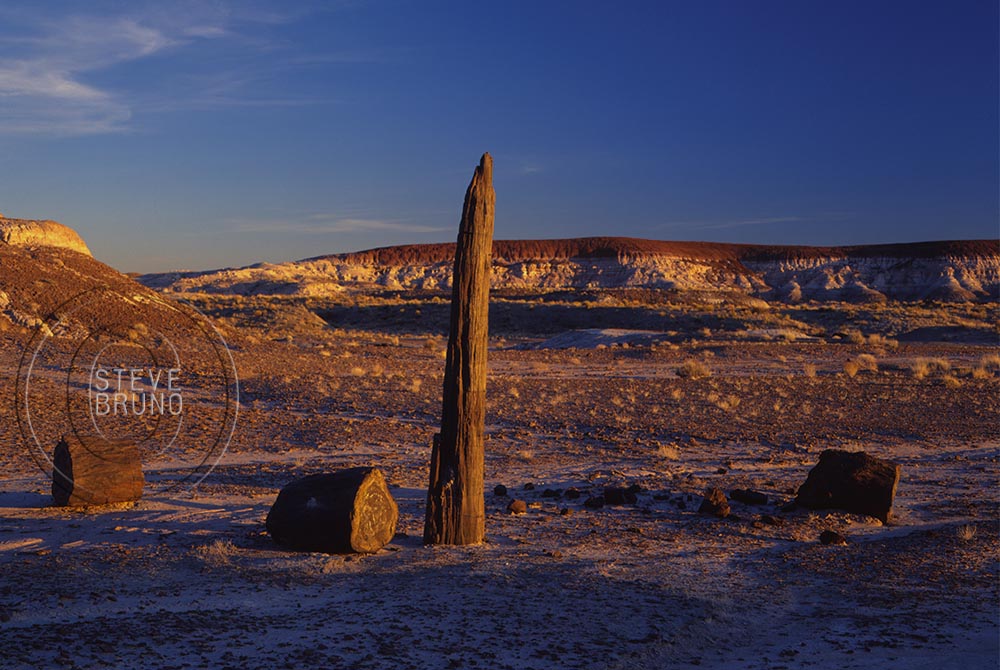
Quite a few years ago, my brother and I went on a weekend trip through northeastern Arizona.  One afternoon, we went hiking in at Petrified Forest National Park.  The trail was difficult to follow, so we gave up trying, and just started heading off into the backcountry.  Petrified Forest NP, which lies in the middle of the Painted Desert, has hills that can look the same very quickly, and is not the place for an inexperienced hiker.  After about a couple miles of this, we knew it was almost time to turn around, when something caught our attention.  As we got closer, we couldn’t believe our eyes.  There were two standing petrified trees!  Although one was more like a tree fragment, the larger was about 9-10 feet tall.
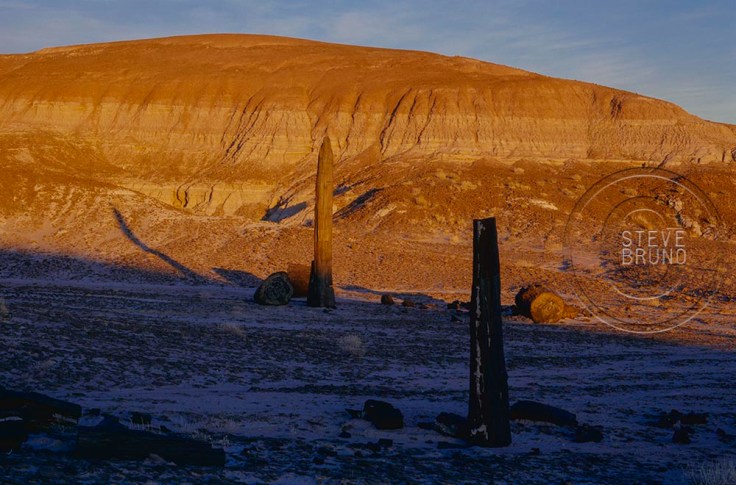
Standing Trees - Petrified Forest NP - Steve Bruno

As you take the driving tour through the park, you will see the petrified logs laying on the ground, with some I’ve seen 40-50 feet in length.  I haven’t covered every square mile of Petrified Forest National Park, but I’m pretty sure these trees were the last ones standing.  That day was a complete adrenaline rush, but both my brother and I knew we had to come back and see this again with different skies.

It was almost a year later when our schedules coincided and we had dramatic skies to photograph this rare find.  It had been a wet winter, and the washes still had water as we headed into the backcountry.  Like I said earlier, the hills can look alike, and we were having trouble locating the trees.  We were joking that we were losing our tracking abilities, but then we discovered why we were having difficulty.  The taller of the trees was no longer standing.

As I mentioned, it had been a wet winter, and the soft soil of the Painted Desert captures impressions very well.  When we arrived at the fallen tree, there was a lone set of footprints that wandered towards the tree in an almost drunken fashion, stopped at the tree (easily in arms reach), then continued onward.  When this tree eventually fell, I figured it was going to be towards the right (top photo), but it had fallen to the left.  More importantly, it fell away from the footprints.

I find it highly improbable that this tree stayed upright for so many centuries, then fell on its own within the next year.  The footprints and the direction of the fall lead me to believe it had assistance.  This seems like the senseless destruction that only a young male would do, but then the story about boy scout leaders toppling a boulder in Goblin Valley, Utah a couple years ago makes me wonder.  They were both in their 40’s, and supposed role models, but look like immature teenagers in the video.  Their excuse was “we didn’t want the rock to fall on someone and hurt them”.  Sounds like the bullshit their lawyer fed them.

In the case of the petrified tree, the footprints wandered further into the backcountry.  I honestly hope that the asshole who did this was drunk and couldn’t find their way back, and ended up being a good meal for the coyotes and buzzards.  At least there would be some purpose for this waste of life.

Even with the photos I did manage to get on the first trip, it took a couple tries before I had one published.  Ironically, on the day after the magazine came out, I received a phone call from a photographer who gave me a long winded story when I inquired about one of his locations.  For a brief moment, I felt like sending him on a wild goose chase, but I was still disgusted over this, and just told him how there was nothing left to go back to.
WPC: Narrow

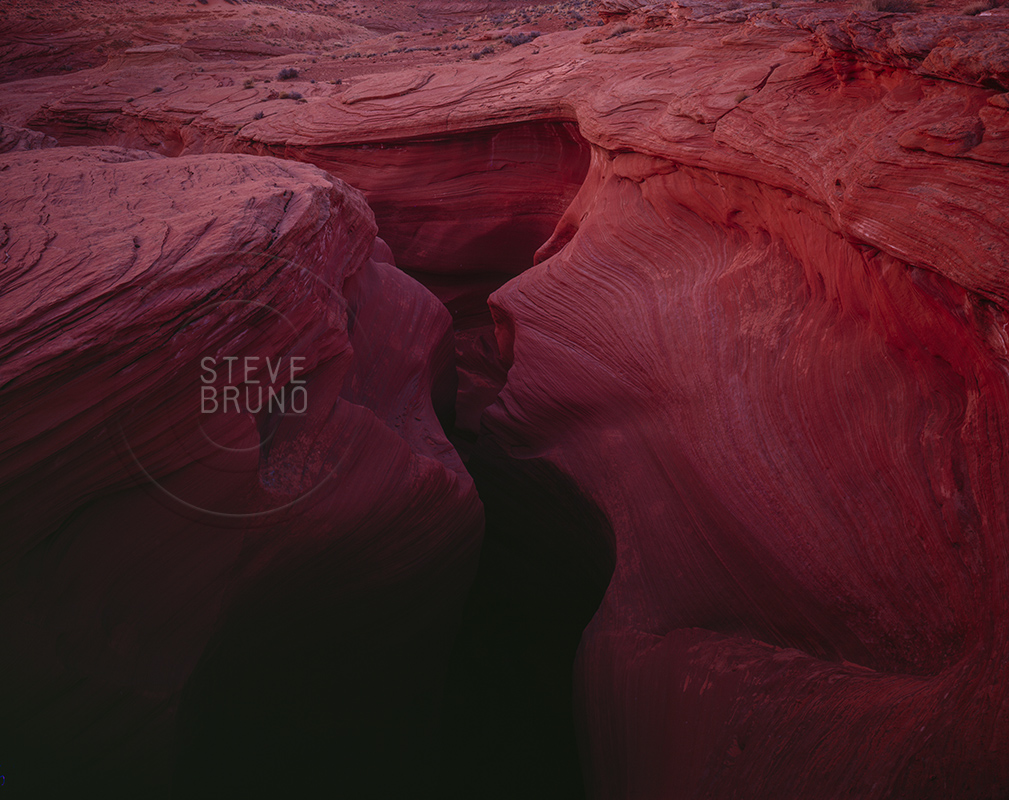
This week’s Daily Post Challenge of Narrow made me immediately think of slot canyons.  The most famous (and photographed) one is Antelope Canyon, and you can find thousands of shots from inside the canyon, but have you ever wondered what it looked like from outside?  This is lower Antelope Canyon (above), and that narrow crack in the earth is about 50 to 60 feet deeper than what you can see at this spot.  Water has worn it smooth all the way, so think of this as the bathtub drain if there’s a thunderstorm nearby.
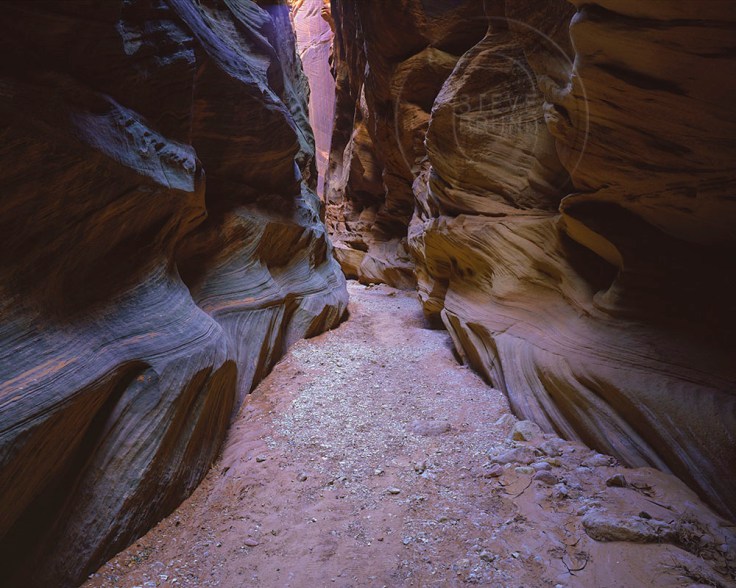
Not far from Antelope Canyon, even deeper and equally claustrophobic is Paria Canyon, with the branch known as Buckskin Gulch.  Once you’ve entered, it remains this narrow for miles, with few escape routes.  The drainage continues upcanyon for many miles, and there are logs jammed in a couple spots high above your head to remind you that this is a sunny day hike.  If it has flooded recently, you will find this impassible due to quicksand.

Buckskin Gulch - Steve Bruno

A much tighter series of canyons exist in Cathedral Gorge State Park in eastern Nevada.  No chance of being caught in a flood here, because these don’t travel very far.  In some spots you will have to walk sideways to get through.  Without some object providing a sense of scale, this may be difficult to obtain perspective, but I can’t walk through this canyon with my feet side by side.

Cathedral Gorge Narrow Canyon - Steve Bruno

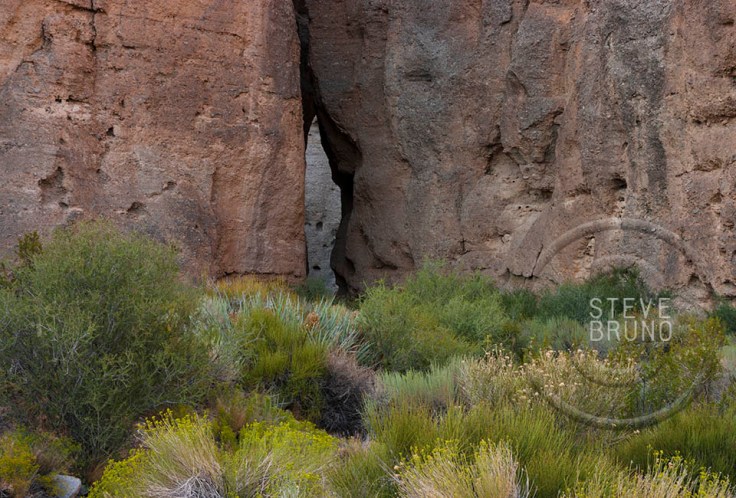
One place that I find quite unique is this series of canyons at the base of Mount Charleston, Nevada.  The canyons themselves are not that narrow or deep, but there is this narrow passage from one canyon to the next one.

Secret Passage - Steve Bruno

Monochrome Madness: MM3-14

I love hidden treasures – those places you come across that very few people visit or even know about.  This is one of those places.  It’s on the edge of metropolitan Phoenix, Arizona, and so close it may be in the city limits.  But, for the millions living there, most have never seen this.

The water flows year round, and it used to be the dogs’ favorite spot for a walk.  Just not today.  Photography came first.  The scents of the river covered my clothing, and I was frantically sniffed upon returning, and given looks that said How could you go there without us?  I was soon forgiven because dogs are great at that.

This is my contribution to Leanne Cole’s Monochrome Madness this week.  You can see what other bloggers have added at Leanne’s site.

Blog at WordPress.com.

Up ↑